Japanese PM Sanae Takaichi to Visit Assam for Modi Summit
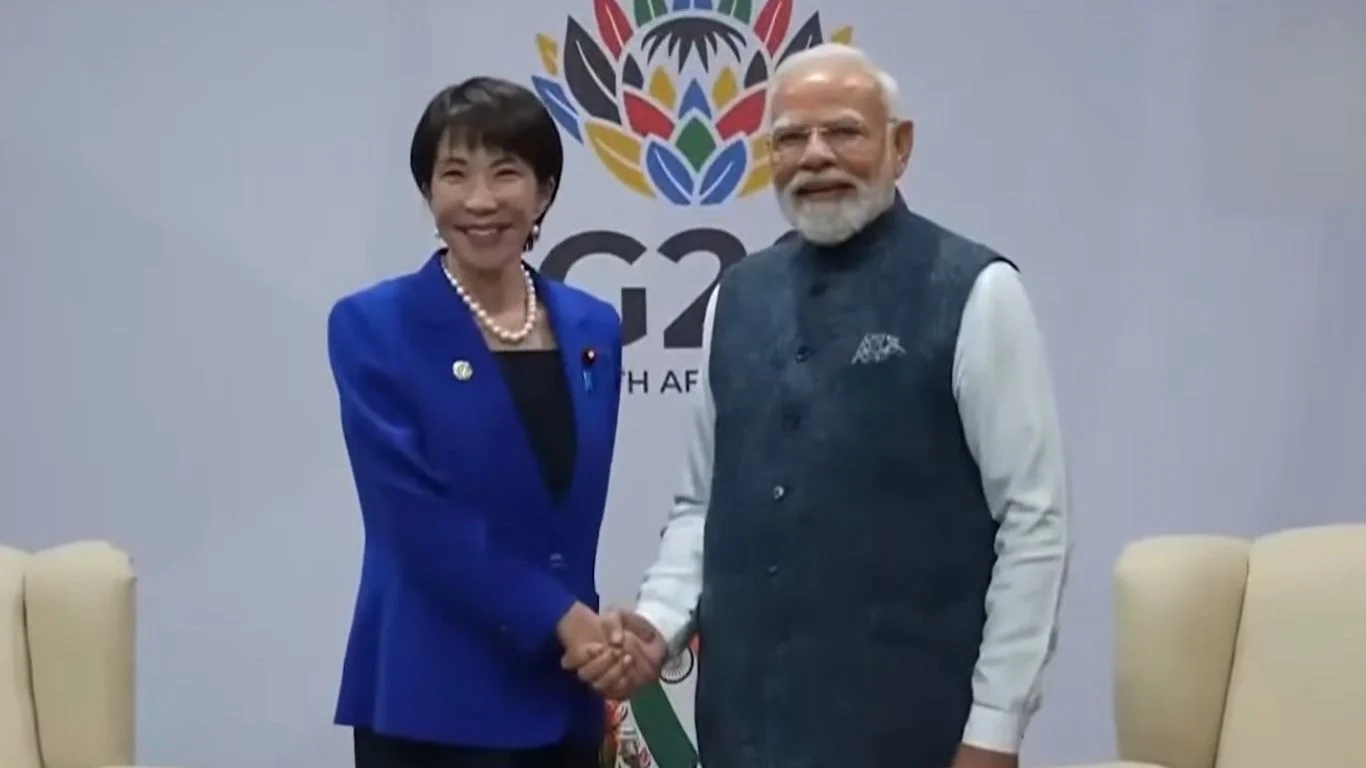
Japanese Prime Minister Sanae Takaichi will travel to Guwahati on July 1, 2026, for a critical bilateral summit with Indian Prime Minister Narendra Modi, shifting the traditional diplomatic venue to Northeast India to catalyze multi-billion-dollar regional economic partnerships.
Key Highlights
- Japanese Prime Minister Sanae Takaichi is scheduled to arrive in Guwahati on July 1, 2026, for a high-stakes bilateral summit with Prime Minister Narendra Modi.
- A delegation of over 50 prominent Japanese corporate leaders, including executives from Suzuki Motor, Toyota Tsusho, and Itochu Corporation, will accompany the Prime Minister.
- The diplomatic itinerary shifts the traditional intergovernmental summit from New Delhi to Assam, highlighting the growing geopolitical importance of the Northeast.
- Strategic dialogues will center on expanding economic corridors, infrastructure funding, and building robust semiconductor and digital technology supply chains.
Japan’s Prime Minister plans visit to Assam to boost India-Japan ties
Assam is finalizing extensive arrangements to welcome an unprecedented international diplomatic gathering in the Northeast as Japanese Prime Minister Sanae Takaichi arrives in Guwahati on July 1 for an official bilateral summit with Indian Prime Minister Narendra Modi.
This high-profile international visit will fortify ties between India and Japan while unlocking major commercial pipelines across Assam and neighboring northeastern states. Japanese media outlets confirm that Takaichi will head an expansive economic assembly featuring more than 50 corporate executives representing Japan’s premier multinational conglomerates. Elite corporate leaders from Suzuki Motor, Itochu Corporation, and Toyota Tsusho will participate in the state visit. Senior officials will advance high-level talks regarding bilateral economic architecture, cross-border infrastructure assets, digital technology alliances, and trans-regional transit networks. Multiple enterprise groups are prepared to sign definitive agreements spanning commercial manufacturing, renewable energy systems, and advanced semiconductor ecosystem deployment.
The diplomatic summit will convene inside the major city of Guwahati rather than within the federal capital of New Delhi. The two democratic nations rotate hosting responsibilities for their recurring bilateral leadership summits, with India serving as the presiding host for the 2026 cycle. Choosing an official venue in Assam underscores the ascending geopolitical priority of India’s northeastern frontier. This diplomatic mission represents Takaichi’s inaugural official trip to India since her historic ascension to the prime minister’s office in October 2025. The high-level meeting manifests the deepening institutional alignment between both democracies operating under their formal Special Strategic and Global Partnership framework.
Tokyo remains an essential capital funding partner for major public works throughout the northeastern territory. Japan has extended significant capital to fund critical highway networks, river crossings, and clean energy generation facilities through long-standing official development assistance frameworks. The Japan Bank for International Cooperation continues to underwrite capital infrastructure assets across Assam. The upcoming leadership dialogue will prioritize direct corporate investment, cross-border commerce, and technical co-development. Major Japanese industrial groups are tracking commercial opportunities in Assam as the state transforms into a strategic hub for semiconductor fabrication and next-generation digital infrastructure. Massive capital deployments by Indian industrial empires like the Tata Group, Adani, and Reliance Industries have drawn substantial international business focus to the state.
Consequently, Japanese industrial entities are targeting emerging entry points across industrial logistics, high-tech manufacturing setups, and resilient supply chain frameworks. These corporate investments are projected to anchor long-term industrialization in Assam while generating critical skilled employment throughout the region. Simultaneously, Assam Chief Minister Himanta Biswa Sarma has accelerated administrative oversight for the landmark diplomatic event. Sarma personally audited operational readiness and security deployment parameters at the newly constructed passenger terminal within Guwahati’s Lokpriya Gopinath Bordoloi International Airport. State municipal agencies have deployed comprehensive urban beautification campaigns across the metropolitan zone ahead of the diplomatic arrivals.
Sarma has maintained that high-level foreign visits serve as catalysts to transform Assam’s macroeconomic trajectory. The Chief Minister continues to emphasize the strategic necessity of integrating regional enterprise ecosystems into modern global investment channels and international consumer markets. The diplomatic trip also holds deep historical resonance for the region. In December 2019, former Japanese Prime Minister Shinzo Abe was confirmed to attend a leadership summit alongside Modi in Guwahati. However, domestic authorities indefinitely deferred that international meeting after widespread civic demonstrations against the Citizenship (Amendment) Act compromised regional security matrices and brought the regional capital to a standstill.
Regional political figures frequently characterize that past cancellation as an unfortunate lost economic window for the state. Securing a seamless execution of this upcoming international summit will register as a milestone for the state administration, validating its contemporary civil stability and rising foreign investment profile. Alongside commercial integration, Modi and Takaichi are set to evaluate maritime security architectures and collaborative defenses within the Indo-Pacific theater. Both sovereign states maintain an identical vision for a free, open, and legally ordered Indo-Pacific geographic space. This bilateral exchange will advance defense synchronicity between New Delhi and Tokyo.
The leadership dialogue will additionally inject operational momentum into the underlying objectives of India’s Act East Policy and the joint Act East Forum. These bilateral programs aim to optimize transport linkages connecting India’s northeastern states with expanding Southeast Asian markets while multiplying commercial trade and inbound capital investments.
Future Outlook
The upcoming Guwahati summit is positioned to institutionalize Assam as the primary gateway for East Asian capital entering India’s landlocked Northeast. Analysts anticipate that successful execution of the Takaichi-Modi summit will unlock a multi-decade development pipeline, transforming the region from an isolated geopolitical zone into a connected industrial hub. By anchoring Japanese advanced semiconductor supply chains and infrastructure investments in the state, India and Japan will systematically counter regional supply chain vulnerabilities while permanently elevating the macroeconomic profile of Assam on the global stage.
FAQs
When is the Japanese Prime Minister visiting Assam?
Japanese Prime Minister Sanae Takaichi is scheduled to arrive in Guwahati, Assam, on July 1, 2026, for a high-level bilateral leadership summit with Indian Prime Minister Narendra Modi.
Which Japanese companies are participating in the diplomatic delegation?
The diplomatic delegation includes more than 50 corporate leaders from Japan’s largest multinational companies, with senior executives from Suzuki Motor, Itochu Corporation, and Toyota Tsusho taking part in the trade and investment talks.
Why is the India-Japan summit being held in Guwahati instead of New Delhi?
The decision to hold the summit in Guwahati highlights the growing strategic and economic importance of India’s Northeast region under the Act East Policy, positioning Assam as a major hub for international semiconductor manufacturing and regional connectivity.
What is the historical significance of holding this summit in Assam?
This summit follows a historically significant cancellation in December 2019, when a planned meeting between Narendra Modi and former Japanese Prime Minister Shinzo Abe in Guwahati was called off due to security concerns stemming from local protests against the Citizenship (Amendment) Act.