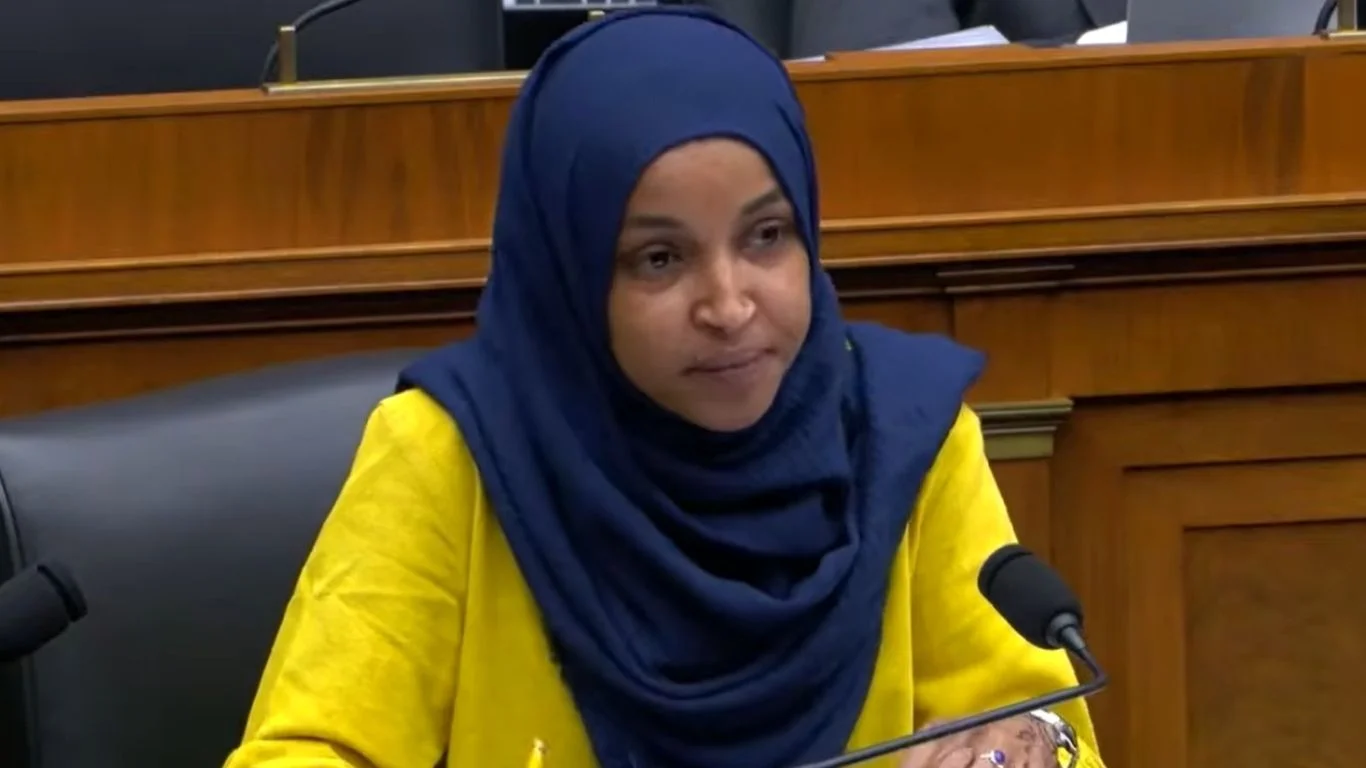
Ilhan Omar India Minority Rights Remarks Spark Debate
A controversial speech by US Representative Ilhan Omar regarding India’s treatment of minority populations has ignited a fierce international political dispute. The lawmaker’s assertions have drawn sharp rebukes from Indian government officials, who strongly defend the nation’s democratic principles and inclusive social record.
Key Highlights
- US Congresswoman Ilhan Omar cited a genocide framework to criticize India’s minority rights during an Indian American Muslim Council event on June 7, 2026.
- Indian Minority Affairs Minister Kiren Rijiju rejected the assertions, stating that India remains a secure haven for diverse communities.
- External Affairs Ministry official Sibi George pointed to escalating minority population statistics and massive voter participation as evidence of democratic stability.
- The Washington gather drew prominent political figures, including Minnesota Attorney General Keith Ellison, highlighting shifting geopolitical dynamics.
During an Indian American Muslim Council gathering on June 7, 2026, US Representative Ilhan Omar initiated a fresh wave of geopolitical friction regarding the state of human rights in India. Her public assertions have drawn immediate condemnation from Indian authorities, who argue her metrics misrepresent the operational realities of the democracy.
The escalating rhetorical dispute arrives as India continues to position itself globally as a resilient, pluralistic democracy backed by an expanding economy. Conversely, international advocacy coalitions and progressive politicians continue to flag structural anxieties regarding domestic religious freedoms and minority protections.
Addressing attendees at the event, Omar emphasized the necessity of maintaining international scrutiny on what she characterized as systemic pressures facing non-Hindu populations. The representative stated that these societal dynamics now extend beyond state mandates and are actively reshaping local communities.
Omar specifically anchored her assessment on the 10 stages of genocide, a conceptual diagnostic model established by Genocide Watch pioneer Gregory H. Stanton. She asserted that current conditions align with the eighth stage, which is defined by organized persecution.
According to the Stanton framework, this particular phase manifests through aggressive structural limitations on targeted groups. The diagnostic criteria include state-sanctioned property confiscations, forced migration, segregation dynamics, and the targeted denial of basic civil services.
Footage of the address began circulating across digital platforms in the days following the convention. The viral broadcast rapidly transformed the congresswoman’s commentary into a central talking point among foreign policy analysts and the global Indian diaspora.
In response, political figures in New Delhi quickly marshaled state data and institutional records to counter the narrative. Minority Affairs Minister Kiren Rijiju publically affirmed that the South Asian nation maintains an unparalleled safety record for pluralistic groups within the geographic territory.
Rijiju noted that vulnerable populations from adjacent borders routinely migrate to India to escape localized regional persecution. He further observed that socioeconomic indicators and developmental opportunities for domestic minorities have climbed significantly over the trailing 10-year window.
The minister explicitly dismissed allegations that state dynamics were forcing citizens to relocate abroad due to sectarian pressure. Rijiju stated that while public policy debates are welcome, external critics must refrain from broadcasting inaccurate geopolitical narratives.
Supporters of the current administration frequently highlight the robust involvement of diverse populations across public infrastructure. They point toward high registration volumes and civic representation within legislative bodies as proof of functional political equity.
Echoing this stance, India’s Ministry of External Affairs pushed back against the international criticism. During an official diplomatic mission to Europe, Secretary (West) Sibi George showcased the historic voter turnouts logged during recent federal cycles as a core institutional victory.
George further supported his counter-argument by reviewing long-term demographic data compiled since independence. The diplomat noted that minority populations have consistently expanded their total percentage share of the populace, indicating sustained social equilibrium.
The legislative forum featured several other high-profile American politicians alongside the Minnesota congresswoman. The roster of speakers included Minnesota Attorney General Keith Ellison, State Senate Majority Leader Erin Murphy, and Republican State Senator Jim Abeler.
Ellison utilized his platform to criticize the trajectory of Hindu nationalism and its broader implications for local civil liberties. Similarly, Hindus for Human Rights representative Raj Rajan voiced concerns regarding perceived institutional threats to the traditional secular framework of the nation.
Rounding out the panel, Assistant Commissioner Zarina Baber shifted focus toward the domestic challenges facing Muslim populations within Western borders. Baber emphasized that anti-Islamic sentiment remains a pressing societal issue for residents inside Minnesota and across the United States.
Historical Context
The clash highlights a recurring point of friction between progressive factions in Washington and the government of India. Over the last decade, organizations like the Indian American Muslim Council and Genocide Watch have frequently utilized international forums to challenge New Delhi’s domestic policies.
Conversely, Indian officials have consistently rejected external oversight, characterizing such critiques as biased interventions that ignore the country’s constitutional protections. This institutional standoff has grown more pronounced as bilateral trade and strategic defense partnerships between the two nations continue to expand.
FAQs
What did US Representative Ilhan Omar say about India?
Omar claimed that reports indicate India has reached the eighth stage of genocide, referencing a framework by Genocide Watch founder Gregory H. Stanton to criticize the country’s minority rights record.
How did the Indian government respond to Omar’s remarks?
Indian officials, including Minority Affairs Minister Kiren Rijiju and Ministry of External Affairs Secretary Sibi George, rejected the claims. They pointed to rising minority populations, high voter turnout, and historical safety records as evidence of an inclusive democracy.
What is the eighth stage of genocide mentioned in the speech?
According to the Stanton model, the eighth stage involves systemic persecution characterized by forced displacement, property distribution disruptions, segregation, and the denial of essential services to a specific group.