Peru Election Protest Erupts as Candidate Demands Vote Transparency
Peruvian left-wing presidential candidate Roberto Sanchez spearheaded a major demonstration in the capital city of Lima on Friday evening, rallying hundreds of loyal backers to demand full transparency in a tightly contested runoff election where he currently trails conservative rival Keiko Fujimori by a razor-thin margin.
Key Highlights
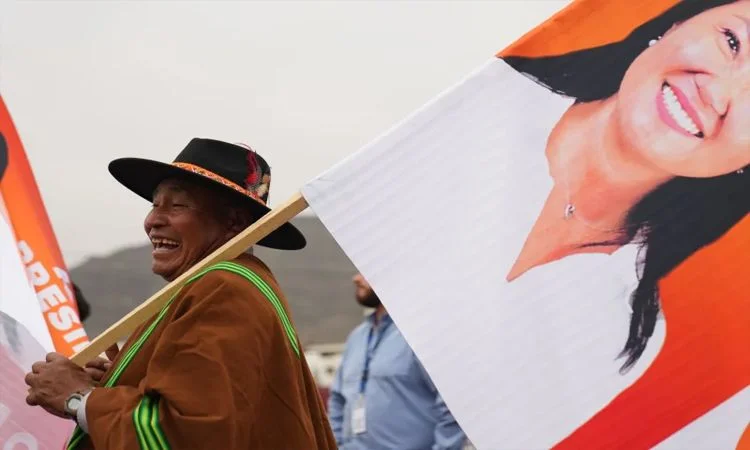
- Left-wing contender Roberto Sanchez led hundreds of demonstrators through the streets of downtown Lima to protest the election results.
- Conservative candidate Keiko Fujimori holds a slim lead of just 43,000 votes with 99.51% of the ballots officially counted.
- Demonstrators refuse to recognize the preliminary outcome, while electoral authorities prepare a multi-week review of 120,000 contested ballots.
- Allegations of vote tampering regarding expat ballots from the United States and Argentina have been rejected by Peru’s Foreign Ministry.
Sanchez asserted that multiple irregularities occurred just as Fujimori’s advantage began to widen to 43,000 votes, with 99.51% of the total ballots officially tallied.
Official data published on the National Office of Electoral Processes (ONPE) website indicates that Fujimori has secured 50.11% of the vote, while Sanchez maintains 49.88%.
Demonstrators marched through the downtown streets of Lima chanting slogans, declaring that votes are not for sale and must be actively defended by the citizenry.
Protester Yuri Guerra, 52, informed reporters that the populace chose Roberto Sanchez and will not recognize Keiko Fujimori or respect votes validated by current electoral authorities.
Before an official winner can be declared, electoral officials must review contested tally sheets representing more than 120,000 votes, a specialized procedure projected to take at least two weeks.
The highly polarized runoff election was originally held on June 7, 2026.
The Together for Peru party asserted that distinct irregularities occurred within the chain of custody for overseas ballots shipped from the United States and Argentina.
The Peruvian Foreign Ministry explicitly rejected all accusations concerning the fraudulent switching of ballots to favor Fujimori’s campaign.
Worker Marisol Espinoza, 65, expressed deep outrage over the alleged fraud, calling it an absolute abuse for Fujimori to win utilizing votes cast from abroad.
Fujimori strongly defended the choices of citizens residing outside Peru, stating to reporters that overseas ballots are completely valid and must be respected.
The tense runoff election directly pitted the daughter of the late former president Alberto Fujimori against Sanchez, the designated political successor of former president Pedro Castillo. Both historical administrations concluded in major public scandals.
The eventual victor of this election will officially assume office on July 28, 2026, to begin a five-year presidential term.
History of Polarized Peruvian Leadership
The intense political standoff between Roberto Sanchez and Keiko Fujimori reflects a deeply fractured electorate shaped by past administrations. Fujimori represents the conservative legacy of her father, Alberto Fujimori, whose presidency in the 1990s remains highly controversial. Conversely, Sanchez commands the left-wing base previously energized by Pedro Castillo, whose tumultuous term ended abruptly in 2022. This ongoing rivalry underscores a decade of severe political instability in Peru, which has seen multiple presidents cycle through office due to corruption probes and impeachment proceedings.
FAQs
Who is leading the presidential election in Peru?
Conservative candidate Keiko Fujimori holds a razor-thin lead with 50.11% of the vote, compared to left-wing candidate Roberto Sanchez who has 49.88%, with 99.51% of the ballots counted.
Why are people protesting in Lima?
Supporters of Roberto Sanchez are protesting to demand complete transparency and to voice allegations of irregularities and fraud after Keiko Fujimori’s lead expanded in the final stages of the vote count.
How long will it take to declare an official winner in Peru?
Electoral authorities need to review contested tally sheets representing more than 120,000 votes, a meticulous legal verification process that is expected to take at least two weeks to complete.
What are the specific allegations regarding overseas ballots?
The Together for Peru party claims that irregularities occurred in the chain of custody for expat ballots sent from the United States and Argentina, though the Peruvian Foreign Ministry has denied these claims.