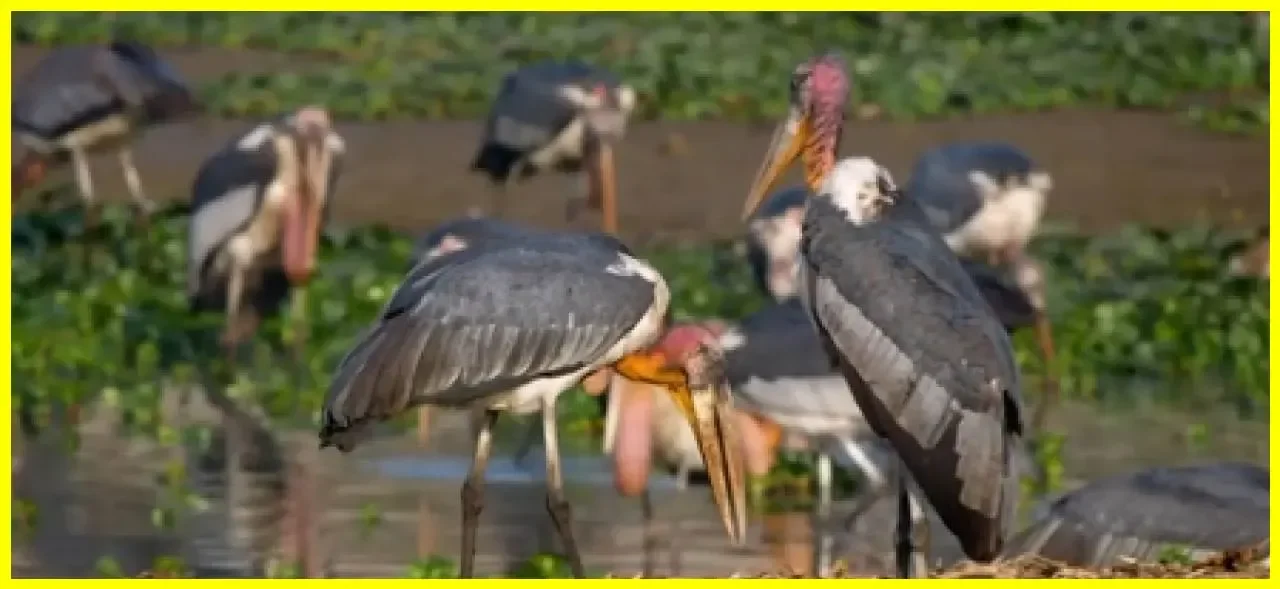
PM Modi Hails Assam Hargila Stork Conservation in Mann Ki Baat
Prime Minister Narendra Modi highlighted the successful community conservation of the rare Greater Adjutant Stork during his latest national radio address. The initiative transformed local perceptions of the bird from an inauspicious presence into a celebrated symbol of regional identity and environmental pride across various villages in Assam.
Key Highlights
- Prime Minister Narendra Modi featured the rare bird’s revival in his 135th broadcast.
- Community efforts turned a traditionally disliked species into a celebrated local icon.
- Around 80 percent of the global Greater Adjutant Stork population lives in Assam.
- Environmental scientist Purnima Devi Barman led the female-driven ecological campaign.
New Delhi, June 28: Prime Minister Narendra Modi used the 135th episode of his national radio broadcast, ‘Mann Ki Baat’, to highlight a unique environmental success story. He shared the journey of preserving the rare ‘Hargila’ bird, known as the Greater Adjutant Stork, with citizens across India.
Modi observed that local populations previously viewed this specific stork species as highly inauspicious in multiple regions of Assam. However, targeted local initiatives successfully transformed these deep-rooted community perceptions. The avian species has now emerged as a distinct symbol of cultural identity for numerous rural settlements.
The Prime Minister emphasized that this rare creature plays a vital role in maintaining the cleanliness of natural ecosystems. Despite these ecological benefits, widespread public misconceptions endured for generations. This long-standing societal disapproval caused widespread hostility, prompting residents to actively avoid the avian creatures.
This deep public aversion had severe consequences for the local wildlife infrastructure. Hostile villagers regularly cut down the massive native trees where the birds built their essential nesting sites. These destructive actions severely threatened the survival capabilities of the local stork population.
During this critical ecological decline, prominent wildlife scientist Purnima Devi Barman analyzed the unfolding situation. She determinedly resolved to transform local public opinion regarding the threatened species. Barman initiated her grassroots movement by directly engaging local women in targeted educational workshops.
The researcher utilized verified scientific facts to demonstrate the ecological importance of the species. She clearly explained how the birds protect the surrounding environment from decay. Gradually, local women joined the educational campaign, catalyzing a massive shift in community behavior.
Consequently, the species experienced a dramatic social rehabilitation across the entire region. The very bird that villagers once aggressively chased away due to superstition is now a source of immense pride. It serves as a recognized badge of honor and cultural identity for these communities.
The Prime Minister lauded this sustained environmental campaign during his national address. He characterized the successful regional initiative as an outstanding model of public awareness. He described the conservation triumph as a premier example of collective social participation working toward ecological goals.
The Greater Adjutant Stork ranks among the largest and rarest avian species existing globally today. The name originates directly from two distinct Sanskrit terms, namely ‘Had’, which signifies bone, and ‘Gila’, representing the action of swallowing. Together, these terms translate literally to the bone-swallowing bird.
Geographically, the surviving population remains heavily concentrated within specific global zones. These storks reside primarily inside the state of Assam, India, alongside isolated pockets located in Cambodia. Remarkably, approximately 80 percent of the entire global population lives permanently within Assam.
This massive stork functions as an essential carnivorous scavenger within its native habitats. The creature acts as an efficient natural sanitation worker by rapidly consuming decaying flesh, animal carcasses, and organic waste materials. This feeding behavior keeps local ecosystems clean.
Additionally, the species contributes significantly to stabilizing the delicate biological balance of regional wetlands. Its daily foraging activities prevent pollution from overwhelming local water bodies and marshes. The birds provide irreplaceable ecological services that safeguard the broader environmental health of the entire state.
FAQs
What is the Hargila bird mentioned by PM Modi?
The bird is the Greater Adjutant Stork, one of the largest and rarest stork species globally. Its name comes from Sanskrit words meaning “bone-swallowing bird,” reflecting its role as a major scavenger that keeps the environment clean.
Where is the global population of this bird concentrated?
Historically and currently, approximately 80 percent of the global population lives in Assam, India. The remaining small populations of this rare stork are found in parts of Cambodia.
Who led the conservation campaign in Assam?
Wildlife scientist Purnima Devi Barman initiated and led the campaign. She successfully mobilized local village women by using scientific facts to change public perceptions about the bird, transforming it into a symbol of pride.