Bipartisan Fix Our Forests Act Lands on Senate Floor to Combat Wildfire Crisis
National public lands are experiencing unprecedented destruction as record-breaking wildfires threaten critical habitats. The bipartisan Fix Our Forests Act now awaits a full Senate vote, offering structural solutions to accelerate ecological restoration, expand prescribed burning, and safeguard vital watersheds across the country.
Key Highlights
- Wildfire activity surged 194% above historical averages by April 2026, affecting over 1.8 million acres.
- The legislative framework cleared the Senate Agriculture Committee with an 18-5 bipartisan vote.
- New policies establish specialized zones to accelerate riparian and wet-meadow restoration.
- The bill creates a centralized National Wildfire Intelligence Center for real-time data coordination.
America’s forests are burning at a pace and scale that should give every hunter and angler pause. According to the National Interagency Fire Center’s May 2026 National Significant Wildland Fire Potential Outlook, as of April 30, 1,848,210 acres had burned across the country – 194% above average.
Nearly 62% of the U.S. is now in drought, with conditions persisting, intensifying, or developing across much of the western U.S., High Plains, and Southeast. Looking ahead, NIFC projects above normal significant fire potential through the summer across an unusually broad geographic footprint: the Northwest, northern Great Basin, northern California, the Southwest, the Rocky Mountain Front Range, and much of the southern Gulf coast.
But fire itself is not the enemy. Much of the American West and South is naturally fire-adapted, with forests and grasslands that evolved alongside frequent low- to moderate-intensity fire, which historically reduced excess vegetation, recycled nutrients, maintained some of the most productive wildlife habitat in the country.
The crisis isn’t that forests burn. It’s that a century of widespread fire suppression, changing land management practices, expanding development, invasive species, and a changing climate have left many of those same forests with choked with unnatural, dense fuel loads – turning a natural process into some of the catastrophic, habitat destroying wildfires we’re now seeing.
For America’s hunters and anglers, the consequences of getting this wrong are not abstract. They are lost seasons, degraded watersheds, and habitat that will take decades to recover.
The challenge before Congress is not simply reducing fire – it is restoring healthier forests where beneficial fire can once again play its natural role while reducing catastrophic wildfires that threaten communities, fish and wildlife habitat, and outdoor recreation.
The good news is that Congress has already done much of the hard work to address this crisis. The Fix Our Forests Act (FOFA) passed the U.S. House of Representatives earlier in the 119th Congress and cleared the Senate Agriculture, Nutrition, and Forestry Committee by a 18-5 bipartisan vote last October. It is currently ready to be called to the Senate floor at any moment.
The Fix Our Forests Act takes a comprehensive approach to the forest health and wildfire challenges that have been building for decades on our national forests. For hunters and anglers, the most consequential provisions are straightforward. Here are just a few:
Accelerating on-the-ground restoration.
For the first time in legislation, FOFA recognizes that projects to restore watersheds can reduce wildfire risk and protect drinking water sources for downstream communities.
Land managers would be authorized to conduct restoration projects aimed at enhancing riparian and wet-meadow health in the newly designated “Fireshed Management Areas” under the bill. This win-win-win creates healthier habitat for fish and wildlife, more fire-resistant landscapes, and protects water supply for downstream communities.
Expanding the use of prescribed fire.
FOFA aims to make meaningful progress toward putting more “good fire” back on the landscape by strengthening the prescribed fire workforce, improving training and coordination among state, tribal, private, and federal practitioners, and reducing the barriers that have limited the safe use of prescribed burning. These investments would acknowledge what land managers have long understood.
For hunters and anglers, more prescribed fire means healthier forests – stimulating new forage for elk and deer, improving habitat diversity for upland birds, and reducing the risk that future wildfires will severely damage the watersheds wild trout and salmon depend on.
Protecting watersheds and downstream communities.
Beyond improving watershed health in Fireshed Management Areas, FOFA would conserve and restore freshwater resources on other National Forest System Lands and nearby non-federal lands through reauthorizing the Water Source Protection Program and improving the Watershed Condition Framework.
These programs identify and implement conservation and restoration efforts to improve water quality originating on U.S. Forest Service lands. Through these provisions, FOFA would expand critical public-private partnerships working to ensure that our National Forests provide clean water for communities, benefit agricultural producers, and safeguard fish and wildlife habitat that hunters and anglers rely on.
Improving interagency coordination.
Wildfire response today is too often hampered by fragmented data and slow coordination across the federal, state, tribal, and local agencies that share responsibility for fighting fires.
FOFA addresses this by creating a national Wildfire Intelligence Center, which would generate and host real-time fire data and coordinate rapid interagency response. For hunters and anglers, faster, better-coordinated fire response means more public land stays accessible each season, and less prime fish and wildlife habitat is lost to fires that could have been contained earlier.
Strengthening community resilience.
FOFA would help communities become more resilient to wildfire by establishing a new interagency “Community Wildfire Risk Reduction Program” to better coordinate federal efforts to help communities prepare for, withstand, and recover from wildfires.
The bill also strengthens and expands the Community Risk Reduction Program and makes improvements to existing grant programs while fostering cutting-edge research on wildfire and early detection technologies.
These investments would help towns near national forests and other public lands better withstand and recover from wildfire – which matters to hunters and anglers, too: resilient gateway communities sustain the outfitters, access points, and local economies that depend on healthy public lands.
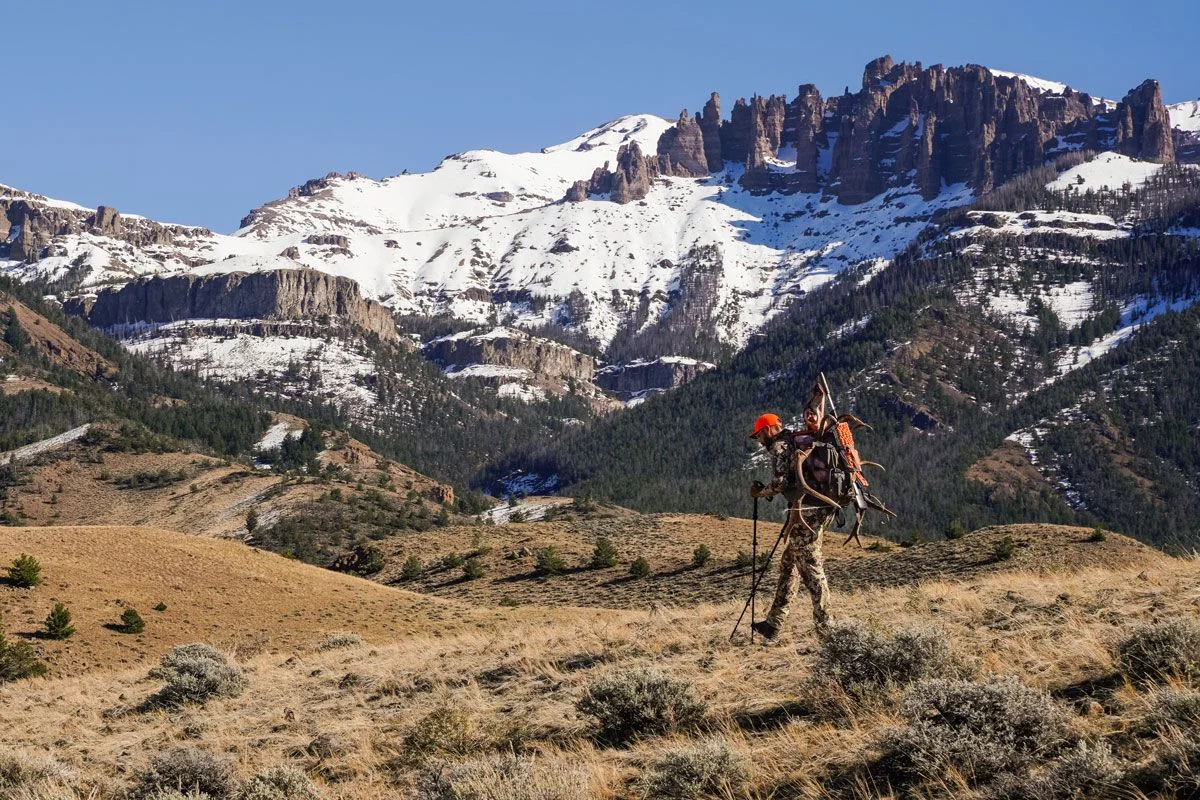
The TRCP has long held that healthy national forests are foundational to quality hunting and fishing. Elk, mule deer, and pronghorn (and many other species) depend on the mosaic of open meadows, mixed conifer forests, and riparian corridors that characterize well-managed national forests.
Trout and salmon depend on cold, clean water that transitioned watersheds provide. When forests are degraded, the hunting and fishing opportunities that millions of Americans enjoy suffers alongside them.
The Fix Our Forests Act does not solve every challenge facing our national forests. The bill must be accompanied by adequate resources and agency capacity to put its tools to work.
Legislation alone cannot substitute for a well-funded, well-staffed agency workforce – but the bill aims to lay critical groundwork that could meaningfully reduce the risk of catastrophic, landscape scale fires that have become increasingly common.
Momentum for meaningful forest and wildfire policy has been building for years. The bipartisan support behind the Fix Our Forests Act – alongside backing from Western governors, state foresters, fire chiefs, conservation organizations, and other stakeholders – reflects a broad consensus that the status quo is no longer acceptable.
While these groups may not agree on every aspect of forest management, they agree that the growing wildfire crisis demands action. Congress has an opportunity to build on that momentum and deliver lasting, science-based solutions before another fire season is upon us.
TRCP urges the Senate to pass the Fix Our Forests Act before the close of the current legislative session. Every fire season that passes without action increases the risk of uncharacteristic wildfires that can devastate watersheds, fragment wildlife habitat, and cause long term closures on public lands that hunters and anglers have depended on for generations.
The forests that make those days afield possible are counting on Congress to act.
A path forward is in sight. It’s time to move.
Future Outlook
As the 119th Congress approaches its final sessions, the legislative trajectory of the Fix Our Forests Act will serve as a critical benchmark for bipartisan environmental policy. Industry experts indicate that if passed, the implementation phase will require intense oversight to ensure federal land agencies receive the necessary funding to deploy these new tools effectively. Land management organizations are already preparing frameworks to utilize the proposed Fireshed Management Areas, aiming to establish proactive defense systems before the peak burning cycles of late 2026 and beyond.
FAQs
What is the primary objective of the Fix Our Forests Act?
The legislation aims to address the building wildfire crisis on national forests by accelerating ecological restoration, expanding the specialized prescribed fire workforce, safeguarding freshwater resources, and improving data sharing across multiple government agencies.
How did the Fix Our Forests Act perform in committee votes?
The bill successfully cleared the Senate Agriculture, Nutrition, and Forestry Committee with a strong bipartisan vote of 18-5 during the legislative session, following its initial passage through the U.S. House of Representatives.
What is a Fireshed Management Area under this bill?
A Fireshed Management Area is a newly designated legislative zone where land managers receive explicit authority to conduct targeted restoration projects, specifically focusing on improving the health of riparian ecosystems and wet meadows to lower severe fire risks.
How does the bill address emergency communication during a wildfire?
The act mandates the creation of a centralized National Wildfire Intelligence Center designed to host real-time wildfire data, which will streamline communication and expedite rapid containment responses among federal, state, local, and tribal agencies.