India Celebrates 45 Years of APPLE Satellite Launch
India is celebrating the 45th anniversary of the launch of the Ariane Passenger Payload Experiment (APPLE). This milestone highlights the nation’s transformative journey from an early experimental phase into a dominant global space power, rooted in the success of its first indigenous communication satellite.
Key Highlights
- 2026 marks exactly 45 years since India launched its first experimental communication satellite.
- The Ariane Passenger Payload Experiment (APPLE) laid the foundation for India’s indigenous space infrastructure.
- The successful launch signalized India’s initial evolution into a contemporary global space powerhouse.
The current year marks the 45th anniversary of the historic launch of the Ariane Passenger Payload Experiment (APPLE). Developed by the Indian Space Research Organisation, this spacecraft served as the nation’s first indigenous experimental communication satellite, a critical milestone that reshaped domestic technological capabilities.
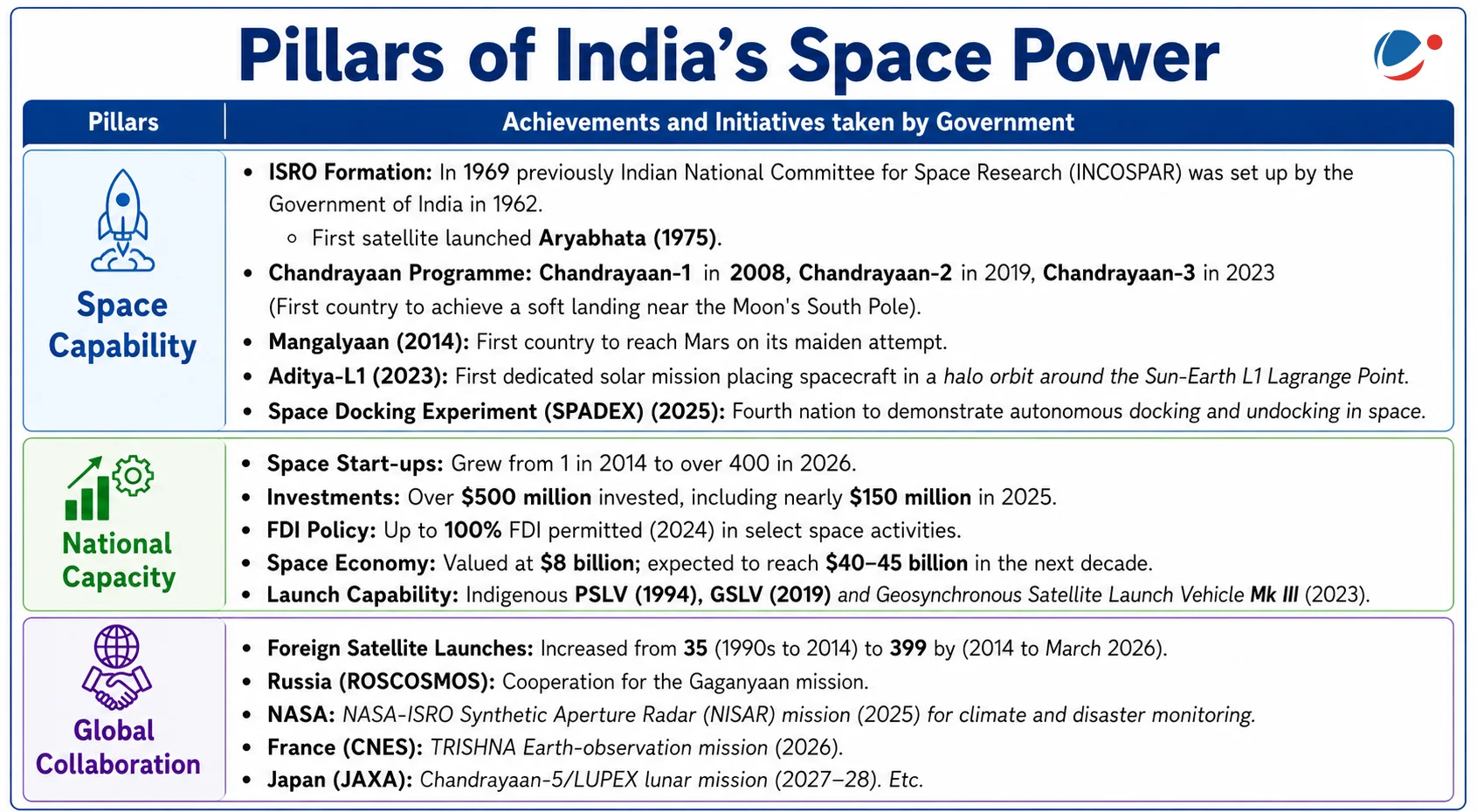
The successful deployment of this spacecraft underscored the early foundations of an extraordinary journey. This achievement directly showcased the ongoing evolution of India as a global space power.
History of India’s Communication Satellite Program
The landmark deployment occurred on June 19, 1981, representing a watershed moment for the Indian Space Research Organisation. Launched aboard the European Space Agency’s Ariane 1 rocket from Kourou, French Guiana, the spacecraft provided vital hands-on experience in geostationary orbital operations.
Engineers utilized the payload to conduct extensive live experiments, covering television broadcasting, emergency telecommunications, and radio networking across the country. This initiative directly paved the way for the robust Indian National Satellite System, which revolutionized national broadcasting, meteorological forecasting, and disaster warning capabilities in subsequent decades.
The project famously required innovative engineering solutions due to infrastructure constraints, including utilizing a traditional wooden bullock cart for critical antenna non-magnetic testing. This iconic imagery symbolized the determination of early Indian space scientists working with limited resources to achieve technological self-reliance.
Throughout its operational lifetime, the spacecraft allowed telemetry, tracking, and command operations to be managed entirely by domestic ground stations. This success validated the capabilities of indigenous mission control centers and solid-fuel apogee kick motors developed within the country.
The satellite itself was a sandwich structure, utilizing a cylindrical momentum bias attitude control system. Despite a jammed solar panel during initial orbital insertion, Indian engineers successfully maneuvered the satellite to maximize solar power collection, showcasing early excellence in real-time space asset management and emergency troubleshooting.
This pioneer project served as a training ground for an entire generation of Indian aerospace engineers and scientists. The technical expertise acquired during the mission laid the groundwork for the subsequent development of the Polar Satellite Launch Vehicle and Geosynchronous Satellite Launch Vehicle families, cementing national autonomy in rocket manufacturing.
Today, the legacy of that initial technology demonstrator lives on through advanced lunar, martian, and deep-space exploration missions. The immense technological leaps achieved since 1981 demonstrate how a single experimental payload established the foundational framework for modern space governance, commercial satellite deployment, and global leadership in aerospace engineering.
FAQs
What was the APPLE satellite?
The Ariane Passenger Payload Experiment (APPLE) was India’s very first experimental communication satellite developed indigenously by the Indian Space Research Organisation.
When was the satellite launched?
The spacecraft was launched into geostationary orbit on June 19, 1981, making 2026 the 45th anniversary of the mission.
Which rocket carried the satellite into space?
The satellite was launched using an Ariane 1 rocket operated by the European Space Agency from Kourou, French Guiana.