ASI Transfers Rakhigarhi Skeletal Remains to AnSI for DNA Study
The Archaeological Survey of India formally transferred ancient human skeletal remains from the historic Rakhigarhi site to the Anthropological Survey of India on June 22, 2026. This strategic handover initiates advanced scientific research into the genetic ancestry, dietary habits, and historical migration patterns of the Indus Valley Civilisation.
Key Highlights
- The Archaeological Survey of India signed a Memorandum of Understanding to transfer Rakhigarhi skeletal remains to the Anthropological Survey of India.
- Researchers will conduct advanced scientific analyses, including ancient DNA extraction and stable isotope studies, at a specialized laboratory in Kolkata.
- The excavation site in Haryana spans 550 hectares, making it the largest known urban settlement belonging to the Harappan Civilization.
- Previous DNA analysis of a 4,600-year-old female skeleton from Mound 7 revealed an absence of the Steppe Pastoral gene.
Ancient human skeletal remnants excavated from the Rakhigarhi archaeological site in Haryana have been officially transferred by the Archaeological Survey of India (ASI) to the Anthropological Survey of India (AnSI). This national research institution, operating under the Ministry of Culture, will perform comprehensive scientific analyses on the remains.
Also Read: The 4,600-year-old woman from Rakhigarhi
Executed under a freshly finalized Memorandum of Understanding (MoU) between both entities, this scientific relocation aims to accelerate multidisciplinary investigations into a major urban center of the “Indus-Saraswati Civilization,” according to AnSI Director Professor B.V. Sharma.
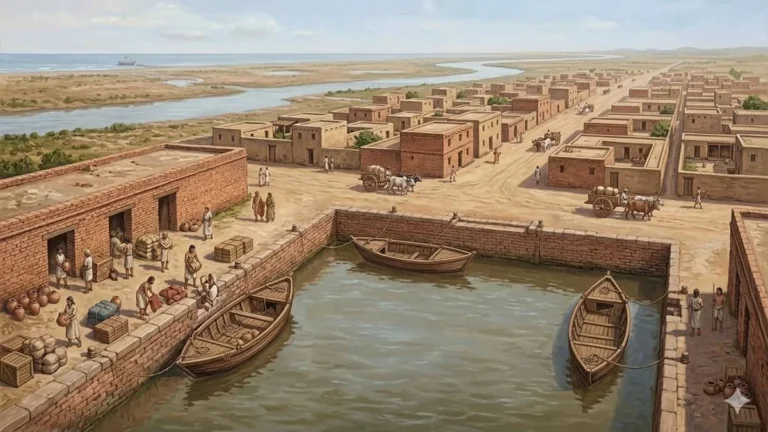
Spanning roughly 550 hectares in Haryana, Rakhigarhi represents the largest recorded settlement linked to the Harappan Civilization. Local excavations demonstrate long-term human residency stretching from the Early Harappan era through the Mature Harappan period, featuring organized urban layouts, sewage networks, manufacturing zones, commercial routes, and cemeteries.
Scientists designated Mound 7 as an ancient burial ground where experts previously unearthed 56 skeletons, including a 4,600-year-old female whose discovery disrupted historical, anthropological, genomic, and linguistic paradigms. Genetic mapping of her remains showed she lacked the Steppe Pastoral gene, intensifying scholarly arguments surrounding Indo-Aryan migratory timelines.
The Union Culture Ministry announced on Monday, June 22, 2026, that three intact human skeletons from Mound 7, alongside assorted bone fragments, reached the specialized ancient human skeletal repository in Kolkata. Officials confirm that the remaining excavated osseous materials will arrive at the laboratory within days.
Government representatives noted that these biological samples offer an unprecedented opening to deploy advanced methodologies. The upcoming scientific regime includes ancient DNA (aDNA) sequencing, stable isotope evaluation, osteological charting, palaeopathological metrics, and prehistoric environmental modeling.
These specialized metrics seek to uncover crucial data regarding lineage, migration corridors, nutritional composition, historical pathologies, survival mechanisms, and ecological dynamics. The AnSI will execute this project alongside the Birbal Sahni Institute of Palaeosciences, University College London, and Banaras Hindu University.
The AnSI recently concluded palaeopathological examinations of remains from multiple Harappan locales and is compiling these academic papers. The acquisition of the Rakhigarhi specimens bolsters national laboratory capacities, while future initiatives will involve partnerships with the Geological, Botanical, and Zoological Surveys of India.
Historical Significance of Rakhigarhi
Located in the Hisar district of Haryana, Rakhigarhi provides critical archaeological evidence regarding the evolution of mature urban planning in South Asia. The continuous habitation layers discovered at the site allow researchers to trace the technological and social transitions of the Harappan Civilization. By analyzing the physical remains and material culture of this expansive settlement, scientists continue to reconstruct the commercial, socio-cultural, and environmental dynamics that shaped early human urbanism.
FAQs
What is the significance of the Rakhigarhi archaeological site?
Rakhigarhi is recognized as the largest known urban settlement of the Harappan Civilization, covering approximately 550 hectares in Haryana. It features archaeological evidence of continuous habitation from the Early to Mature Harappan periods, including complex drainage systems, planned layouts, trade networks, and extensive burial grounds.
Why were the skeletal remains transferred to the AnSI?
The Archaeological Survey of India transferred the remains to the Anthropological Survey of India under a Memorandum of Understanding for advanced scientific analysis. The skeletons will undergo specialized testing in Kolkata, including ancient DNA extraction, stable isotope studies, and palaeopathological research.
What did previous DNA analysis reveal about the Rakhigarhi remains?
Earlier genomic analysis of a 4,600-year-old female skeleton recovered from Mound 7 showed an absence of the Steppe Pastoral gene. This finding has significantly influenced scientific and historical debates regarding the timeline and nature of Indo-Aryan migrations into the Indian subcontinent.
Which scientific institutions are collaborating on this research?
The Anthropological Survey of India is leading the research in collaboration with the Birbal Sahni Institute of Palaeosciences in Lucknow, University College London, and ancient DNA specialists from Banaras Hindu University. Future phases will also involve India’s national geological, botanical, and zoological surveys.