US Senator Warns Against Damaging Election Rhetoric
A prominent Republican lawmaker has issued a stark warning regarding the political discourse surrounding democratic processes, cautioning that continuous attacks on electoral systems threaten to diminish public trust. The lawmaker also directed sharp criticism toward top national intelligence leadership, calling for immediate structural reforms within the federal oversight apparatus.
Key Highlights
- US Senator Thom Tillis urged fellow Republicans to cease challenging electoral legitimacy ahead of the upcoming November midterm elections.
- Tillis criticized the Director of National Intelligence, Bill Pulte, demanding his immediate removal from the administration.
- The North Carolina lawmaker proposed the ultimate abolition of the Office of the Director of National Intelligence to return to a pre-9/11 security framework.
- He advised the Republican party to campaign aggressively on policy achievements rather than revisiting past voting disputes.
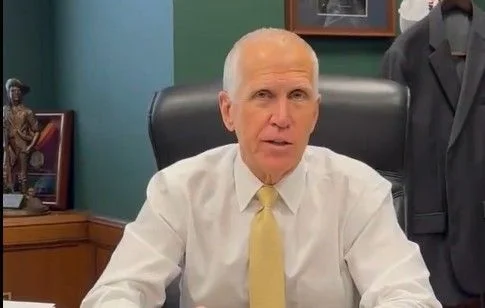
Washington, June 28 (IANS) US Republican Senator Thom Tillis warned on Sunday that continued attacks on the integrity of US elections could undermine public confidence in American democracy, while also renewing his criticism of Director of National Intelligence Bill Pulte.
In an interview on CNN’s State of the Union, Tillis said Republicans should stop questioning the legitimacy of elections ahead of the November midterm polls and instead focus on their record in office.
“I am concerned that we’re going to continue to cast doubt on elections in November and erode what has been a 250-year tradition of a peaceful transition of power,” Tillis said.
The North Carolina senator questioned efforts to rapidly implement new election rules before the midterm elections
“I have people telling me I need to implement the SAVE Act immediately in North Carolina, in a state that has voter I.D.,” he said.
“Why are we doing more things to undermine our confidence in elections, rather than getting the strong message out that will win for Republicans this year?” Tillis added. “Accept that the voting laws are going to be fundamentally what they are today, win by them.”
Instead of revisiting election disputes, Tillis urged Republicans to campaign on policy issues.
“Talk about the emergence and the rise of the Democrat Socialists of America, accept that the voting laws are going to be fundamentally what they are today, win by them. Win by the good results that Republicans have produced, and stop undermining confidence in the elections.”
Tillis also sharply criticised Director of National Intelligence Bill Pulte, saying he should not remain in office.
“I don’t think he should be in the administration, let alone in charge of DNI,” Tillis said.
“He is singularly responsible for 702 beginning to go dark because of a lack of confidence of him in that role. So he needs to get out. We need to get a credible person in the role.”
The senator went further, arguing that the Office of the Director of National Intelligence itself should eventually be abolished.
“I think, ultimately, we should end DNI and go back to the intelligence community, the posture that we had before 9/11,” he said, adding that after 25 years, the US should be able to coordinate intelligence agencies without a separate DNI structure.
The Office of the Director of National Intelligence was created in 2004 following recommendations made after the September 11, 2001, terrorist attacks to improve coordination among US intelligence agencies. The office oversees the country’s 18-member intelligence community and serves as the principal intelligence adviser to the President.
History of the DNI
The Office of the Director of National Intelligence was established by Congress under the Intelligence Reform and Terrorism Prevention Act of 2004. Its creation came as a direct response to the 9/11 Commission Report, which identified significant communication gaps and a lack of centralized coordination among various American spy agencies. Before its inception, the Director of Central Intelligence led both the CIA and the broader intelligence apparatus. Over the last two decades, the office has grown to manage the National Intelligence Program budget and unify the strategic efforts of 18 distinct federal intelligence elements.
FAQs
What concerns did Senator Thom Tillis raise about the upcoming midterm elections?
Senator Tillis expressed concern that ongoing rhetoric questioning the legitimacy of electoral systems would diminish public trust and damage the traditional peaceful transition of power. He urged his party to focus on policy records and conservative legislative achievements instead.
Why is Senator Tillis criticizing DNI Director Bill Pulte?
Tillis stated that Director Pulte lacks the necessary credibility for his leadership role, specifically holding him responsible for complications surrounding Section 702 surveillance authorities. The senator argued that Pulte needs to leave the administration to restore trust.
What structural changes did Tillis propose for the US intelligence community?
The senator recommended completely abolishing the Office of the Director of National Intelligence. He suggested returning the broader intelligence apparatus to its pre-9/11 operational posture, stating that separate coordination structures are no longer necessary after 25 years of integration.