Donald Trump Praises Narendra Modi And Xi Jinping As Classics At G7 Summit
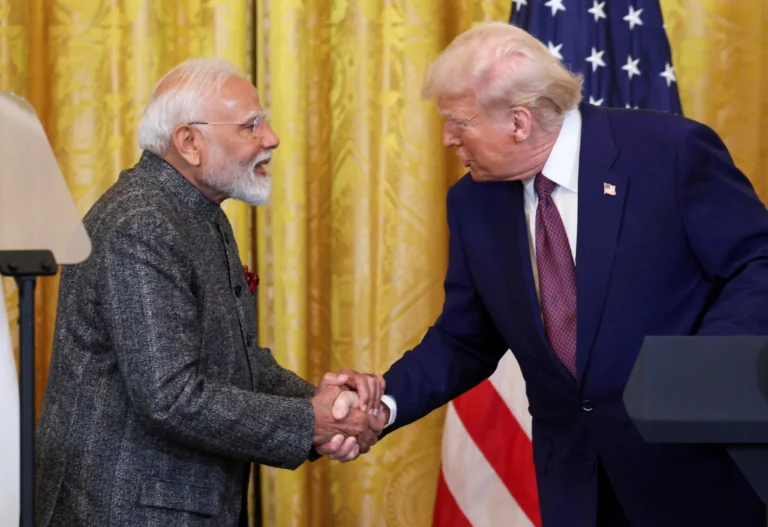
US President Donald Trump highly commended Prime Minister Narendra Modi and Chinese President Xi Jinping during a high-profile interview, characterizing both global leaders as extraordinary figures. The remarks coincided with a pivotal 55-minute bilateral meeting between Modi and Trump held during the G7 Summit in France.
Key Highlights
- US President Donald Trump labeled Prime Minister Narendra Modi and Chinese President Xi Jinping as “classics” of global leadership.
- Trump praised Modi’s 12-year political stability and strategic neutrality in keeping India out of international military conflicts.
- Despite the public adulation, underlying trade tensions persist as Trump labeled Modi a “killer” in economic negotiations.
- Experts warn of Washington’s shifting priorities after the US modified the Indo-Pacific Command framework to accommodate altering ties with Beijing.
Fostering normal diplomatic relations remains difficult once friction develops between close allies. This dynamic was evident during the recent bilateral discussions between Prime Minister Narendra Modi and US President Donald Trump at the G7 Summit in France. The situation stems from Trump’s adversarial approach over the past 16 months. He frequently disregards standard diplomatic decorum, treating allies and adversaries uniformly.
Furthermore, Washington has agitated New Delhi by unilaterally imposing high tariffs while demanding reciprocal duty reductions on American merchandise. India maintained significant diplomatic restraint despite these provocations. New Delhi refrained from aggressive rhetoric throughout this 16-month period, even following the tragic killings of three Indian sailors near the Strait of Hormuz.
Trump previously asserted that he personally averted an India-Pakistan military conflict through severe warnings, driven by his desire for a Nobel Peace Prize. New Delhi initially dismissed these groundless claims. However, Indian officials eventually ignored the statements after realizing this self-praise had become habitual. The latest G7 session indicates that underlying American diplomatic frustrations remain unresolved.
Trump spoke extensively during the 55-minute bilateral assembly. He later lauded the Indian leader, stating that Modi appears exceptionally pleasant but operates as a “killer” through highly stringent, uncompromising negotiation tactics. Trump asserted that Washington would defend India against external aggression during Modi’s tenure. He claimed a bilateral trade pact is imminent, though actual policy moves contradict this optimism.
Washington initially conceptualized the Quadrilateral Security Dialogue in 2007 to align with India and counter Beijing’s maritime assertiveness in the East and South China Seas. The US stated the framework and the Indo-Pacific Command would curb Chinese expansionism. However, strategic experts warned New Delhi against relying on a transactional American administration. Washington’s recent rebranding of that military command to accommodate closer ties with Beijing justifies those early warnings.
US President Donald Trump has named PM Narendra Modi and Chinese President Xi Jinping as the world leaders he most admires, calling them ‘classics’. He praised their leadership styles, political strength, and Modi’s long tenure in office.
During a broadcast of The Axios Show on Friday, Donald Trump explicitly selected Xi Jinping and Narendra Modi as the global figures he holds in the highest regard. The US President affirmed his admiration for Xi’s authoritative governance before shifting focus to the Indian leadership.
Trump Lauds PM Modi
Trump commended Modi’s strategic intelligence, noting that steering a population of 1.5 billion people away from foreign wars is exceptionally smart. He acknowledged India as the largest global population center. Trump noted that while the two democracies engage in massive commercial exchange, the United States now ensures fair business practices are maintained.
The US President remarked that Hollywood could never successfully cast actors to replicate the unique, commanding presence of Xi or Modi. He emphasized that both statesmen represent quintessential archetypes of modern political power.
Praise for Political Stability
Trump expressed profound admiration for Modi’s political durability, noting the Prime Minister has successfully maintained governance for more than 12 years. He contrasted this stability with the historically volatile Indian political theater, which previously witnessed leadership changes every six months to a year. Trump credited Modi’s unique ability to project immense composure while remaining an exceptionally tough leader.
Improved Economic Relations
The US President reiterated that bilateral commercial ties reached an optimal state under his administration. Trump insisted that economic engagements with India have transitioned into a mutually beneficial framework. He concluded by emphasizing that both leaders wield unmatched geopolitical authority.
Future Outlook
The geopolitical landscape surrounding India-US relations faces structural realignment. While personal camaraderie between state heads often yields positive media coverage, trade policy friction and fluctuating multilateral alliances will dictate long-term outcomes. India’s adherence to strategic autonomy will face tests as Washington recalibrates its approach to the Indo-Pacific region to balance ties with China.
FAQs
What did Donald Trump say about Narendra Modi at the G7 Summit?
Donald Trump praised Narendra Modi as a great leader and a classic figure, balancing personal compliments by calling him a tough negotiator or killer in bilateral trade discussions.
How long did the bilateral meeting between Modi and Trump last?
The bilateral dialogue between the two heads of state lasted for exactly 55 minutes on the sidelines of the G7 Summit in France.
How long has Narendra Modi been in office according to the reports?
Prime Minister Narendra Modi has maintained continuous political stability at the helm of the Indian government for more than 12 years.
Why did India maintain diplomatic restraint against the US?
India chose diplomatic patience to preserve long-term bilateral ties despite facing aggressive trade tariffs and unsubstantiated claims regarding regional conflict mediation from the US administration.