US-India Relations Face Strategic and Tariff Strain Amid Friction
Diplomatic and economic engagements between New Delhi and Washington navigate complex strategic friction and trade challenges following recent policy shifts.
Key Highlights
- Bilateral ties between India and the United States face operational strain over trade tariffs and global stability approaches.
- A G7 summit meeting between Prime Minister Modi and President Trump aimed to bridge the recent bilateral trust deficit.
- A landmark US Supreme Court ruling in February 2026 dismantled previous punitive duties, shifting Washington to a temporary global tariff.
- Both nations maintain a shared target to expand bilateral trade from $212 billion to $500 billion by 2030.
There is no denying the fact that a good degree of warmth was reflected during the bilateral interaction, but dissonance in the strategic and economic ties also existed.
India and the United States, in recent times, have witnessed some strain in their bilateral relationship, especially because of changes in US policy towards India. The pace at which the bilateral relationship and constructive engagement evolved over the years experienced friction over issues such as trade, tariffs, and various other factors impacting global peace and stability. Though “Trump 1.0” never saw any changes in policy towards India, “Trump 2.0” has drastically changed its stance on many issues; hence, the momentum built in the India-US strategic equation saw differences in their bilateral approaches.
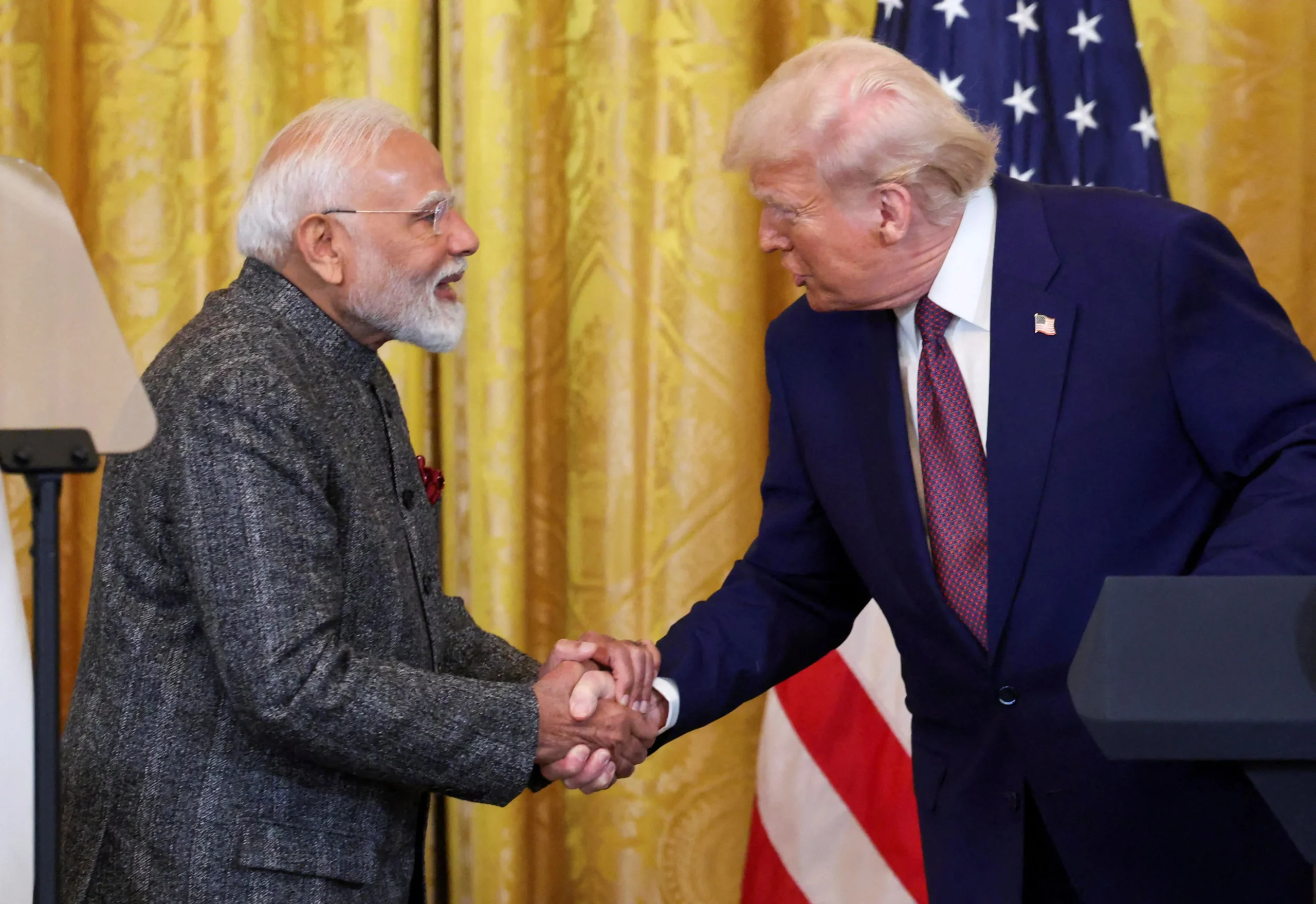
The bilateral interaction held between Prime Minister Modi and President Trump on the sidelines of the G7 Summit in Evian, France, perhaps provided significant pointers suggesting that the US is again looking towards India as a “reliable partner” and that the trust deficit created in the recent past needs to be bridged. Since January 2025, the US has used “tariffs” as a major weapon against the rest of the world in general, and India in particular. This was perhaps the most important reason for Indo-US ties moving in a different direction. As the US policy on tariff issues unfolded, the US Supreme Court issued a ruling in February 2026 that struck down previous country-specific punitive duties. The strategic landscape of tariffs as an instrument of US foreign policy changed, and the US had to announce a temporary 10% global tariff applicable to all countries, including India. At one point, tariffs had peaked at 50% in mid-2025—which were deemed illegal by the Supreme Court—and henceforth, both the US and Indian governments began a repatriation and refund process for billions of dollars in collected duties.
The trade deal between the US and India remained central to the bilateral interaction between Trump and Modi. The delay in the deal was perhaps seen as a cause for uncertainty in bilateral relations. There is now a new momentum that would help in agreeing to a trade deal. India is obviously working to build a win-win situation and has been negotiating with objectivity and a rationale for promoting an even export-import ratio. There is a plan to enhance bilateral trade from the current US$212 billion to US$500 billion by 2030. The US also sees a greater interest in enhancing the volume of trade and realizing the full potential of India’s emergence as a huge commercial market.
The tougher stance taken by the US on both trade and immigration has also been perceived as a major stumbling block in promoting bilateral interests. Both Prime Minister Modi and President Trump reflected their personal chemistry during the interaction on the sidelines of the G7 Summit. Trump was very categorical in stating that “India plays a big role in everything.” This certainly connotes that India has become a part of the solution to many global problems. Trump wanted India to play a bigger role in West Asia, and India’s emphasis on “Peace through Diplomacy” will perhaps be the solution to the continuing crisis.
The reference made by India’s Prime Minister, Narendra Modi, regarding the “Gulf of Oman” attacks—where he reflected on the safety issue of Indian seafarers and how best they could be protected—was noted. “Freedom of Navigation” was yet another issue brought to the notice of the US President.
The future trajectory of Indo-US bilateral relations will very much depend on how quickly the trade agreement is realized and whether India’s plea for preferential access to the US market finds a place in the deal. The finalization of the trade deal should be expedited at the fastest pace. The visit of US Trade Representative Jamieson Greer in the next few days will perhaps help in moving ahead, though his recent proposal—which seems to include additional tariffs of up to 12.5% on imports from 60 economies, including India—will require further negotiation.
India and the US will need to work together for a better world in the existing international security environment. The onus lies on President Trump to steer his foreign policy towards India, where there could be convergences on all important, pertinent areas impacting global peace and stability.
Future Outlook
The upcoming diplomatic itinerary remains crucial for stabilizing the trade corridor. The imminent arrival of US Trade Representative Jamieson Greer is expected to catalyze conversations surrounding market access. However, deep-seated friction remains regarding proposals for an extra 12.5% import duty targeting 60 sovereign economies. Resolving these fiscal disparities will dictate whether New Delhi can successfully secure preferential commercial entry into American consumer markets before 2030.
FAQs
What is the current volume of trade between India and the United States?
Bilateral trade between the two nations currently stands at $212 billion, with an official strategic target to expand total commerce to $500 billion by the year 2030.
How did the US Supreme Court influence trade tariffs in 2026?
The US Supreme Court issued a judicial ruling in February 2026 that invalidated country-specific punitive duties, forcing the administration to transition to a baseline temporary global tariff of 10%.
What global security issues were discussed by the leaders at the G7 Summit?
Prime Minister Modi highlighted maritime safety challenges affecting Indian seafarers following attacks in the Gulf of Oman, while emphasizing the critical importance of maintaining freedom of navigation in international waters.