Prime Minister Narendra Modi Sets New Indian Governance Tenure Record Discover how Prime Minister Narendra Modi surpassed historical tenures to set a democratic governance record in India by June 2026. Narendra Modi tenure record narendra-modi-sets-governance-tenure-record Narendra Modi, Indian politics, longest serving prime minister, democratic governance, economic growth, COVID-19 response politics
Prime Minister Narendra Modi Sets New Indian Governance Tenure Record Discover how Prime Minister Narendra Modi surpassed historical tenures to set a democratic governance record in India by June 2026. Narendra Modi tenure record narendra-modi-sets-governance-tenure-record Narendra Modi, Indian politics, longest serving prime minister, democratic governance, economic growth, COVID-19 response politics
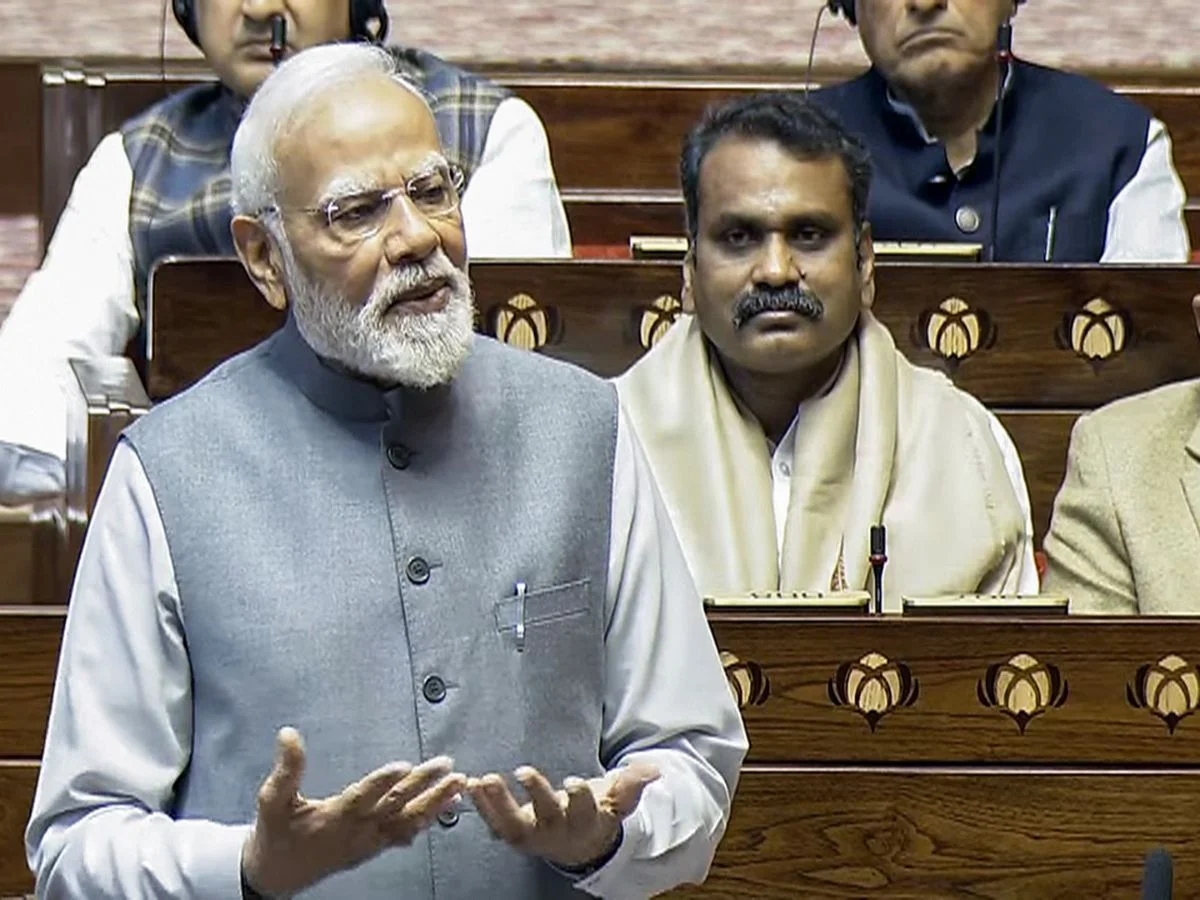
Prime Minister Narendra Modi reached a historic milestone on June 10, 2026, by becoming India’s longest-serving elected head of government, navigating complex socio-political dynamics and global crises to secure a legacy defined by sustained popular mandates and transformative national development.
Key Highlights
- Prime Minister Narendra Modi completed 4,399 consecutive days in office on June 10, 2026, surpassing the previous record.
- India’s gross domestic product expanded by 105% over a decade, reaching $4.3 trillion in 2026.
- The administration successfully delivered 2.2 billion vaccine doses domestically and distributed 300 million doses globally.
- The 2024 general election established the administration as the first non-Congress government to secure three consecutive terms.
LONGER IN OFFICE, LARGER IN DELIVERY
Global political longevity offers a benchmarks for comparison, illustrating the scale of the current administration’s electoral achievements. Singapore’s development under leadership spanning 31 years occurred within a tightly controlled city-state of fewer than 3 million residents.
In contrast, India’s governance operates across a highly competitive, diverse democracy of 1.4 billion people. This environment features an active media landscape and an independent judicial framework that routinely evaluates political performance.
Similarly, international models like Japan’s economic interventions over nearly nine years or Germany’s 16-year reunification era relied heavily on specific geopolitical conditions or pre-existing institutional frameworks.
The current administration inherited a system where 270 million citizens lacked basic banking access and systemic inefficiencies compromised public welfare delivery, shifting the state relationship with vulnerable populations from systemic exclusion to direct resource distribution.
A DECADE OF VISIBLE CHANGE
Macroeconomic data highlights significant structural shifts, with gross domestic product doubling from $2.1 trillion in 2015 to $4.3 trillion in 2026.
India currently ranks as the fourth-largest global economy, recording a 7.6% growth rate for fiscal year 2026 while positioning itself to secure the third position by 2030.
Infrastructure metrics show the national highway network expanded by 61%, growing from 91,287 km in 2014 to more than 1,46,560 km, with daily construction acceleration rising from 8 km to 33 km.
Digital financial architecture expanded through the Unified Payments Interface, which managed 21.70 billion transactions in January 2026 alone, representing 49% of all global real-time digital payments.
Financial inclusion initiatives advanced significantly, establishing more than 55 crore Jan Dhan accounts to integrate previously unbanked segments of the population directly into the formal financial ecosystem.
THE POST-COVID VERDICT: AN ANOMALY WITHOUT PARALLEL
The global political fallout from the pandemic disrupted governing parties across multiple continents, creating difficult re-election conditions for incumbent administrations.
In the United Kingdom, a historic 80-seat parliamentary majority secured in 2019 dissolved by 2022 due to public dissatisfaction with pandemic management policies.
The United States experienced an incumbent transition during the 2020 presidential election, where public health management served as a central point of political debate.
Australia witnessed a leadership change in 2022, while Canada’s administration was reduced to a minority government configuration dependent on opposition consensus.
France’s 2022 presidential election resulted in a narrow victory against polarizing opposition, while governing coalitions across Germany, Italy, New Zealand, and South Korea faced major electoral setbacks.
The public health crisis required an unprecedented domestic mobilization, resulting in the administration of more than 2.2 billion vaccine doses utilizing the CoWIN digital infrastructure.
International health cooperation expanded through the Vaccine Maitri program, exporting nearly 300 million doses to approximately 100 developing nations under regional diplomatic frameworks.
The 2024 general elections delivered a third consecutive mandate, marking the first time a non-Congress administration secured three successive terms in modern Indian political history.
Sustained electoral support stems from targeted welfare systems, including direct cash transfers, subsidized housing, sanitation infrastructure, and clean cooking gas access for lower-income households.
This political durability relies on the absence of a unified opposition coalition and substantial centralized political capital developed through structured public communication over more than two decades.
The underlying electoral trend indicates that voting behavior aligned closely with measurable improvements in daily living standards and household socioeconomic security.
THE DEMOCRATIC VERDICT
Continuous success in a democratic framework serves as an objective indicator of public trust, requiring verification through regular local and national electoral processes.
Securing three successive terms across a vast socio-economic spectrum represents a notable case study in contemporary democratic governance and leadership continuity.
The electoral outcome reflects long-term public alignment with the administration’s policy framework and governance paradigm over a ten-year observation period.
As political organizations prepare for the 2029 general elections, the current administration continues to maintain significant momentum based on its established policy implementation record.
| Key Governance Indicator | Baseline Value (2014/2015) | Current Value (2026) | Growth / Impact Metric |
|---|---|---|---|
| Gross Domestic Product | $2.1 trillion | $4.3 trillion | 105% increase |
| National Highway Network | 91,287 km | Over 1,46,560 km | 61% expansion |
| Highway Construction Rate | 8 km/day | 33 km/day | 312.5% speed increase |
| Jan Dhan Banking Accounts | 0 | Over 55 crore | Massive financial inclusion |
| UPI Monthly Transactions | Minimal | 21.70 billion (Jan 2026) | 49% of global digital payments |
| COVID-19 Vaccine Doses | 0 | 2.2 billion (Domestic) | 300 million exported globally |
Future Outlook
As the administration moves past its milestone date in 2026, the strategic focus shifts toward the 2029 general elections and long-term economic targets. Economists project that maintaining the current 7.6% growth trajectory will successfully position India as the world’s third-largest economy by 2030.
The structural changes in digital payments and physical infrastructure are expected to catalyze further private capital investment, while the welfare delivery framework will likely expand to address emerging urban poverty challenges alongside established rural programs.
FAQs
What milestone did Prime Minister Narendra Modi reach on June 10, 2026?
On June 10, 2026, Prime Minister Narendra Modi completed 4,399 consecutive days in office, surpassing Jawaharlal Nehru to become India’s longest-serving elected Prime Minister.
How much did India’s economy grow under the current administration?
India’s GDP expanded by 105%, rising from $2.1 trillion in 2015 to $4.3 trillion in 2026, making it the fourth-largest economy globally.
What was the scale of India’s vaccination program?
India administered over 2.2 billion domestic vaccine doses using the CoWIN platform and exported nearly 300 million doses to around 100 countries through the Vaccine Maitri initiative.
What is the current status of India’s highway infrastructure?
The national highway network grew by 61% from 91,287 km in 2014 to more than 1,46,560 km by 2026, with construction speeds increasing to 33 km per day.
Why is the 2024 election outcome considered historically unique?
The 2024 general election marked the first time in Indian political history that a non-Congress government secured a third consecutive term in office.