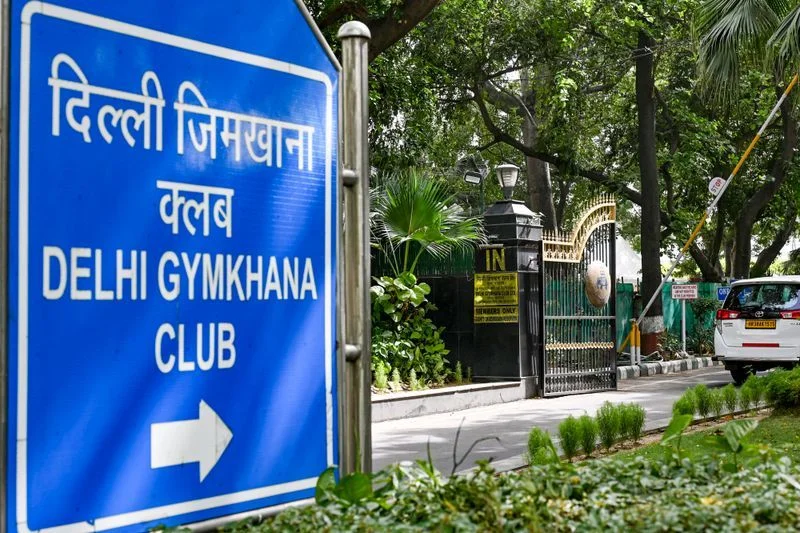
Delhi Gymkhana Club Takeover Sparking Intense Debate
The central government’s escalating moves toward acquiring Delhi’s historic Gymkhana Club have triggered heavy debate across the capital. While official channels cite security necessities, the developing legal and political confrontation highlights deeper structural tensions surrounding elite real estate, institutional autonomy, and shifting political landscapes.
Key Highlights
- The central government is moving toward a full administrative takeover of the 27-acre Gymkhana Club estate.
- Official narratives cite defense and national security requirements as the primary justification for the acquisition.
- Analysts suggest the move targets symbolic elite spaces under the political rhetoric of dismantling colonial legacies.
- Legal experts anticipate final judicial reviews will heavily influence the future of similar legacy institutions across India.
Delhi’s elite social circles are buzzing with intense speculation regarding the central government’s systematic administrative takeover of the historic Gymkhana Club. While the legal process remains ongoing, expectations grow that the higher judiciary—following precedent-setting verdicts on major national issues—will ultimately validate the state’s intervention in this prominent South Delhi institution.
Observers largely discount the official justification that the 27 acres of prime land are required strictly for national security and defense infrastructure. This rationale is frequently deployed during state actions that aggressively test conventional legal boundaries and established administrative norms.
Consequently, alternative theories regarding the sudden intervention abound, ranging from internal financial mismanagement and unpaid government dues to extreme security calculations aimed at preventing foreign-style political insurrections. Others view it as a strategic real estate play designed to benefit state-aligned corporate entities, though such theories assume a level of economic rationality that past policy decisions do not always demonstrate.
The ruling dispensation relies heavily on powerful national narratives to sustain its political dominance. These frameworks connect idealized depictions of ancient Indian achievements with ambitious modern milestones, projecting India as a global leader targeting developed nation status by 2047 and net-zero emissions by 2075. Continuous institutional promotion transforms these concepts into accepted political realities, maintaining electoral momentum.
The targeted institution has fallen victim to two specific political narratives: the alleged subversion by entrenched Lutyens’ Delhi elite networks and the necessity of erasing persistent colonial influences. Both concepts are applied selectively to reinforce the state’s populist agenda.
The assumption that the privileged inhabitants of the capital’s core function as an active opposition hub is fundamentally flawed. The 2,800-hectare Lutyens’ zone is overwhelmingly populated by ruling party politicians, highly compliant bureaucrats, and state-vetted corporate leaders who benefit from massive public subsidies.
Furthermore, internal demographics reveal that an overwhelming 75% to 80% of retired bureaucratic and military members state-wide actively support the ruling party’s core ideology. An additional 10% to 15% remain entirely silent to protect their state pensions, leaving no viable internal political opposition.
With the capital’s elite spaces already politically aligned, the aggressive takeover serves primarily as an ideological tool. The campaign against colonial mindsets functions as a convenient distraction from systemic governance challenges, offering a highly visible target to mobilize working-class voters.
Presenting the club as an exclusionary luxury zone allows the state to project itself as a champion of the underprivileged. This narrative contrasts elite subsidies against state welfare programs feeding 800 million citizens, effectively shifting public attention away from major corporate concessions.
This institutional intervention marks the beginning of a broader national strategy targeting elite spaces. Regional authorities in Maharashtra have already issued administrative notices to 16 prominent clubs in Mumbai, demonstrating a replicated pattern. Authoritarian governance models routinely require an internal adversary to maintain public mobilization, rendering historic civic associations highly vulnerable.
Ultimately, the dissolution of these traditional spaces signals a permanent shift in the civic landscape. While long-standing administrative procedures often delayed membership access for over 10 years, the loss of these historical legacy institutions alters the cultural fabric of the metropolis.
History of India’s Colonial Clubs
The establishment of elite social clubs in India dates back to the 19th century under British colonial rule, designed originally as exclusive spaces for European military and civilian administrators. The Delhi Gymkhana Club, founded in 1913, served as a central social hub during the construction of the new imperial capital by Edwin Lutyens. Following independence in 1947, these institutions transitioned to Indian administration, becoming deeply integrated with the country’s diplomatic, military, and bureaucratic echelons. In recent years, these properties have faced increased scrutiny over land-use terms, subsidised rental agreements, and their historical connection to colonial-era social structures.
FAQs
Why is the government taking over the Gymkhana Club?
The central government has officially stated that the 27-acre estate is required for national security and defense purposes. However, political analysts view the move as part of a broader ideological campaign targeting elite spaces and colonial-era legacies.
How big is the Gymkhana Club estate?
The historic property spans 27 acres of prime real estate in the heart of New Delhi’s highly secure administrative zone.
Are other social clubs facing similar government action?
Yes, the strategy is expanding beyond the capital. Authorities in Maharashtra have already issued official administrative notices to 16 prominent heritage clubs across Mumbai.
What is the political significance of Lutyens’ Delhi in this context?
While political rhetoric frames Lutyens’ Delhi as an opposition stronghold, demographic realities show the 2,800-hectare zone is predominantly occupied by ruling party officials, state-aligned industrialists, and compliant public servants.