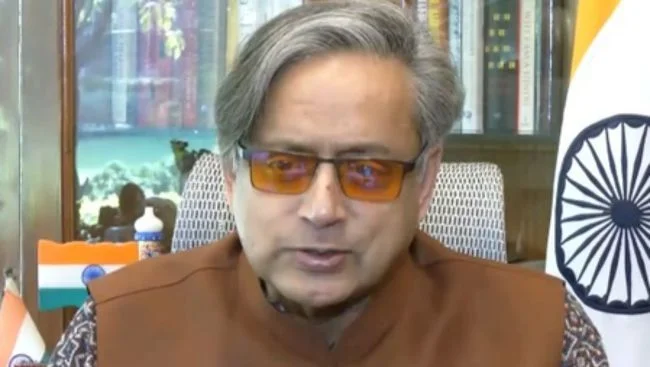
Kharge Slams Government Over High Fuel Prices Amid Lower Global Crude
Congress president Mallikarjun Kharge launched a blistering attack against the Central government on Saturday, questioning why domestic petrol, diesel, and liquefied petroleum gas prices remain exorbitantly high despite global crude oil rates plummeting to pre-conflict levels, effectively accusing the administration of financial exploitation.
Key Highlights
- Congress chief Mallikarjun Kharge condemned the ruling party for tightening control over public savings despite a sharp fall in global crude oil to $70.71 per barrel.
- Fuel prices remain high at Rs 102.12 for petrol and Rs 95.20 for diesel, compared to lower rates when crude peaked at $138 per barrel.
- The opposition demanded a rollback on commercial and domestic LPG cylinders, noting that supply chains have fully normalized.
- Kharge alleged that the public has been reduced to a mere tool for tax extraction to boost treasury collections.
The Congress chief said, when the war in West Asia was at its peak, crude oil was at USD 138 per barrel; Back then, petrol was Rs 94.77 a litre and diesel Rs 87.67 a litre, he said, adding that today, crude oil has fallen to USD 70.71 per barrel
Congress leader Mallikarjun Kharge publicly criticized the administration on Saturday regarding elevated fuel costs, pointing out that international crude rates have retreated to levels seen before the West Asian geopolitical conflict.
The opposition leader accused the Bharatiya Janata Party of systematically depleting public wealth through unfair tax collections, asserting that citizens are being treated merely as financial revenue sources for the state.
Kharge demanded an explanation for why the population must pay inflated prices for essential commodities like petrol, diesel, and cooking gas while global crude indices experience steep declines.
In a social media communication published in Hindi on X, the Congress president characterized the government’s fiscal approach as a predatory habit that continues to strain ordinary household savings instead of providing financial relief.
Presenting three direct challenges to the current administration, the leader noted that international crude prices reached $138 per barrel during the height of the West Asian military hostilities.
During that high-conflict period, domestic retail rates for petrol stood at Rs 94.77 per litre, while diesel was priced at Rs 87.67 per litre. Kharge highlighted that global crude has since dropped to $70.71 per barrel.
He questioned the economic justification for the Modi administration maintaining retail petrol prices at Rs 102.12 per litre and diesel at Rs 95.20 per litre given the massive drop in import costs.
The Congress chief stated that the government previously doubled commercial liquefied petroleum gas rates by blaming wartime disruptions. He demanded to know why these prices have not been reversed now that global supply logistics have stabilized.
Every primary energy category, including domestic cooking cylinders, five-kilogram canisters utilized by migrant workers, and compressed natural gas, has seen steep price hikes under the current administration.
With international market conditions returning to safety, Kharge asked why the government exhibits extreme hesitation when required to implement retail price reductions.
The opposition leader emphasized that citizens bore the financial burden when global energy raw materials were expensive, yet they receive no benefit now that costs have decreased.
The Rajya Sabha opposition leader concluded that the public has evidently been transformed into a captive asset for the ruling party to maximize its domestic tax revenues.
The Indian National Congress has consistently challenged the National Democratic Alliance over its refusal to align domestic fuel costs with descending international benchmarks, labeling the strategy an direct extraction of public funds via steep duties.
Historical Context
The pricing mechanism for domestic fuel in India has long been a flashpoint between the ruling dispensation and the opposition. While the government officially deregulated petrol prices in 2010 and diesel prices in 2014 to reflect market dynamics, state-run oil marketing companies frequently freeze retail adjustments during crucial periods. The opposition asserts that the central government has counteracted falling global oil prices over the last several years by repeatedly raising excise duties, thereby absorbing the financial upside into the fiscal treasury rather than passing savings to consumers.
FAQs
Why is the opposition criticizing the government over fuel prices?
The opposition, led by Congress president Mallikarjun Kharge, states that the government is keeping domestic petrol, diesel, and LPG prices high despite international crude oil falling significantly to $70.71 per barrel.
What were the fuel prices when global crude was at $138 per barrel?
When global crude prices peaked at $138 per barrel during the West Asian conflict, domestic petrol in India was sold at Rs 94.77 per litre and diesel was priced at Rs 87.67 per litre.
What are the current retail rates for petrol and diesel according to the report?
Despite lower international crude oil costs, domestic retail prices are being maintained at Rs 102.12 per litre for petrol and Rs 95.20 per litre for diesel.
Which other petroleum products have seen price increases?
Beyond petrol and diesel, the prices of commercial and domestic LPG cooking cylinders, five-kilogram small cylinders used by migrant populations, and compressed natural gas have all been increased.