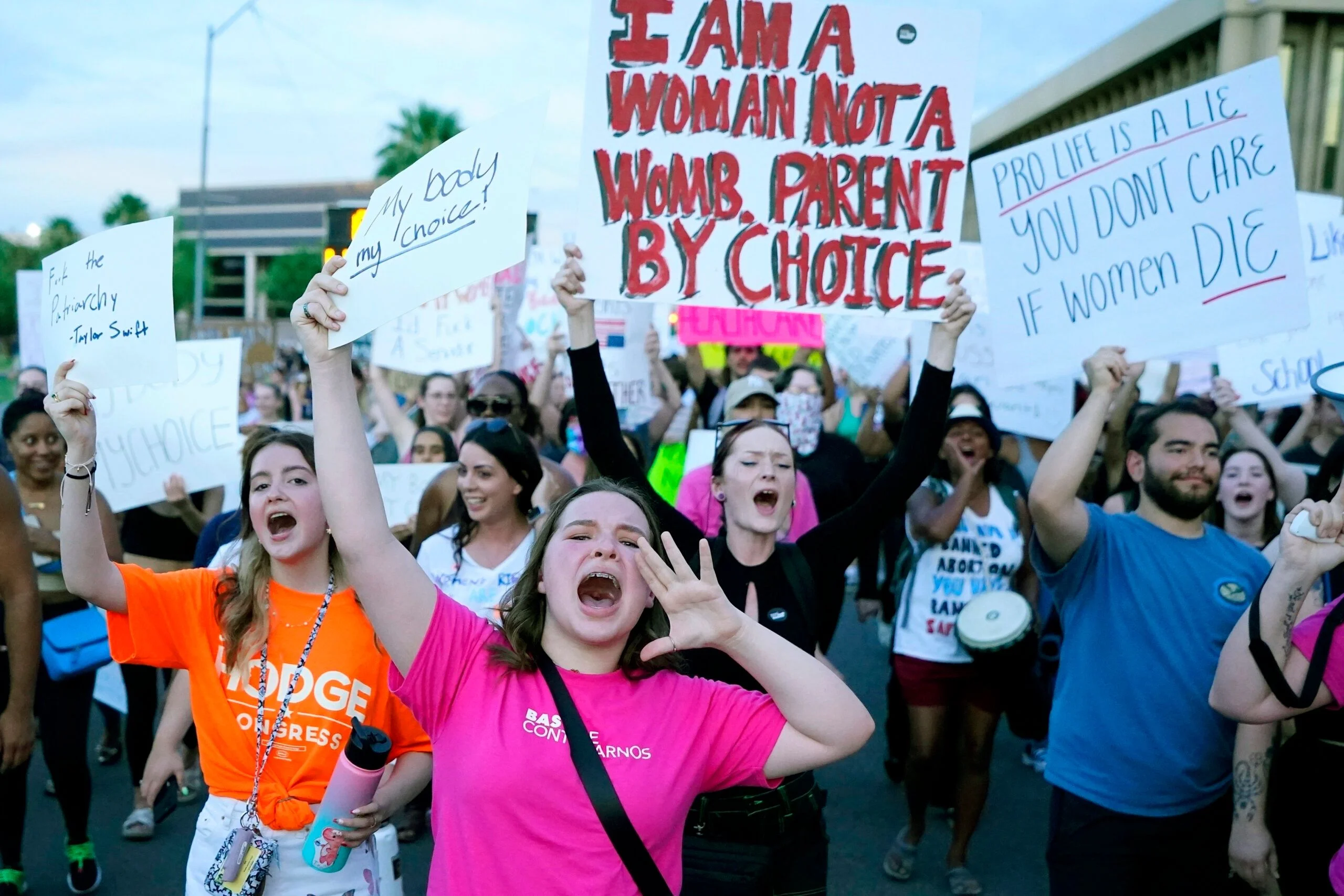
Arizona Democrats Lean on Abortion for 2026 Vote
Arizona political leaders and reproductive rights organizers are actively working to position abortion access as a central, decisive issue for voters in the upcoming 2026 election cycle. Strategists aim to leverage the topic to influence key battleground races for the governorship and the attorney general office.
Key Highlights
- Proponents plan to connect reproductive healthcare access directly to voter anxieties regarding the current cost-of-living crisis.
- A national campaign will inject $23.5 million into battleground races to support candidates who favor abortion protections.
- Republican legislative leaders are mounting legal appeals to preserve statutory restrictions struck down by courts.
Reproductive rights advocates want abortion to be a “defining” issue in 2026 election
State officials and advocacy groups are shifting their political focus toward the next electoral cycle. They argue that protecting reproductive healthcare remains incomplete despite recent constitutional victories achieved by voters.
Abortion could be central to the races for governor and attorney general
The upcoming electoral matchups will decide control of the executive branch and top legal posts. Advocates state these roles are critical for either enforcing or challenging existing reproductive healthcare restrictions.
Advocates are connecting abortion access to broader economic concerns
Campaign organizers assert that the ability to plan a family directly impacts household financial stability. They intend to message abortion rights as an fundamental component of regional economic health.
Voters in the state face a complex landscape of ballot decisions this November. Despite the crowded field of issues, Governor Katie Hobbs and reproductive freedom organizations are pushing to elevate medical privacy to the forefront of public consciousness.
Constitutional protections were altered in 2024 via the passage of Proposition 139. This citizen-led initiative enshrined abortion rights into the state constitution shortly after Hobbs signed legislation wiping away an 1864 territorial law that banned the procedure entirely.
However, advocacy coalitions declare that substantial political stakes remain active. They point to ongoing efforts by conservative lawmakers to pass secondary regulations and contest the amendment within the judicial system.
Speaking on the anniversary of the judicial decision that dismantled federal abortion protections, Hobbs stood alongside healthcare practitioners, university students, and representatives from Reproductive Freedom for All to argue for sustained political focus into 2026.
The governor noted on June 24 that the passage of Proposition 139 did not instantly dissolve institutional obstacles or eliminate systemic difficulties regarding healthcare delivery.
Advocates identify the Republican-majority state legislature as a primary obstacle. They claim lawmakers are disregarding public sentiment by introducing measures that systematically restrict the parameters of the newly established constitutional right.
Throughout her tenure, Hobbs has utilized her veto power to block multiple abortion-related bills. These vetoed measures included statutory language establishing fetal personhood, mandating specific fetal growth curricula in public academies, and restricting late-term medical procedures.
The governor additionally attempted to advance legislation removing state reporting mandates on medical providers and strengthening legal safeguards for birth control access. Those executive efforts were quickly blocked by legislative leadership.
Another major political hurdle is the upcoming gubernatorial race where Hobbs faces re-election. The two congressional representatives competing for the Republican nomination have established public records opposing abortion access during their tenures in Washington.
Congressmen Andy Biggs and David Schweikert have consistently aligned with anti-abortion platforms, backing federal statutory restrictions. In a recent policy assessment by the Center for Arizona Policy, Schweikert affirmed he would back a legislative initiative to rescind Proposition 139.
Campaign records show Biggs declined to complete the policy assessment. When pressed on whether the congressman would support a legislative referral to overturn the constitutional amendment, campaign representative Drew Sexton avoided a direct response.
Sexton issued a statement accusing Hobbs of focusing on past social issues to obscure an active investigation into executive actions and economic policies that dropped the state to 45th in national affordability metrics.
Athena Salman, managing regional campaigns for Reproductive Freedom for All, stated on June 24 that the lack of direct commentary from conservative candidates indicates they recognize their legislative records diverge from majority public opinion.
Salman observed that candidates in competitive, politically divided regions are softening their public rhetoric because extreme positions on reproductive restrictions serve as a primary vulnerability during general elections.
To counter opposition campaigns, Reproductive Freedom for All launched a $23.5 million national electoral initiative named “My Body, My Ballot.” The funding is earmarked to reinforce campaigns for Hobbs and allied down-ballot candidates.
The advocacy group emphasized that voters must assess reproductive policy positions when casting ballots for local legislative races, aiming to alter majority control and shield vulnerable executive seats.
Salman specifically highlighted the upcoming attorney general race, criticizing Senate President Warren Petersen and House Speaker Steve Montenegro for acting as alternative legal officers to defend statutes neutralized by Proposition 139.
The campaign director noted that while the constitutional amendment marked a major advancement, legislative leadership has expended $800,000 in public funds attempting to sustain invalidated restrictions.
Following the solidification of Proposition 139, a coalition including individual physicians and the Arizona Medical Association initiated lawsuits against a broad array of state medical regulations, utilizing legal representation from civil liberties organizations.
The litigation targeted state mandates enforcing mandatory waiting periods, pre-procedural counseling scripts, prohibitions on telemedicine prescriptions for medication abortions, and bans on procedures tied to genetic anomalies.
Petersen and Montenegro assumed the legal defense of the regulations after Attorney General Kris Mayes declined to defend the statutes. In a February judicial decree, Maricopa County Superior Court Judge Greg Como invalidated the contested regulations.
Como noted in the judicial opinion that the universal suppression of professional medical discretion and patient autonomy rendered the statutory schemes unconstitutional under the new framework.
Legislative leaders are actively appealing the decision. In a legal brief filed June 18, counsel for the legislature argued that Proposition 139 was intended only to preserve the regulatory framework that existed under previous federal legal precedents.
Former judicial official Andrew Gould, representing the legislature, wrote that the lower court erroneously extended the amendment to dismantle standard health and safety rules that were legally sound for decades.
The explicit text of Proposition 139 establishes an individual’s fundamental right to obtain an abortion, forbidding the state from interfering unless demonstrating a compelling public interest executed through the narrowest possible mechanism.
With appellate litigation pending and Petersen campaigning to replace Mayes, reproductive rights groups view the upcoming political cycle as a critical defensive juncture.
Hobbs and campaign organizers acknowledged that voters are managing immediate financial pressures stemming from inflationary trends. However, they maintained that reproductive health choices remain fundamentally tied to household economic security.
The governor stated that preserving healthcare access and ensuring families can expand safely is structurally connected to regional economic stability, describing the issues as components of a singular policy agenda.
Future Outlook
The legal battles over Arizona’s abortion laws will likely culminate in a definitive ruling by the State Supreme Court, setting a precedent for how constitutional amendments passed by voters filter down into state health codes. Politically, the $23.5 million investment by national groups indicates that Arizona will remain a primary focus for national spending through 2026. The success or failure of the economic messaging strategy deployed by Democrats will provide a template for matches in other politically divided states.
FAQs
What is Proposition 139 in Arizona?
Proposition 139 is a citizen-approved constitutional amendment passed in 2024 that guarantees individuals a fundamental right to abortion within the Arizona State Constitution.
Why are Arizona lawmakers still in court over abortion?
Republican legislative leaders are appealing a court ruling that struck down several state regulations, arguing that Proposition 139 was only meant to protect basic access rather than eliminate long-standing health and safety rules.
How much money is being spent on the Arizona abortion campaign?
Reproductive Freedom for All has dedicated $23.5 million to a national campaign called “My Body, My Ballot,” which intends to support pro-choice candidates in competitive states like Arizona.