PM Modi and Armenian PM Pashinyan Strengthen Ties After West Asia Repatriation
Prime Minister Narendra Modi engaged in a strategic diplomatic phone call with Armenian Prime Minister Nikol Pashinyan to solidify bilateral ties. The discussion centered on expanding economic and defense cooperation while expressing gratitude for crucial logistical support during recent geopolitical instability.
Key Highlights
- Prime Minister Modi congratulated Prime Minister Pashinyan on his party’s decisive victory in the parliamentary elections.
- India expressed deep gratitude to Armenia for facilitating the safe transit of 2,060 Indian citizens fleeing instability in Iran.
- Prime Minister Pashinyan recognized Prime Minister Modi as the longest-serving elected leader in the history of modern India.
- Both leaders pledged to accelerate mutual cooperation across defense, high technology, trade, and cultural exchanges.
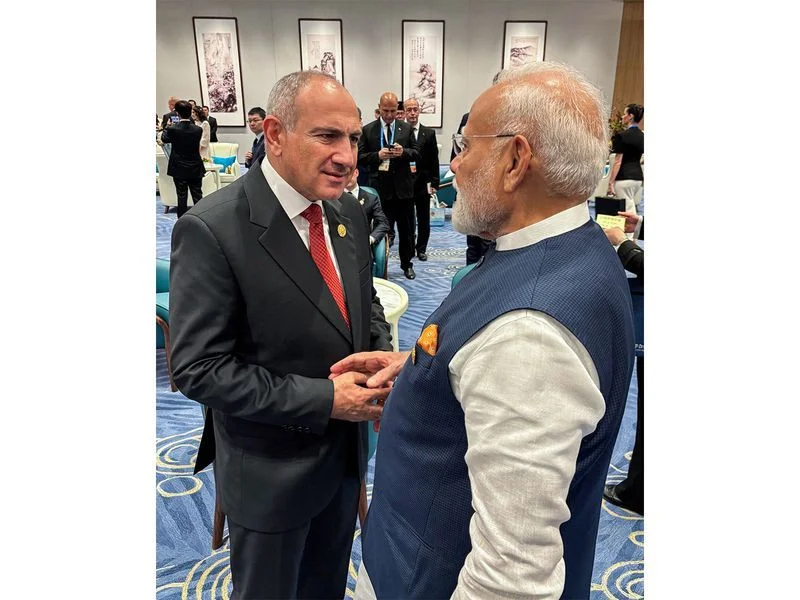
New Delhi — Prime Minister Narendra Modi conducted a telephone conversation on Wednesday with the Prime Minister of Armenia, Nikol Pashinyan.
The Indian leader extended his congratulations to Pashinyan regarding his political party’s success in the legislative polls concluded in Armenia.
Writing on the social media platform X, Modi noted his satisfaction regarding the communication initiated by Prime Minister Nikol Pashinyan. He offered congratulations to the leader and his political alignment for securing victory in the democratic parliamentary elections held in Armenia.
The Prime Minister conveyed his appreciation for Armenia’s role in supporting the repatriation of Indian nationals who were stuck in Iran after recent escalations in West Asia. Both statesmen confirmed their mutual intent to deepen the comprehensive relationship spanning trade, defence, technology, and bilateral social bonds, aiming for higher cooperation.
Concurrently, the Office of the Prime Minister of Armenia issued an official communication confirming that Modi reiterated his congratulations to Pashinyan for his success in the national votes, offering standard wishes for his upcoming governance.
Pashinyan expressed appreciation for the sentiments and conversely offered his congratulations to Modi for achieving the milestone of becoming the longest-serving elected Prime Minister throughout India’s history, wishing progress for the South Asian nation.
The two leaders highlighted the necessity of maintaining a trajectory of growth for the friendly partnership existing between Armenia and India, noting their satisfaction with current bilateral trends. They emphasized expanding high-level political talks alongside boosting collaboration in economic sectors, advanced technologies, academic fields, and cultural relations.
The prime ministers evaluated cooperative mechanisms in both bilateral fields and international forums, analyzing practical measures to broaden the scope of the shared diplomatic roadmap.
The statesmen additionally emphasized the critical role of scheduling high-level official state visits to consolidate institutional cooperation and initiate fresh collaborative projects between the two democracies.
Previously on April 17, the Ministry of External Affairs disclosed that a total of 2,361 individuals were safely repatriated back to India following the eruption of hostilities in West Asia.
Ministry spokesperson Randhir Jaiswal clarified that since the regional crisis began, official efforts secured the return of 2,361 Indian nationals from Iran. Out of this total, 2,060 individuals traveled through Armenia, while 301 proceeded via Azerbaijan.
The repatriated group of 2,361 citizens comprised 1,041 Indian students, alongside three foreign nationals originating from Bangladesh, Sri Lanka, and Guyana. Jaiswal reminded that approximately 7,500 Indian citizens were residing within Iran when the regional crisis originally manifested.
Future Outlook
The diplomatic synergy displayed between New Delhi and Yerevan signals an accelerating strategic alignment in the South Caucasus region. As India expands its footprint as a reliable defense exporter and technological partner, Armenia is increasingly viewing India as a vital geopolitical counterweight. The successful evacuation of thousands of citizens via Armenian territory demonstrates a high level of operational trust that observers believe will pave the way for formal transit agreements and joint security frameworks in the coming years.
FAQs
How many Indian citizens were evacuated from Iran via Armenia?
A total of 2,060 Indian nationals were successfully evacuated from Iran through Armenian territory during the West Asia security crisis.
What key sectors did PM Modi and PM Pashinyan agree to strengthen?
The two leaders committed to enhancing their multifaceted partnership across several core sectors, including trade, defense, high technology, education, culture, and people-to-people connections.
How many total citizens have been repatriated from West Asia by India?
The Ministry of External Affairs announced the successful repatriation of 2,361 individuals from the region, which included 1,041 students and three foreign nationals assisted by Indian authorities.