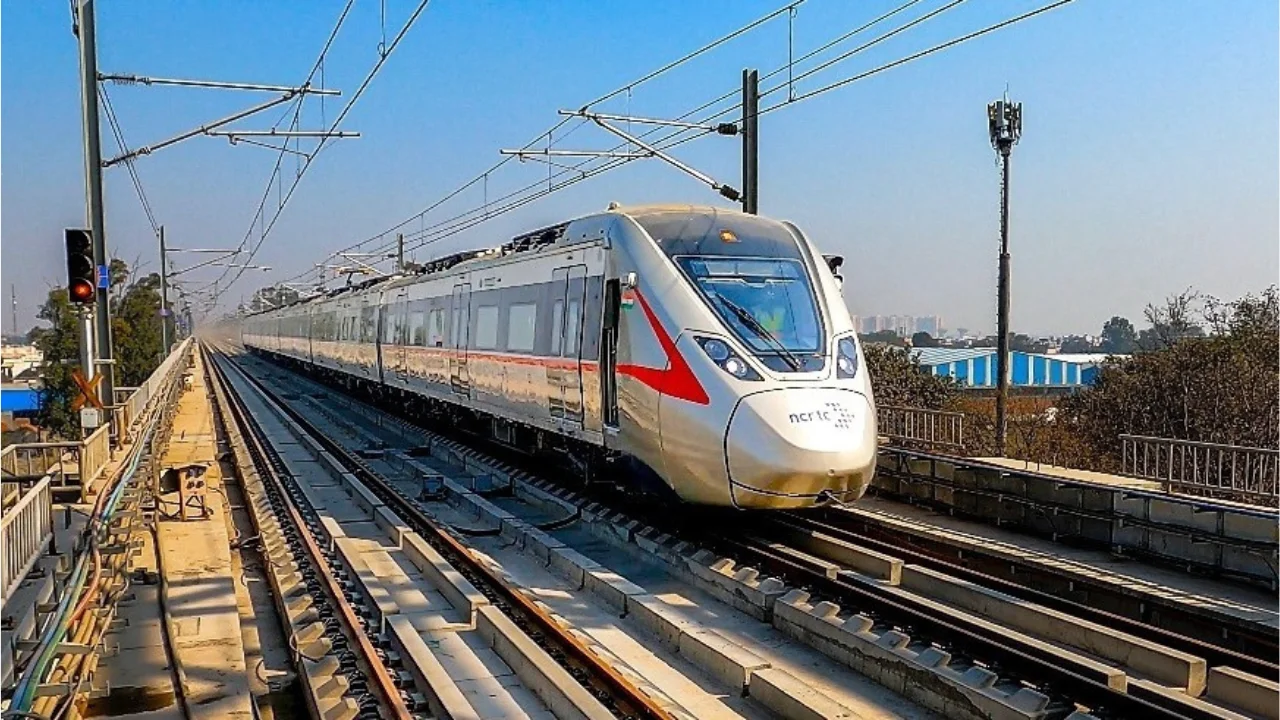
Haryana Approves New Namo Bharat Rail Lines
The National Capital Region is set for a massive transit overhaul after Haryana approved two new high-speed Namo Bharat rail corridors. The network expands connectivity from Delhi to regional industrial hubs, decentralizing employment centers and slashing commuter travel times across the rapidly growing territory.
Key Highlights
- Haryana cleared 2 new high-speed regional rail corridors adding around 25 stations.
- The routes connect Delhi to Behror via Gurugram and to Karnal via Panipat.
- Travel times on existing corridors dropped to 55 minutes for an 82-km journey.
- Haryana will use a negotiated purchase framework to accelerate land acquisition in 2026.
The National Capital Region is organizing for a massive transportation infrastructure expansion following Haryana’s authorization of 2 high-speed regional transit links. This development signals an evolution in regional strategies for public mobility, residential planning, and commercial advancement far beyond the borders of the traditional capital city core.
The upcoming Namo Bharat rail grid will link Delhi with Gurugram, Rewari, and terminate at Behror in Rajasthan. Concurrently, a northern line will run through Sonipat and Panipat to reach Karnal. These corridors will introduce approximately 25 new transit stations across the territory.
For infrastructure strategists, this initiative extends beyond accelerating train speeds. The project targets the decentralization of job hubs to decrease traditional reliance on central Delhi as the primary economic hub. Distributed networks are vital as secondary towns absorb massive industrial expansions.
This regional rapid transit push follows recent milestones where Prime Minister Narendra Modi dedicated the 82-km Delhi-Meerut Namo Bharat corridor. Commuters reported that journey times dropped to 55 minutes from 2 hours, highlighting the transformative speed of the integrated network.
Administrative authorities state that land procurement is now a major operational focus. Haryana will implement a direct negotiated purchase system instead of slow compulsory acquisition methods. This mechanism allows state authorities to acquire land immediately from property owners via mutual financial consensus.
A specialized multi-agency administrative panel led by regional district officials will regulate pricing frameworks and financial disbursements. Infrastructure analysts suggest this strategy will compress development schedules, mitigating the bureaucratic delays that frequently impede major Indian engineering projects.
Rapid construction execution remains vital because the commercial footprint of the region is shifting swiftly. Major industrial sectors in Manesar, Dharuhera, and Panipat are securing substantial corporate capital injections. This economic shift requires immediate high-capacity transport infrastructure.
Initial construction phases for the southwestern axis will focus on the link from Delhi to Dharuhera. This route encompasses high-density employment zones and residential centers, including Aerocity, Cyber City, IFFCO Chowk, Hero Honda Chowk, and the Manesar industrial zone.
These commercial submarkets currently experience severe vehicular traffic congestion every day. They represent some of the fastest-growing corporate real estate corridors across northern India, making rapid mass transit connectivity an urgent priority for regional traffic management.
Urban finance experts state that Namo Bharat infrastructure networks catalyze substantial secondary economic developments. These include significant real estate value appreciation, expanded commercial logistics networks, and increased residential housing density along the transit lines.
However, researchers emphasize that uncoordinated infrastructure growth risks exacerbating unchecked urban sprawl. To prevent this, regional planning departments must pair rail expansion with sustainable zoning laws, environmental conservation zones, and comprehensive affordable housing frameworks.
The fundamental value of these rapid transit lines lies in reshaping regional worker migration patterns. Drastically shorter transit durations expand job accessibility for communities living far from major metropolitan centers, while simultaneously lowering reliance on personal automobiles.
This shift helps mitigate heavy vehicle emissions in an intensely polluted atmospheric zone. As statutory clearances advance, the core challenge centers on balancing rapid infrastructure delivery with sustainable urban design. These rail lines will define future regional growth.
Also read: Delhi Punahana Waterlogging Problem Deepens Before Monsoon
Delhi NCR Namo Bharat Routes Expand Regional Mobility
Future Outlook
The expansion of the Namo Bharat network across Haryana and into Rajasthan represents the next phase of India’s transit-oriented development strategy. By integrating high-speed regional rail with local metro operations—as seen in the recent Meerut Metro integration—the system establishes a sustainable framework for mega-region connectivity. Over the next decade, these corridors are projected to transform agricultural peripheries into organized, high-density smart cities while significantly curbing vehicular emissions in northern India’s industrial belt.
FAQs
What are the two new Namo Bharat routes approved by Haryana?
The two newly cleared regional rapid rail corridors include one axis connecting Delhi to Gurugram, Rewari, and Behror, and a second northern line stretching through Sonipat and Panipat to Karnal.
How many stations will be added in the new Namo Bharat expansion?
The expansion across the newly approved transport corridors is expected to add approximately 25 transit stations, creating new economic and residential growth hubs.
How does Haryana plan to handle land acquisition for the project?
Haryana plans to utilize a negotiated purchase framework managed by a multi-agency committee. This allows the state to purchase land directly from owners through mutual financial agreements to accelerate project timelines.
Which areas are prioritized in the first phase of the southern corridor?
The first phase of the southwestern route will prioritize the section from Delhi to Dharuhera, covering major commercial and residential hubs including Aerocity, Cyber City, IFFCO Chowk, Hero Honda Chowk, and Manesar.