Rep Celeste Maloy Elected Chair of Congressional Western Caucus
Representative Celeste Maloy from Utah has assumed leadership of the Congressional Western Caucus following her unanimous selection as chair. The position became vacant earlier this 2026 calendar year after the unexpected passing of the previous leader, Congressman Doug LaMalfa.
Key Highlights
- Rep. Celeste Maloy secure unanimous support to lead the influential legislative group.
- The leadership transition follows the death of former chairperson Doug LaMalfa in 2026.
- Maloy credits her early agricultural involvement in FFA for shaping her ongoing congressional policy decisions.
- Future caucus priorities include reducing regulatory obstacles for Western energy developments.
RFD-TV AUCTION BARN STUDIOS, FORT WORTH, Texas (RFD News)
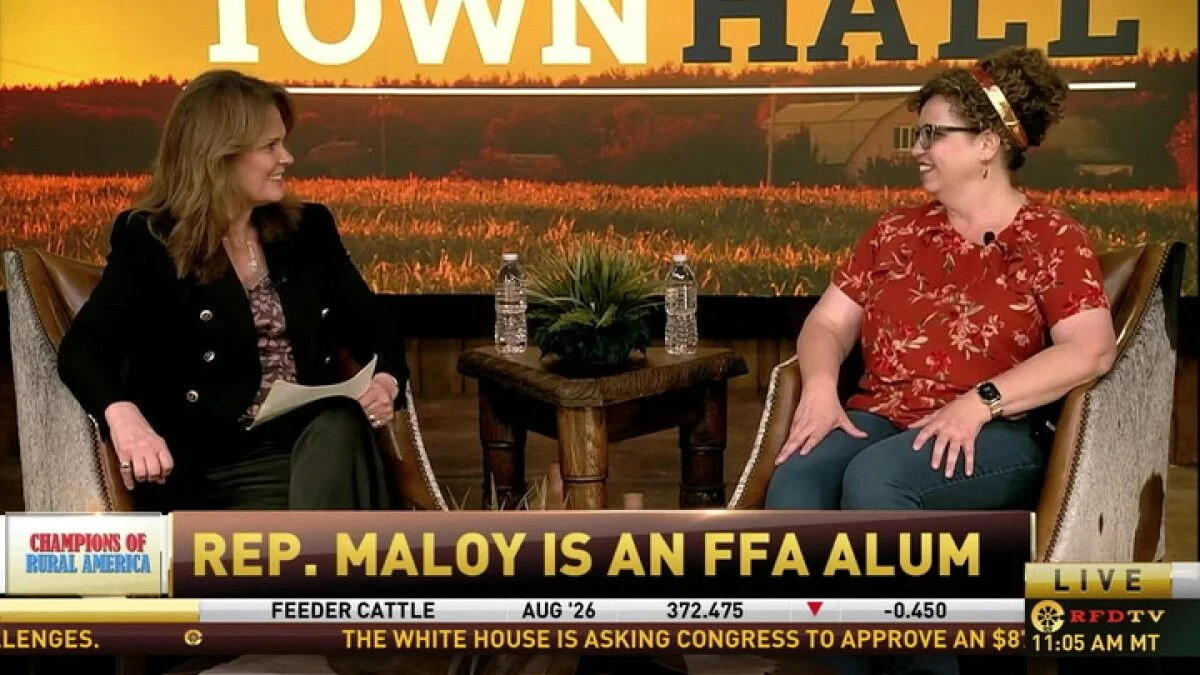
During the latest broadcast of Champions of Rural America, the television network introduced its audience to the incoming leader guiding the legislative direction of the Congressional Western Caucus.
Rep. Celeste Maloy of Utah secured the leadership role via a unanimous vote among her colleagues after the seat was vacated by the late Representative Doug LaMalfa. Participating in a recent town hall event, Maloy shared personal reflections regarding her time working alongside LaMalfa and his guidance during her initial legislative career.
“I remain relatively new to the chambers of Congress, currently navigating the midpoint of my initial term. My entry followed a special election during the previous legislative session, and Doug LaMalfa stood out as an early colleague who extended friendship and guidance,” Maloy remarked during the broadcast.
The congresswoman noted that LaMalfa consistently ensured she understood chamber procedures and scheduling demands. She noted that when he initiated his campaign to lead the caucus, he requested that she serve alongside him, affectionately assigning her a unique nickname referencing her first name.
Maloy emphasized that her relationship with the policymaking body started well before her congressional tenure. Her past professional responsibilities as a regional legal representative in southern Utah allowed her to participate in caucus meetings that centered on water distribution, public territory administration, and village financial matters.
“While serving as a regional attorney, I managed numerous files tied to public lands and municipal water management. These responsibilities drew me to the annual December policy gatherings hosted by the caucus in Las Vegas,” Maloy explained to the panel.
She recalled observing numerous senators, representatives, and executive branch officials collaborating on rural strategies. The topics directly mirrored the immediate concerns affecting her local neighborhood and daily legal caseload.
The Utah lawmaker stated that those early policy forums motivated her professional aspirations long before she envisioned running for a federal office.
“Holding a seat in Congress or directing the strategy of this specific caucus was never something I anticipated. Nevertheless, my primary objective has always been to ensure this policy organization continues to prosper,” she stated.
Additionally, Maloy highlighted how her teenage participation in the National FFA Organization, formerly known as Future Farmers of America, established the foundation for her subsequent public service.
“I was an active FFA member during my secondary education. When addressing modern youth agricultural groups, I candidly admit that my initial enrollment was motivated by a desire to network outside my isolated rural schooling area,” Maloy stated.
Though she maintains a humorous perspective on her adolescent motivations, she acknowledged the deep, transformative influence the agricultural federation exerted on her adult path.
“During my final year of secondary school, a victory in a regional soil analysis competition provided the full funding necessary for my undergraduate studies. Consequently, I maintain a strong dedication to the organization because it financed my schooling,” Maloy shared.
She completed an agricultural degree program, noting that her teenage self lacked a strategic vision regarding how a high school club enrollment would eventually anchor her federal career. Small, routine choices frequently generate major long-term life trajectories.
Maloy stated that the foundational values of agricultural education remained with her during her transition to Washington. Upon entering the House of Representatives, she utilized her initial floor address to highlight principles from the agricultural group’s core doctrine.
“I integrated the core message of the organization’s creed into my first official House address. I communicated my firm belief in achieving superior outcomes through advanced methodologies, acknowledging that current benefits emerged from historical perseverance,” Maloy explained.
She connected those classic values to her current service during a transformative legislative period. The lessons learned in youth agricultural chapters continue to guide her perspective on national policy choices and emerging public opportunities.
The conversation with Maloy was part of RFD-TV’s Rural Town Hall presented by the Western Caucus Foundation, which will premiere July 1 only on RFD-TV. In next week’s Champions of Rural America segment, she will discuss legislation to reduce regulatory hurdles for geothermal energy projects on federal lands.
LEARN MORE: Rural Town Hall presented by the Western Caucus Foundation
The broader agricultural broadcasting network also featured insights from various industry leaders addressing distinct challenges across the domestic farming sector.
Senator Deb Fischer participated in a policy dialogue focusing on impending Farm Bill negotiations, regional agricultural restrictions, national fuel blending rules, and general assistance frameworks for domestic food cultivators.
Concurrently, market analyst Shaun Haney presented data detailing recent downward movements in diesel fuel costs, highlighting the subsequent relief for field operational budgets alongside ongoing federal fuel pricing policy debates.
From the international trade sector, Jamie Beyer of the American Soybean Association provided an analysis of the United States-Mexico-Canada Agreement, focusing on trade predictability, foreign market hurdles, and the upcoming formal trade pact evaluation.
Additionally, John Crispin representing the Agoro Carbon Alliance detailed structural changes occurring within environmental credit markets, focusing on cultivator enrollment, validation metrics, and enduring financial gains from carbon sequestration initiatives.
Resource management remains a critical focus as regional environmental officials in Washington initiated a public sourcing campaign designed to draft long-term water conservation and supply strategies.
Financial strains persist in specific regions, with recent banking updates revealing that operations situated across the Midwest and Southeast territories generate more than 66% of all domestic family farm bankruptcy reorganizations.
Future Outlook
Looking ahead, the Congressional Western Caucus under Maloy’s leadership plans to aggressively target bureaucratic delays blocking domestic energy infrastructure. The group’s immediate legislative focus centers on introducing statutory frameworks designed to fast-track permits for geothermal exploration on public tracts. By streamlining environmental reviews, the caucus aims to boost rural economic growth and strengthen western power grids by late 2026 and into 2027.
FAQs
Who was selected as the new leader of the Congressional Western Caucus?
Representative Celeste Maloy of Utah was unanimously chosen by her colleagues to serve as the chairperson of the legislative organization.
What event led to the leadership vacancy within the caucus?
The leadership position became available earlier in 2026 following the passing of the former chairperson, Congressman Doug LaMalfa.
How did youth agricultural programs influence Representative Maloy’s path?
Maloy participated in FFA during high school, winning a soil judging contest that fully funded her college agricultural degree, which later informed her rural policy work in Washington.


