BJP Mango Diplomacy Targets 82 Foreign Missions in New Delhi
BJP National President Nitin Nabin launched a unique diplomatic initiative by sending choice Indian mangoes to 82 international envoys in New Delhi. This strategic move leverages India‘s rich agricultural heritage to strengthen geopolitical ties and foster cross-cultural goodwill among foreign missions.
Key Highlights
- BJP President Nitin Nabin sent elite mango boxes to 82 Heads of Missions in New Delhi.
- The initiative was inspired by Prime Minister Narendra Modi’s focus on regional mango varieties.
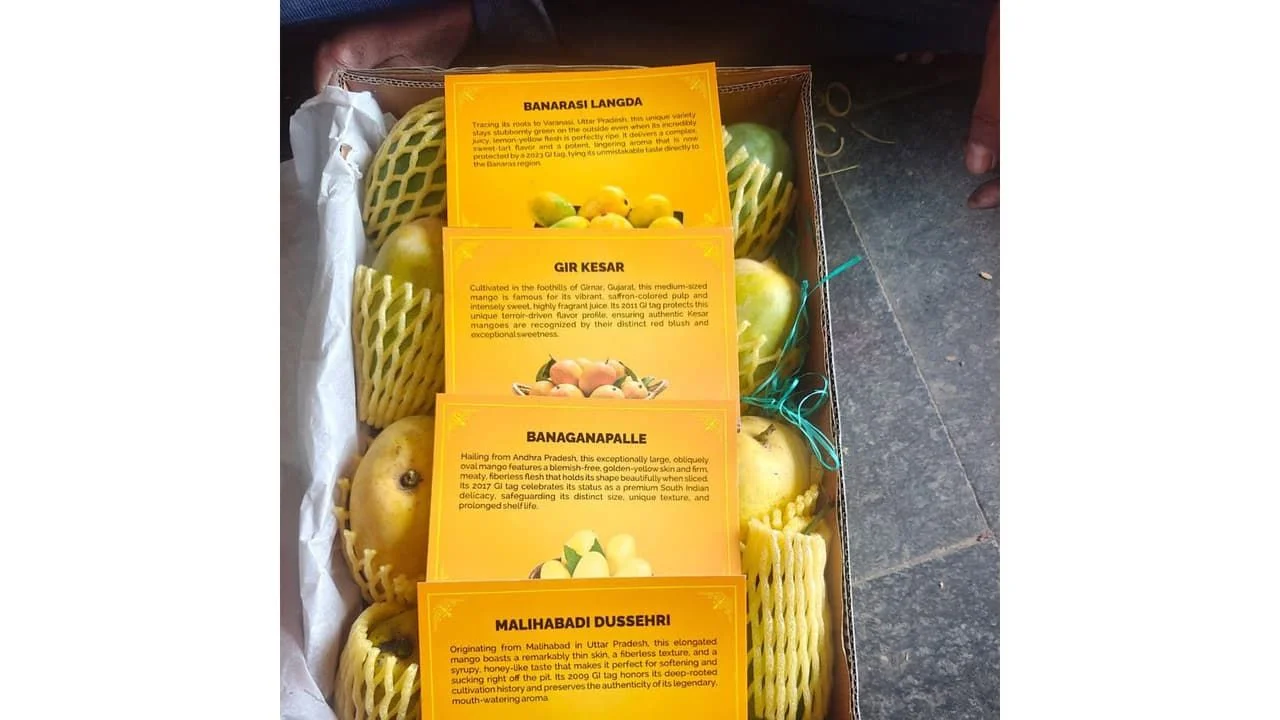
- Four distinct geographically indicated (GI) varieties were distributed to global diplomats.
- The gesture embodies the traditional philosophy of Vasudhaiva Kutumbakam to share cultural joy.
BJP’s Mango Diplomacy
Drawing inspiration from Prime Minister Narendra Modi’s public addresses, BJP National President Nitin Nabin extended an agricultural gesture across international borders. The party leadership dispatched premium fruit assortments to 82 Heads of Missions stationed in New Delhi, accompanying each delivery with a personalized communication. This exercise packaged Indian cultural heritage across four distinct regional flavor profiles.
Dr. Vijay Chouthaiwale, who directs the Department of Foreign Affairs for the Bharatiya Janata Party, publicised the outreach on social media. He characterized the initiative as a practical manifestation of Vasudhaiva Kutumbakam, a philosophy translating to “the world is one family.” The diplomatic outreach aimed to project national goodwill and shared cultural traditions through indigenous produce.
Four Flavours of India’s Culture
The diplomatic packages comprised four specific varieties of Indian mangoes, starting with Gir Kesar. Cultivated along the foothills of Girnar in Gujarat, this medium-sized fruit is recognized for its intense saffron pulp and highly aromatic juice. A 2011 Geographical Indication (GI) tag protects its specific regional cultivation profile, validating its unique red blush and high sugar content.
The second variety, Malihabadi Dusseheri from Uttar Pradesh, features an elongated shape, exceptionally thin skin, and a fiberless, honey-like texture. Its historical legacy and distinct aroma have been protected under a 2009 GI tag. Envoys received instructions on the traditional method of softening the fruit to extract the pulp directly.
The third selection was the Banaganapalle mango from Andhra Pradesh, which is often referred to as Benishan or Safeda. This large, oval variety represents a premier South Indian delicacy, valued for its blemish-free golden skin, firm flesh, and extended shelf life protected by a 2017 GI tag.
Finally, the Banarasi Langda from Uttar Pradesh completed the selection. This variety maintains a distinct green exterior even when its juicy, yellow flesh reaches full maturity. It offers a complex sweet-tart flavor profile backed by a strong aroma, secured by a 2023 GI tag linking it to Varanasi.
PM Modi on India’s Mango Heritage
The political initiative follows a national address by Prime Minister Narendra Modi on May 31, where he detailed the socioeconomic and cultural footprint of domestic mango cultivation. The Prime Minister observed that summer discussions in typical Indian households heavily revolve around regional mango varieties, noting that each territory yields an independent flavor and distinct aroma profile.
During his address, the Prime Minister cataloged prominent regional varieties, including the Hapus and Alphonso of Maharashtra’s Konkan belt, the Kesar of Gujarat, the Dussehri of Uttar Pradesh, and the Langra of Varanasi. He emphasized that regional transitions alter the physical appearance, color metrics, and taste profiles of the fruit.
He further highlighted Bihar’s aromatic Zardalu, alongside the Chausa and Malda varieties, as fruits deeply intertwined with regional identity. Turning toward southern territories, he recognized the widespread popularity of Banganapalli, Totapuri, Neelam, and Malgova, while adding Bengal’s Himsagar and the Suvarnarekha of Odisha and Andhra Pradesh to the national portfolio.
The Prime Minister emphasized that local mango supply chains are successfully penetrating international markets, moving efficiently from rural agricultural zones to global consumer segments. He extended official commendations to domestic fruit farmers, characterizing them as critical anchors of the national agrarian economy.
Historical Context
The practice of utilizing premium agricultural products for statecraft has long been an established component of South Asian bilateral relations. Historically referred to as fruit diplomacy, leaders across the subcontinent have frequently exchanged seasonal harvests to soften bilateral friction, commemorate transitions of power, or reinforce cultural connections. By elevating regional varieties with specific Geographical Indication certifications, this current initiative links traditional agrarian output directly with formal international outreach in the nation’s capital.
FAQs
What is the primary objective of the BJP mango diplomacy initiative?
The initiative serves as a cultural outreach program designed to strengthen diplomatic relations with 82 foreign missions in New Delhi. It uses premium regional fruit varieties to showcase the nation’s agricultural diversity and reflect the traditional philosophy of global unity.
Which four mango varieties were selected for the foreign diplomats?
The diplomatic packages contained Gir Kesar from Gujarat, Malihabadi Dusseheri from Uttar Pradesh, Banaganapalle from Andhra Pradesh, and Banarasi Langda from Uttar Pradesh. All four varieties hold official Geographical Indication tags.
Why do the selected mangoes hold GI tags?
Geographical Indication tags are awarded to protect the specific geographic origin, unique flavor profiles, and historical cultivation methods of these varieties. For example, Gir Kesar secured its tag in 2011, while Banarasi Langda received protection in 2023.
How does this initiative connect to the domestic agricultural economy?
The outreach highlights the expanding footprint of Indian agriculture in global markets. It aligns with state efforts to promote rural produce internationally and recognizes fruit farmers as essential contributors to the country’s economic growth.