How Dravidian Movement Reshaped Indian Federalism
A groundbreaking academic study challenges the traditional New Delhi-centric narrative of Indian constitutional history by demonstrating how Tamil Nadu’s regional parties fundamentally restructured Centre-State relations, shifting power away from the central government to deepen the democratic fabric of the nation.
Key Highlights
- A 2023 JNU doctoral thesis by Alamu R. reframes Indian federalism through the lens of Tamil Nadu’s state politics.
- The research proves the DMK and AIADMK used ideological rhetoric as public reasoning to protect state autonomy.
- The 1969 Rajamannar Committee is highlighted as a historic, state-led challenge to New Delhi’s centralized authority.
- Language politics and fiscal struggles are recast as essential drivers for democratic access and economic survival.
The history of Indian federalism is often narrated from New Delhi. Constitutional debates, Union commissions, Supreme Court judgments, and central government initiatives dominate most accounts of how Centre-State relations evolved after Independence. A recent doctoral thesis by Alamu R., submitted to the School of Social Sciences at Jawaharlal Nehru University in 2023, challenges this perspective by shifting attention to Tamil Nadu and the role played by the Dravidian movement in reshaping Indian federalism.
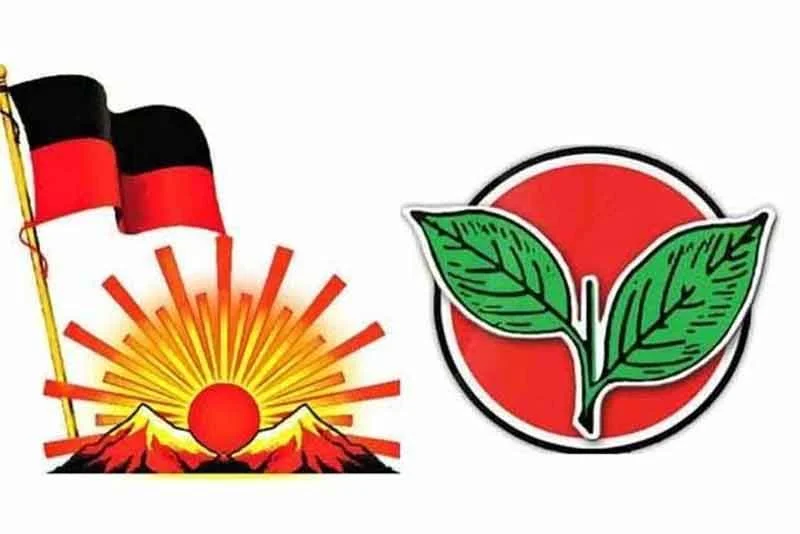
Titled “Dravidian Ideology and State Politics: A Study of DMK and AIADMK Since 1967,” the thesis argues that the Dravida Munnetra Kazhagam (DMK) and the All India Anna Dravida Munnetra Kazhagam (AIADMK) were not merely regional parties seeking electoral advantage through autonomy slogans. Rather, they emerged as significant political actors who deepened and democratized Indian federalism by resisting the centralizing tendencies of the Union government.
Beyond the Dismissal of Ideology
One of the major contributions of the thesis lies in its theoretical approach. Much of the existing literature on Indian politics tends to treat ideological claims as secondary to material interests or electoral calculations. In contrast, Alamu employs the “morphological approach” to ideology, drawing on the work of political theorists Michael Freeden and Rochana Bajpai.
This framework takes political rhetoric seriously. Rather than viewing rhetoric as mere propaganda, it treats it as a form of public reasoning through which political actors define problems, mobilize constituencies, and shape policy outcomes.
This perspective helps explain a key historical puzzle: how the DMK was able to move from its early demand for a separate Dravidian state, Dravida Nadu, to a demand for state autonomy within the Indian Union without suffering political collapse. According to the thesis, the shift did not represent an abandonment of core principles. The underlying objectives—social justice, self-respect, linguistic dignity, and opposition to cultural domination—remained consistent even as political strategies evolved.
The Turning Point of 1967
The year 1967 occupies a central place in the study. The elections of that year disrupted the long-standing dominance of the Congress Party and marked the beginning of a new era in Indian politics. In Tamil Nadu, the DMK came to power, ending Congress rule and inaugurating what would become a durable Dravidian political order.
The thesis notes that the DMK government was unique among the wave of non-Congress governments that emerged during this period. Unlike several other state governments that were dismissed or destabilized, the DMK completed its full term in office. This experience convinced the party leadership that protecting state powers against central encroachment was not merely a constitutional issue but a practical necessity.
The importance of state autonomy became even more pronounced during the early 1970s, when the increasingly centralized style of governance associated with Prime Minister Indira Gandhi generated concerns among regional governments. The DMK responded by intensifying its campaign for restructuring Centre-State relations.
The Rajamannar Committee: A Landmark Intervention
The thesis places particular emphasis on the Rajamannar Committee, appointed by the DMK government in 1969 under the chairmanship of Justice P. V. Rajamannar.
This committee occupies a unique place in India’s constitutional history. It was the first commission established by a state government to examine Centre-State relations from the standpoint of the states rather than the Union.
Its recommendations represented a comprehensive challenge to constitutional provisions that concentrated power in New Delhi.
The committee criticized Articles 256 and 257 of the Constitution, which permit the Union government to issue executive directions to state governments. It argued that such provisions were inconsistent with the spirit of federalism. The Tamil Nadu government went even further in its response, demanding the deletion not only of these articles but also of Article 365, which empowers the Centre to intervene when states fail to comply with Union directives.
The committee also proposed a stronger Inter-State Council under Article 263. Significantly, it argued that the council should not be dominated by Union ministers. Instead, it should consist primarily of the Prime Minister and the Chief Ministers of the states. Furthermore, legislation affecting state interests or matters in the Concurrent List should require prior consultation through this institution.
These proposals reflected a vision of cooperative federalism in which states would function as genuine partners rather than administrative units subordinate to the Centre.
The 1974 State Autonomy Resolution
The debates surrounding the Rajamannar Committee eventually culminated in the historic State Autonomy Resolution adopted by the Tamil Nadu Legislative Assembly in 1974.
The thesis carefully reconstructs these debates and highlights the contrasting positions taken by various political parties. National parties such as Congress (O) and the Communist Party of India opposed several of the proposed changes. They argued that the Centre required supervisory powers to address constitutional breakdowns, corruption, and administrative failures within states.
The DMK, however, maintained that excessive central control weakened democratic accountability and undermined the federal character of the Constitution.
The resolution thus became a landmark expression of regional aspirations and a significant milestone in the broader evolution of Indian federalism.
Fiscal Federalism and Economic Autonomy
The thesis also extends its analysis beyond constitutional debates to examine fiscal federalism. Through a close reading of budget documents, policy notes, and finance speeches, it shows how Dravidian governments consistently sought to expand the state’s fiscal capacity.
According to the study, these governments viewed financial dependence as a major obstacle to meaningful autonomy. Their demands for a larger share of resources, greater control over revenue generation, and protection against centralizing financial schemes were rooted in a broader effort to strengthen the developmental role of the state government.
The struggle for fiscal autonomy therefore formed an important, though often overlooked, dimension of the Dravidian federal project.
Language Politics as Democratic Politics
Another major contribution of the thesis is its treatment of language policy.
The conventional portrayal of Tamil Nadu’s anti-Hindi politics often reduces it to linguistic chauvinism or regional sentiment. Alamu’s study offers a different interpretation.
By examining the legislative debates that established Tamil Nadu’s two-language policy in 1968, the thesis argues that language politics was closely linked to questions of democratic choice and social justice. Opposition to compulsory Hindi was not simply a defence of Tamil identity. It was also a rejection of linguistic hierarchies that could disadvantage large sections of the population in education, employment, and public life.
The study further explores efforts to promote Tamil in administration, education, and public communication. These initiatives are presented as attempts to democratize access rather than as exercises in cultural exclusivism.
A New Perspective on Indian Federalism
Perhaps the most significant contribution of the thesis is methodological. Indian political science has traditionally approached federalism from a top-down perspective, focusing on constitutional framers, Union governments, and national commissions.
Alamu reverses this lens by treating the proceedings of the Tamil Nadu Legislative Assembly as a primary source. Through a detailed examination of assembly debates, budget discussions, and policy controversies, the study uncovers the everyday political struggles through which federal principles were negotiated and expanded.
This approach reveals federalism not as a static constitutional arrangement but as an ongoing political process shaped by conflicts, negotiations, and mobilizations at the state level.
The thesis ultimately presents the Dravidian parties as central actors in the democratization of Indian federalism. While the DMK and AIADMK differed on many issues and competed fiercely for power, both operated within a shared ideological tradition that emphasized regional dignity, social justice, and resistance to excessive centralization.
The study suggests that many of the rights and powers enjoyed by Indian states today did not emerge automatically from constitutional design. They were secured through sustained political struggles led by regional movements and governments.
By recovering this history, the thesis provides an important reminder that federalism in India has been shaped not only by decisions made in New Delhi but also by the persistent efforts of states such as Tamil Nadu to redefine the balance of power within the Union.
History of Centre-State Constitutional Conflicts
The structural friction between New Delhi and India’s states traces back to the framing of the Constitution, where founders opted for a “quasi-federal” system with a strong central bias to prevent fragmentation. However, the 1967 general elections shattered the monolithic rule of the Congress party across multiple states, birthing the first wave of potent regional opposition. Tamil Nadu stood at the vanguard of this geopolitical shift. By commissioning the Rajamannar Committee in 1969, the state initiated an intellectual and legal counter-offensive against central hegemony, setting a precedent that regional entities could actively re-interpret constitutional boundaries rather than merely accepting mandates handed down from the capital.
FAQs
What is the primary focus of Alamu R.’s 2023 doctoral thesis?
The thesis examines how Tamil Nadu’s Dravidian movement, specifically through the political tenures of the DMK and AIADMK since 1967, challenged the centralizing power of New Delhi to deepen and democratize Indian federalism.
What was the historical significance of the 1969 Rajamannar Committee?
Appointed by the DMK administration, it was the first commission established by an Indian state government to evaluate Centre-State relations entirely from the perspective of state autonomy, challenging key constitutional provisions that favored the Union.
How does the study reframe Tamil Nadu’s anti-Hindi language politics?
Rather than dismissing it as regional chauvinism, the research positions the language movement as a fight for social justice and democratic choice, aiming to prevent linguistic hierarchies that disadvantage non-Hindi speakers in employment and education.
Why was the year 1967 a turning point for Indian federalism?
The 1967 elections ended the singular dominance of the Congress party and brought the DMK to power in Tamil Nadu, proving that a regional party could sustain a full governing term while actively defending state rights against central overreach.