Modi Champions Climate Justice for Global South in Seychelles
Indian Prime Minister Narendra Modi addressed the National Parliament of Seychelles on Sunday, advocating for global climate equity and stronger bilateral ties. Modi emphasized that developing island nations should not carry the financial and environmental burdens generated by industrialized polluters.
Key Highlights
- PM Modi demanded “climate justice” for island nations that contribute minimally to global emissions.
- India pledged continuous geopolitical and developmental backing for Small Island Developing States.
- The address highlighted India’s domestic green initiatives, including Mission LiFE and renewable energy expansions.
- Modi reiterated India’s successful push to include the African Union as a permanent G20 member.
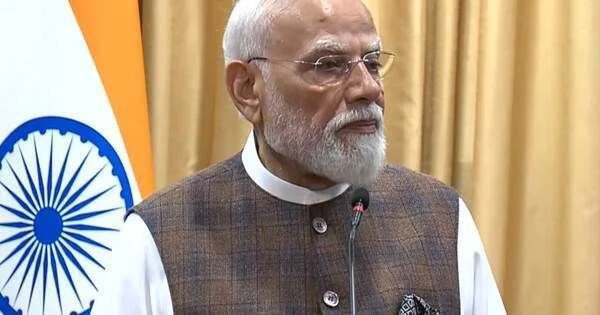
Prime Minister Narendra Modi on Sunday delivered a keynote address before the National Parliament of Seychelles, issuing a strong call for “climate justice” and insisting that the Global South, especially developing island states, must not shoulder an unfair share of the worldwide climate crisis burden.
The Indian leader also underscored the robust strategic and bilateral partnership linking New Delhi and Victoria. He simultaneously urged a comprehensive restructuring of the global architecture and international bodies to better represent modern geopolitical balances.
Speaking to the assembled members of the Seychelles legislature, Modi remarked that both nations maintain a firm conviction that populations with the lowest historical emissions should not face the harshest fallout. He stated that global climate actions require baseline foundation principles of equity, fairness, and collective responsibility.
Detailing the domestic and international ecological strategies managed by New Delhi, the Prime Minister explained that India continues to guide by practical implementation. He emphasized that over the past decade, India executed one of the largest renewable infrastructure rollouts globally while promoting sustainable citizen habits via ‘Mission LiFE’.
Modi further detailed critical multinational frameworks established or backed by India, highlighting the International Solar Alliance, the Coalition for Disaster Resilient Infrastructure, the Global Biofuel Alliance, and the recent environmental tree-planting initiative ‘Ek Ped Maa Ke Naam’.
Reassuring the leadership of Seychelles regarding India’s long-term geopolitical commitments, Modi affirmed that New Delhi will keep collaborating with Victoria to guarantee that the specific challenges of small island developing nations secure necessary global attention.
Shifting his focus to multilateral systems and global leadership, the Prime Minister noted that both India and Seychelles envision an international framework where socioeconomic growth is broadly shared and global institutions mirror current geopolitical realities.
Modi stated that a shared global future requires collective, fair, and inclusive architecture, noting this philosophy directed India’s diplomatic strategy during its previous G20 Presidency presidency. He highlighted Indian diplomatic maneuvers that positioned developing nations at the center of international policy, resulting in a landmark expansion of the coalition. He noted that this inclusive perspective drove India to establish the priorities of the Global South at the center of international governance, leading to the African Union joining the G20 as a permanent member.
Concluding his legislative speech, Modi declared that this unified objective binds the Global South together and serves as the primary strategic vision that India and Seychelles will advance across international forums.
During his closing observations, Modi reaffirmed New Delhi’s deep dedication to anchoring ties with Seychelles, pledging that India will remain a dependable ally, celebrate the nation’s milestones, back its sovereign goals, and offer steadfast friendship.
The Prime Minister is currently conducting a three-day official State Visit to Seychelles running from June 27 to June 29, following a formal diplomatic invitation extended by President Patrick Herminie.
The Indian Prime Minister is additionally set to participate as the Guest of Honour in the Golden Jubilee National Day events of Seychelles, celebrating 50 years of independence achieved from the United Kingdom back in 1976.
Future Outlook
The diplomatic engagements during this state visit signal a deepening security and environmental alignment between India and Western Indian Ocean nations. As climate disruptions accelerate, India’s positioning as a leading voice for Small Island Developing States (SIDS) is expected to strengthen its strategic footprint in the region. Observers anticipate enhanced maritime security pacts and fresh joint renewable energy projects to emerge from the bilateral talks, cementing India’s role as a primary net security provider and developmental ally in the Indian Ocean region heading into the next decade.
FAQs
What was the main focus of PM Modi’s speech to the Seychelles Parliament?
PM Modi focused heavily on demanding climate justice for the Global South, particularly small island nations. He also emphasized strengthening India-Seychelles strategic ties and reforming global governance institutions to make them more inclusive.
What is Mission LiFE mentioned by the Prime Minister?
Mission LiFE (Lifestyle for Environment) is an India-led global mass movement aimed at encouraging individuals to adopt sustainable lifestyles and eco-friendly habits to protect and preserve the environment.
Why is PM Modi visiting Seychelles in June 2026?
PM Modi is on a three-day official State Visit from June 27 to June 29, 2026, at the invitation of President Patrick Herminie. He is also attending Seychelles’ Golden Jubilee National Day as the Guest of Honour, marking 50 years of independence.
How did India support the Global South during its G20 Presidency?
India focused international attention on the economic and developmental priorities of developing nations. This diplomatic effort successfully culminated in the African Union being admitted as a permanent member of the G20.