Former Militant Exposes ISI Terror Operations in Kashmir
An exhaustive disclosure by a former insurgent has unveiled the deep operational mechanisms of Pakistan’s intelligence apparatus in Kashmir. The detailed account details counterfeit currency operations, psychological manipulation tactics, and a subsequent transition into Indian counter-terrorism units, highlighting a major shift in regional security dynamics.
Key Highlights
- A former insurgent exposed systemic exploitation and fake refugee camps set up by Pakistan’s intelligence agency.
- Counterfeit currency networks were deployed across South Kashmir to destabilize the local financial system.
- The operative transitioned into an Indian strategic asset, supplying critical intelligence before joining the Territorial Army.
- Policy changes in 2026 and structural governance shifts were credited with drastically reducing regional militant recruitment.
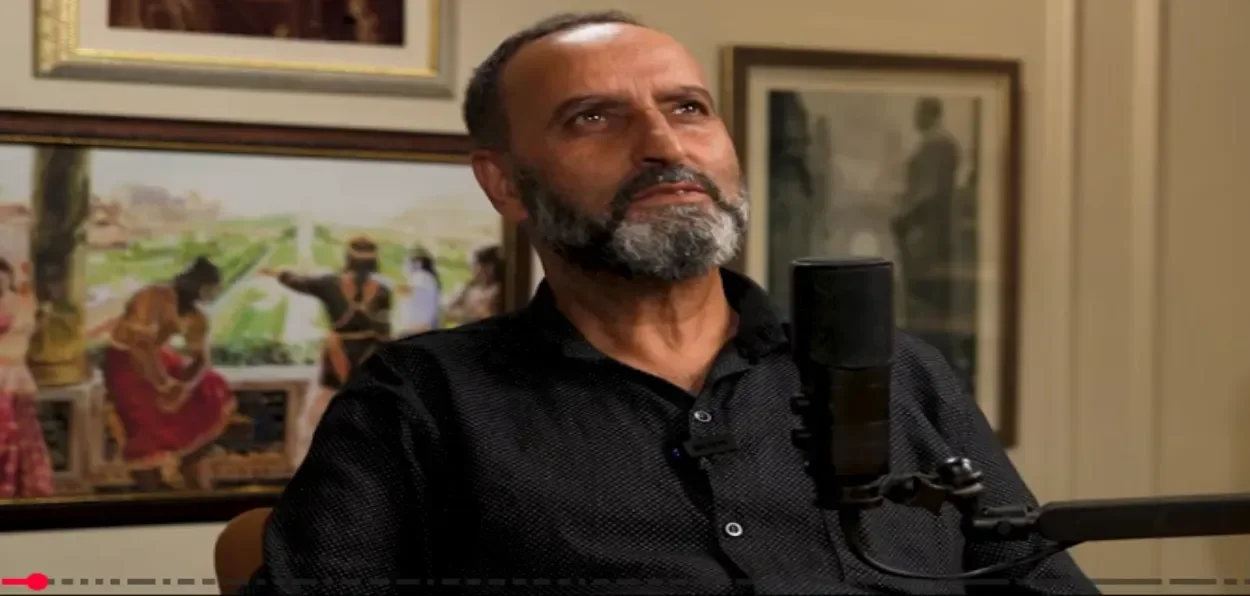
Mushtaq Ahmad Bhat, a former militant who once worked with ISI and later became an Indian Army asset and joined the Territorial Army, has exposed Pakistan’s exploitation of Kashmiri Muslims.
He delivered these revelations during an extensively detailed public disclosure. The testimony was structured across four distinct thematic segments: Radicalisation, Return, Exposure, and Reflection.
Bhat, a native of Pulwama, stated he participated in establishing a production facility dedicated to manufacturing fake Indian currency notes designed for illicit injection into the domestic market.
According to Bhat, he managed the logistics and systematic dispersion of these fraudulent bills throughout the districts of South Kashmir.
These admissions have refocused international scrutiny on transnational illicit networks. Indian security agencies previously identified these syndicates as central pillars of economic sabotage, which prompted the federal demonetization of high-value bank notes to neutralize foreign financial subversion.
Screenshot of the Podcast
The former operative revealed that foreign handlers orchestrated highly staged events, including the rapid fabrication of temporary displacement camps. He stated that individuals were coached to exhibit distress before international observers to generate systematic adverse propaganda against Indian security forces.
He detailed pervasive instances of duplicity by foreign handlers. He explained how coercive mechanisms were systematically applied to pressure local youths into insurgent activities, describing a consistent pattern of betrayal by senior commanders.
Bhat originally aligned with the Hizbul Mujahideen faction during the initial wave of regional insurgency in the early 1990s.
He recounted an incident where a local recruit disappeared immediately after forming a domestic relationship in Muzaffarabad. He noted that controllers explicitly stated that personal attachments compromised the focus required for insurgent operations.
He acknowledged that tactical influence and social status initially attracted him to the movement during his youth. He observed that the prevailing environment made the path highly appealing to teenagers, prompting his traversal into cross-border training facilities.
His internal alignment shifted significantly following the assassination of his grandfather, a traditional village leader affiliated with the Indian National Congress. To preserve his operational cover, he publicly feigned approval of the execution.
This event catalyzed his transition into a covert informant for domestic security forces while maintaining his position within the insurgent hierarchy. He transferred critical data regarding infiltration corridors, command structures, and early movements connected to the 1999 Kargil friction.
Following the compromise of his covert identity, he integrated directly into the Territorial Army to participate in active domestic counter-insurgency deployments.
Bhat, whose family maintains historical ties to traditional political factions, observed that contemporary federal administrative policies implemented up to 2026 have successfully decoupled local youth from insurgent recruitment pipelines.
He strongly advocated for the retention of direct federal security oversight regarding regional governance. He argued that reverting control to local political entities could instantly spark a resurgence in militant recruitment numbers.
Utilizing his military background, he subsequently focused on community rehabilitation, successfully convincing multiple active insurgents to surrender and integrate into civilian frameworks.
He further commented on the historical migration of minority populations from the valley, characterizing the departure as a necessary protective measure. He suggested that remaining would have subjected their youth to forced conscription by insurgent syndicates.
READ MORE:A visit to PoJK reveals the other Kashmir is not so ‘azad’
He concluded that specific communities managed to avoid the deeper institutional and social devastation that impacted the remaining residents during three decades of continuous regional friction.
Historical Context
The testimony delivered by Mushtaq Ahmad Bhat reflects a broader historical evolution within the Kashmir conflict. The early 1990s marked the peak of cross-border insurgent recruitment, which gradually shifted as intelligence networks matured. The transition of former militants into counter-terrorism assets, colloquially known in security circles as a vital component of local intelligence gathering, altered the operational capabilities of groups like Hizbul Mujahideen. Furthermore, the references to financial subversion highlight the long-standing economic warfare tactics countered by the 2016 demonetization policy, which aimed to sever the fiscal lifelines of regional terror networks permanently.
FAQs
Who is Mushtaq Ahmad Bhat?
Mushtaq Ahmad Bhat is a former insurgent from Pulwama who initially joined the Hizbul Mujahideen. He later transitioned into a covert intelligence asset for Indian security forces and subsequently joined the Territorial Army to conduct counter-terrorism operations.
What details were revealed about terror financing?
Bhat revealed direct involvement in an ISI-backed counterfeit currency ring. The operation manufactured fake Indian currency notes and systematically distributed them across South Kashmir to cause economic destabilization.
What was the structure of Bhat’s public disclosure?
The comprehensive disclosure was delivered across four distinct chapters: Radicalisation, Return, Exposure, and Reflection, detailing his journey from initial recruitment to counter-terrorism operations.
How did Bhat assist the Indian military while undercover?
While maintaining his cover inside Hizbul Mujahideen, he transmitted critical intelligence regarding insurgent infiltration pathways, operational structures, and early strategic movements tied to the 1999 Kargil conflict.