Jawaharlal Nehru Best Prime Minister in India History Says Jairam Ramesh
Congress General Secretary Jairam Ramesh declared Jawaharlal Nehru as the greatest prime minister in the history of independent India. Speaking during a recent media session, the veteran leader contrasted Nehru’s legacy with that of Sardar Vallabhbhai Patel and launched a sharp critique against the current political establishment.
Key Highlights
- Jairam Ramesh named Jawaharlal Nehru as India’s finest prime minister while describing Sardar Vallabhbhai Patel as the ideal leader the nation never had.
- The Congress leader leveled harsh criticism against Prime Minister Narendra Modi, branding him a master of misrepresentation.
- Ramesh reflected on his 35-year political journey, crediting former Prime Minister Rajiv Gandhi for his entry into public life.
- The lawmaker expressed a strong professional preference for his previous role as the environment minister over his tenure in rural development.
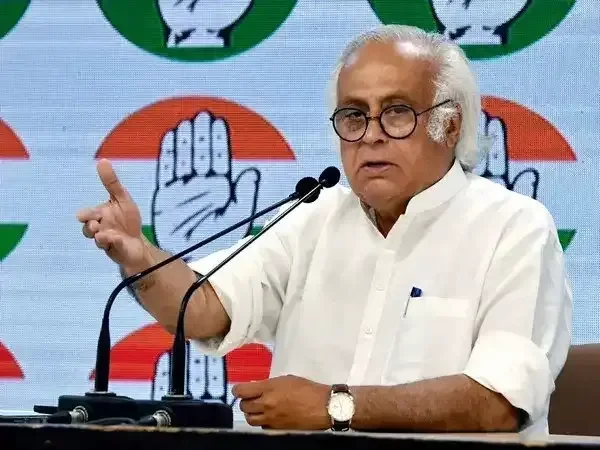
In a recent interview, Congress leader Jairam Ramesh asserted that Jawaharlal Nehru stands out as the finest prime minister in India’s history. He contrasted this with his view of Sardar Vallabhbhai Patel, whom he described as the best prime minister India never had. Ramesh’s comments were captured during a session with PTI Videos, where he elaborated on his opinions regarding past and present leaders.
Ramesh’s choice of Nehru highlights a deep respect for the legacy of India’s first prime minister, whose leadership he considers unmatched. In the same context, Patel was recognised for his significant contributions, although, according to Ramesh, he was not put in the role he ideally should have occupied.
During the interview, Ramesh provided a critical assessment of current political figures, specifically targeting the Rashtriya Swayamsevak Sangh (RSS) and Prime Minister Narendra Modi, calling Modi a “master of falsehoods.” This characterization reflects Ramesh’s broader criticisms of the current ruling party’s narrative.
Personal Reflections and Career Choices
When pressed to select his preferred past roles within the government, Ramesh indicated a stronger inclination towards his tenure as an environment minister than his time in rural development. This preference illustrates his commitment to environmental issues, which he deems essential in contemporary conversations around governance and policy.
Furthermore, discussing his multifaceted identity as an MP, writer, and strategist, Ramesh underscored that these roles represent various aspects of his personality. He expressed enjoyment in writing numerous books over the last decade, indicating a passion for research and archive exploration.
Ramesh elaborated on how he valued his experience as an MP, especially in raising environmental concerns. He described the different dimensions of his work as enriching, noting that each role has contributed uniquely to his political journey and personal growth.
Influence of Rajiv Gandhi on Ramesh’s Political Career
Ramesh credited former Prime Minister Rajiv Gandhi as a pivotal figure in his transition to full-time politics. He detailed how interactions with Gandhi and his associate Sam Pitroda catalysed his involvement with the Congress party. Ramesh recalled events following Gandhi’s electoral defeat, which led to an invitation to join the party in anticipation of upcoming elections.
He reflected on his extensive career, noting that this year marks his 35th anniversary with the Congress. His work has spanned various sectors, including the ministry of industry and the Planning Commission, through which he collaborated closely with Gandhi on technology initiatives.
Ramesh described Rajiv Gandhi as an inspiration, particularly for encouraging individuals from non-political backgrounds to enter politics. He expressed gratitude for the opportunity provided by Gandhi, which laid the foundation for his political activism and ongoing commitment to the Congress party.
History of Leadership Debates in India
The historical discourse surrounding the leadership styles of Jawaharlal Nehru and Sardar Vallabhbhai Patel remains a recurring theme in Indian political dialogue. Serving together in India’s first post-independence cabinet, Nehru as Prime Minister and Patel as Deputy Prime Minister managed differing governance philosophies while unified in building a sovereign state. Modern commentators frequently contrast Nehru’s democratic socialism and institutional focus with Patel’s pragmatic statecraft and administrative integration of over 500 princely states.
FAQs
What did Jairam Ramesh say about Jawaharlal Nehru and Sardar Patel?
Jairam Ramesh stated that Jawaharlal Nehru was the finest prime minister in the history of India. In contrast, he described Sardar Vallabhbhai Patel as the best prime minister India never had.
How did Jairam Ramesh characterize Prime Minister Narendra Modi?
During his interview with PTI Videos, Ramesh criticized the current political leadership, explicitly labeling Prime Minister Narendra Modi as a master of falsehoods.
Which ministerial portfolio did Jairam Ramesh prefer during his career?
Ramesh indicated a strong preference for his past tenure as India’s environment minister over his administrative time leading the ministry of rural development.
Who inspired Jairam Ramesh to enter Indian politics?
Ramesh credited former Prime Minister Rajiv Gandhi and technocrat Sam Pitroda for guiding his transition into full-time political life with the Congress party 35 years ago.