Major Earthquakes and Legal Verdicts Jolt Northern India
A powerful magnitude 6.2 earthquake centered in Afghanistan rocked Delhi-NCR and northern India on Saturday evening. Simultaneously, significant institutional developments emerged as the Ram Temple Trust accepted major leadership resignations following serious financial misappropriation allegations, and the Supreme Court resolved a historic seven-decade property dispute.
Key Highlights
- A deep 6.2 magnitude earthquake struck the Hindu Kush region, triggering widespread tremors across northern India including Delhi-NCR and Jammu and Kashmir.
- High-ranking officials of the Shri Ram Janmabhoomi Teerth Kshetra Trust resigned following the arrest of eight individuals over alleged temple donation theft.
- The Supreme Court brought an end to a 70-year-old land dispute in Uttarakhand, validating a historic 1957 property sale deed.
- No immediate casualties or severe structural damage were reported across the national capital region despite intense shaking.
The impact of the quake was felt widely, with tremors reported from Delhi-NCR, Jammu and Kashmir, and other northern regions. Many residents rushed out of their homes and offices as buildings shook briefly, creating panic in several areas.
Strong tremors were felt across Delhi-NCR and several parts of North India on Saturday evening after a powerful earthquake struck Afghanistan.
According to the National Centre for Seismology, the earthquake measured 6.2 on the Richter scale and occurred at around 7:04 PM IST. The epicentre was located in the Hindu Kush region of Afghanistan at a depth of approximately 215 kilometres below the surface.
Despite the intensity of the tremors, there were no immediate reports of casualties or major damage at the time of reporting. Authorities are closely monitoring the situation for any aftershocks or further developments.
Experts noted that the significant depth of the earthquake allowed its impact to be felt across a large geographical area, even though the epicentre was outside India.
This is not the first time tremors originating in Afghanistan have been felt in North India, as the region is seismically active due to its proximity to tectonic plate boundaries.
Shri Ram Janmabhoomi Teerth Kshetra Trust on Saturday confirmed that its general secretary Champat Rai and its trustee member Anil Mishra have tendered their resignations and assured that a fair inquiry will be conducted into allegations related to the Ram temple donations.
The Trust confirmed on Saturday that its general secretary Champat Rai and member Anil Mishra have tendered their resignations. According to the Trust’s treasurer, Govind Dev Giri, the resignations have been formally received and will be taken up for consideration at the next meeting of the governing body.
The sudden move comes amid serious allegations of misappropriation of funds linked to offerings made by devotees at the temple. Reacting to the situation, Giri stated that the trustees are deeply disturbed by the developments and emphasised their responsibility to uphold public trust by ensuring a fair and impartial inquiry.
He conveyed that the Trust is committed to addressing concerns raised over the past few days and reassured devotees that every effort will be made to uncover the truth. Stressing accountability, he said those found guilty would face strict punishment, while also warning against attempts by vested interests to malign the image of the religious institution.
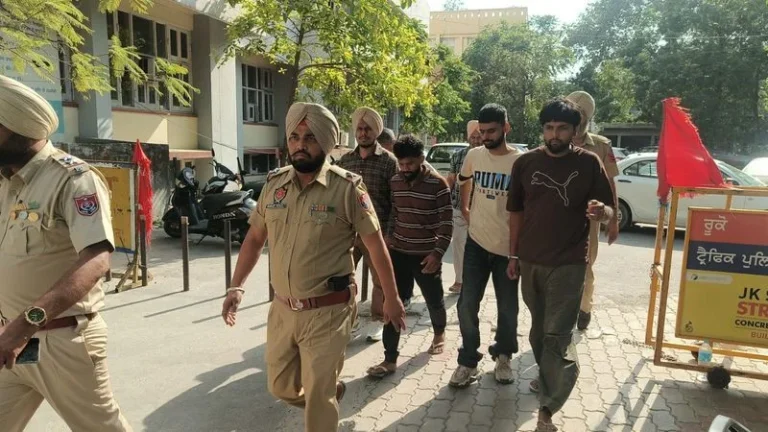
The controversy intensified after police arrested eight individuals on Thursday night in connection with the alleged diversion of donation money collected at the Ayodhya temple. Among those detained is reportedly a former driver associated with Champat Rai.
Sources indicated that law enforcement agencies have recovered approximately Rs 80 lakh in cash along with foreign currency from the accused during the operation, pointing to a significant financial irregularity.
Amid growing concerns, the Trust maintained that all valuable offerings made by devotees, including silver items and ornaments, remain secure and properly documented under its custody.
In his statement, Giri expressed confidence that the truth would ultimately prevail and that the faith of millions of devotees would remain unshaken. He asserted that the flow of devotion towards Lord Ram would continue uninterrupted despite the current crisis.
Meanwhile, the Vishva Hindu Parishad, with which Champat Rai is associated as a senior leader, shared details of the Trust’s response on social media, amplifying the message of assurance to the public.
As investigations continue, the episode has triggered widespread attention, raising questions over the handling of temple donations while putting the spotlight on the Trust’s internal accountability mechanisms.
The Supreme Court has brought closure to a land dispute that lingered for over seven decades, affirming the validity of a sale deed executed in 1957. The prolonged legal battle, which spanned four generations of a family, finally reached its conclusion with this verdict.
According to the report, the case revolved around approximately 15.5 bighas of land located in Narsipur Kalan village in Haridwar, Uttarakhand. The property had originally been purchased through a registered sale deed dated June 4, 1957, by the predecessors of the present appellants, who were minors at the time. Since then, the family maintained that they had been in continuous possession of the land.
Over the years, the matter moved through multiple legal stages. In 1984, the family succeeded in getting the land records updated in their name after one of the original sellers withdrew objections. Later, during land consolidation proceedings in 1991, they sought formal recognition of their ownership rights. Initially, their claim was accepted, and even a compromise reached in 1993 appeared to support their position.
However, the dispute resurfaced after objections were raised by other stakeholders. In 1999, the Consolidation Officer rejected the family’s claim, stating that the sale deed had not been properly established and was invalid under relevant land laws. This decision was upheld by higher authorities, and in 2017, the High Court also dismissed the family’s petition, reinforcing earlier findings.
The Supreme Court, however, took a different view. It found that the earlier decisions had placed undue emphasis on minor inconsistencies, particularly regarding details provided by a witness to the sale deed. The court observed that such discrepancies were not substantial enough to discard a legally registered document.
Importantly, the court noted that there were no allegations of fraud, coercion, or forgery in the execution of the sale deed. It stressed that in the absence of such serious claims, a registered document carries a presumption of validity and cannot be dismissed on trivial grounds.
The bench further highlighted that the appellants had consistently maintained possession of the land, and this claim had not been convincingly challenged by the opposing side. Taking all factors into account, the court ruled that the earlier findings were legally unsustainable.
Setting aside the decisions of the lower authorities and the High Court, the Supreme Court upheld the 1957 sale deed, effectively ending a legal struggle that had stretched across generations.
The judgment not only resolves a long-pending dispute but also reinforces the importance of giving due weight to registered legal documents in property matters.
FAQs
What was the magnitude and epicenter of the North India earthquake?
The earthquake measured 6.2 on the Richter scale. Its epicenter was located in the Hindu Kush region of Afghanistan, striking at a depth of roughly 215 kilometers below the earth’s surface.
Why did leaders of the Ram Temple Trust resign?
General secretary Champat Rai and trustee member Anil Mishra resigned following severe allegations of financial misappropriation regarding temple donations. The police recently arrested eight suspects and recovered Rs 80 lakh in cash during the corruption probe.
How did the Supreme Court resolve the Uttarakhand land dispute?
The Supreme Court upheld the validity of a registered 1957 sale deed involving 15.5 bighas of land in Haridwar. The court ruled that registered property documents carry a presumption of validity that minor discrepancies cannot overturn.