Severe Weather Disruption: Intense Rainfall Floods Kolkata and Paralyzes North Bengal
Torrential monsoon downpours battered West Bengal through Friday, causing severe waterlogging across Kolkata and triggering devastating landslides in North Bengal. Rising river levels and infrastructural damage, including a bridge collapse in Darjeeling, have severely paralyzed regional transport networks, placing emergency services on high alert.
Key Highlights
- Bridge Collapse: A critical temporary hume pipe bridge over the Balason River at Dudhia washed away, severing direct transit between Siliguri and Mirik.
- Met Office Alerts: The IMD issued red alerts for Jalpaiguri and Alipurduar, expecting extreme rainfall exceeding 20 cm within 24 hours.
- Urban Flooding: Key commercial and educational zones across Kolkata and Salt Lake faced substantial inundation during peak morning hours.
- National Highway Blocked: Landslides at Tindharia and Paglajhora completely halted traffic on the vital Siliguri-Kurseong stretch of National Highway 110.
Heavy overnight monsoon rain that continued till Friday afternoon disrupted life across large parts of north Bengal and flooded several areas of Kolkata and adjoining south Bengal districts, causing traffic snarls on key roads. Torrential rain in neighbouring Bhutan and Sikkim also pushed rivers in north Bengal, including the Teesta and the Balason, a major tributary of the Mahananda, close to danger levels, officials said.
The India Meteorological Department issued a red alert for heavy to very heavy rainfall, with extremely heavy showers likely in parts of Jalpaiguri and Alipurduar over the next few days. Orange alerts were issued for Darjeeling, Kalimpong and Cooch Behar, and for the south Bengal districts of Kolkata, North and South 24 Parganas, Purba Barhaman, Purba and Paschim Medinipur for the next 48 hours, with heavy to very heavy rain, thunderstorms and gusty winds forecast. Extreme weather risks are compounding as dense cloud formations over neighboring Bhutan and Sikkim threaten to trigger further landslides and severe flooding across the Dooars plains.
The escalating regional crisis prompted authorities to open the gates of the Mahananda Barrage at Fulbari on Thursday night to manage the surge. Multiple landslides were also reported in the Darjeeling hills, cutting off connectivity between Siliguri and various parts of the hills through the NH 110 arterial road. This structural disruption forced the total cancellation of all Darjeeling Himalayan Railway toy train services on Friday, with officials stating that resumption on the Darjeeling-Kurseong route remains entirely dependent on track conditions.
In Darjeeling, incessant rain led to the collapse of a temporary bridge over the swollen Balason river, disrupting vehicular movement between Siliguri and the Mirik subdivision, officials said. The hume pipe structure had been built as an alternative after the Dudhia iron bridge collapsed in October 2025. “A portion of the temporary hume pipe bridge at Dudhia collapsed after a sudden rise in water level of the river due to torrential rain,” an official said.
Compounding the subregional isolation, the tourist destination of Rangbang-Tabakoshi near Mirik was also cut off after another minor temporary bridge washed away. The Central Water Commission issued an alert on X, noting that high river flows and severe erosion continue to threaten the permanent bridge currently under construction at the site. The official added that vehicular movement had been diverted through alternative routes via Pankhabari and Kurseong, alongside alternative mountain passes through Patong-Panighata and Sukhiapokhri-Ghum.
The recurring infrastructure failures drew sharp criticism from Darjeeling MP Raju Bista, who visited the site and faulted the state government’s execution. The BJP lawmaker argued that the temporary hume pipe structure was poorly engineered and bound to fail under predictable heavy monsoon conditions. Bista asserted that a robust Bailey bridge built in coordination with the Border Roads Organisation or the Indian Army would have offered a far safer interim solution.
Conversely, Public Works Department Minister Ajay Kumar Poddar assured that emergency engineering teams have been deployed to initiate restoration work on a war footing the moment river levels recede. Poddar announced that the state government has already sanctioned over Rs 51 crore for a resilient, permanent two-lane bridge at the Dudhia crossing. The structural project is currently undergoing a technical review by Jadavpur University, with complete construction slated for completion by February 2027.
In Kolkata, roads in central and north Kolkata and the Sector V area of Salt Lake were submerged after the morning downpour, slowing traffic during office hours. College Street, Amherst Street and Camac Street remained waterlogged long after the rain had eased. Kolkata Municipal Corporation officials said reports of waterlogging had come in from several areas, but described the situation as not severe.
“Pumping stations and other drainage measures have already been pressed into action, and civic personnel are on alert. Water is expected to recede once the rain stops,” a KMC official said. With the International Day of Yoga to be observed on Sunday and Prime Minister Narendra Modi scheduled to attend a programme at Red Road, the KMC is monitoring the situation from a control room and remains on high alert, officials said.
In some low-lying areas, water entered houses and educational institutions, affecting residents, office-goers and students. A teacher at a school in Bally in neighbouring Howrah district said yoga practice sessions ahead of the International Day of Yoga were hit after classrooms were flooded. “Classes had to be called off as water entered several classrooms, making it impossible for students to attend lessons,” the teacher said.
According to the IMD, Alipore recorded 43.6 mm of rainfall, Dum Dum 58 mm and Salt Lake 80 mm between 8.30 am and 11.30 am. With more rain forecast and rivers running high, the downpour continued to affect transport and daily life across north and south Bengal on Friday.
India’s Contrasting Monsoon Outlook
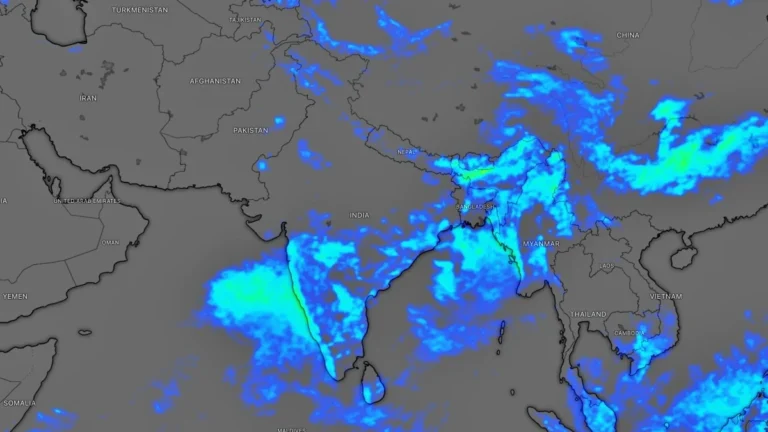
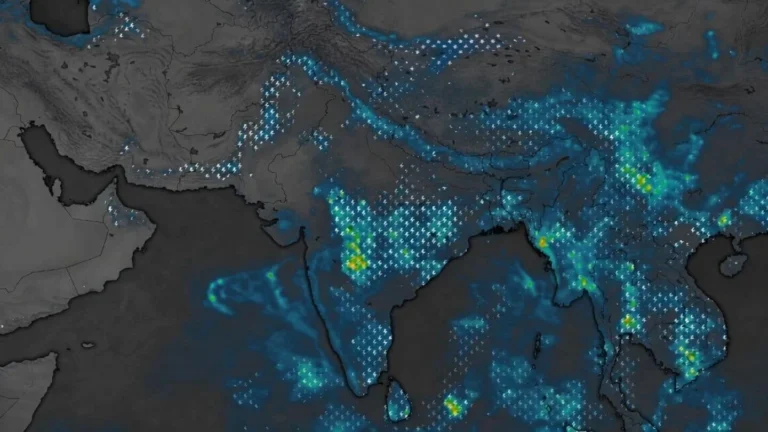
The severe deluge in West Bengal highlights a striking meteorological divide across the country during this monsoon cycle. While North Bengal and the broader Northeast face imminent flooding threats, catastrophic landslides, and severe urban waterlogging, north and central India remain trapped in a relentless heatwave. Residents in Delhi-NCR continue to experience punishing temperatures ranging between 39°C and 42°C under a yellow alert, highlighting the highly polarized nature of the 2026 monsoon deployment.
FAQs
What caused the bridge collapse in Darjeeling?
The temporary hume pipe bridge at Dudhia collapsed due to a sudden and rapid surge in the water levels of the Balason River, triggered by relentless overnight monsoon rainfall across the hills.
Which main transport routes in North Bengal are currently closed?
The Siliguri-Kurseong stretch of National Highway 110 is entirely closed due to landslides at Tindharia and Paglajhora. Additionally, all Darjeeling Himalayan Railway toy train services have been temporarily suspended.
How much rainfall did Kolkata receive during the Friday morning downpour?
Between 8.30 am and 11.30 am on Friday, the IMD recorded 43.6 mm of rainfall in Alipore, 58 mm in Dum Dum, and 80 mm in the Salt Lake locality.
When will the permanent bridge over the Balason River at Dudhia be finished?
According to West Bengal Public Works Department Minister Ajay Kumar Poddar, construction on the permanent two-lane bridge is actively underway with an allocation of over Rs 51 crore and is expected to be completed by February 2027.