India Scales Renewable Energy Strategy and Global Green Leadership
Global leaders routinely gather on 5 June to debate climate metrics, offering extensive rhetoric regarding environmental deterioration. However, measurable ecological transformations executed at a massive structural scale require direct state intervention. India currently establishes a distinctive paradigm, executing tangible infrastructural transitions that outpace conventional global sustainability benchmarks.
Key Highlights
- India achieved the third-largest global renewable energy capacity ranking, surpassing Brazil.
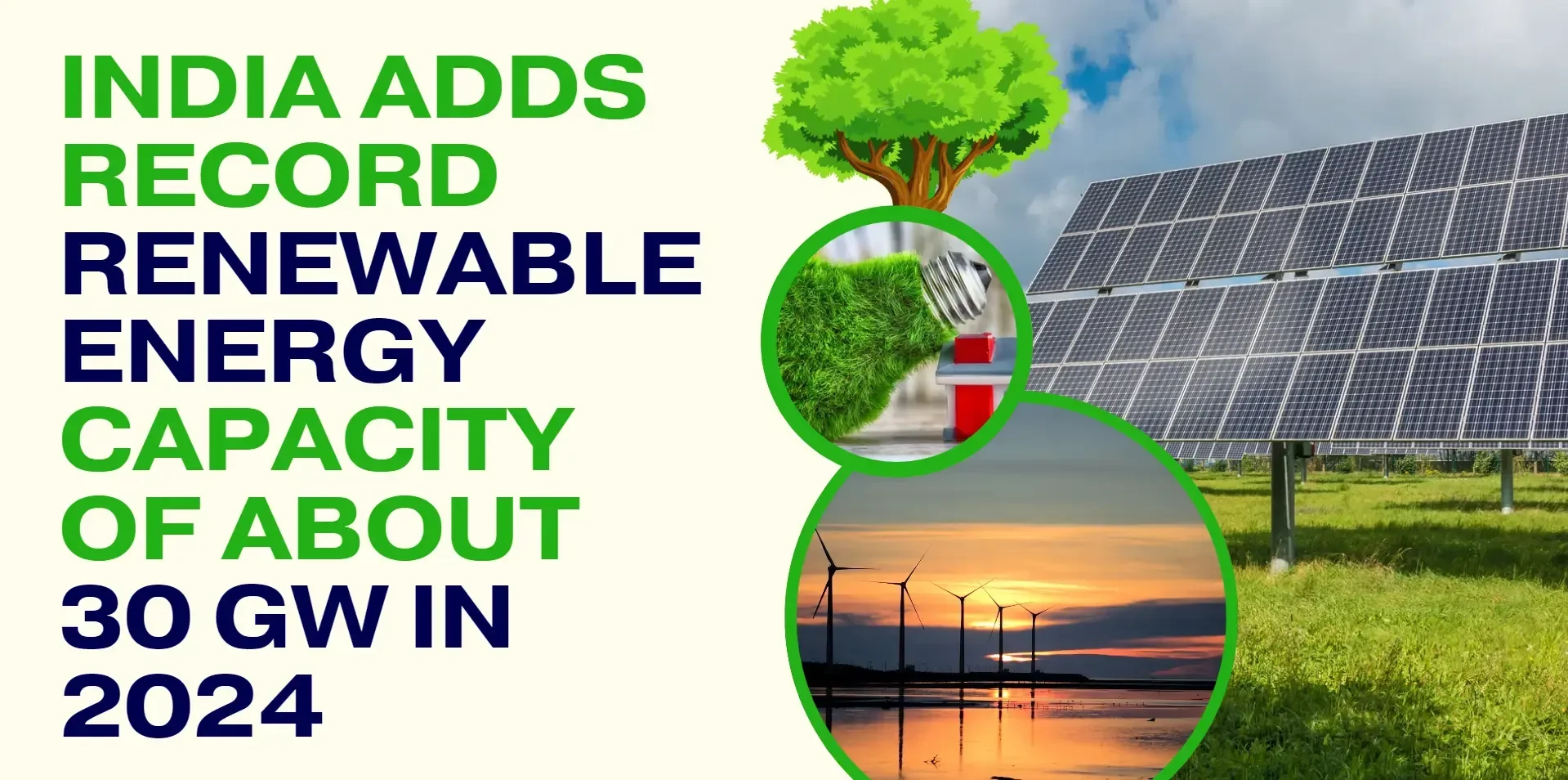
- Total domestic installed green energy infrastructure expanded eightfold to 283.46 GW by March 2026.
- Environmental preservation strategies now safeguard 8% of global recorded species on 2.4% of world land.
- The International Solar Alliance currently unites a multinational coalition exceeding 120 sovereign states.
LEDGER OF A DECADE
The administration of Prime Minister Narendra Modi transformed India’s sustainable infrastructure from a policy projection into an operational reality. The International Renewable Energy Agency confirms India holds the third position globally in green energy deployment. Domestic operational infrastructure reached 283.46 GW by March 2026, registering an eightfold growth over 10 years.
This industrial overhaul modernizes an expansive power grid supplying 1.4 billion citizens. The macro-economic implications extend far beyond basic climate frameworks. While geopolitical conflicts destabilized international fossil fuel markets, New Delhi systematically secured domestic energy sovereignty using targeted solar and wind infrastructure investments. Achieving energy self-reliance represents critical strategic risk mitigation.
The core philosophy driving this expansion maintains that ecological preservation and economic industrialization operate synergistically. New Delhi asserted at international climate summits, including COP26, that developing nations cannot isolate poverty eradication from planetary conservation. Government strategies focus on executing both mandates simultaneously through comprehensive policy frameworks.
The domestic Panchamrit climate commitments alongside the formal 2070 net-zero emissions target operate as sovereign determinations. These long-term metrics reflect calculated blueprints for a sustainable, developed nation rather than yielding to international diplomatic pressure. The transition encompasses critical industrial sectors well beyond centralized electrical grids.
India’s specialized ecological management programs demand international policy analysis. The nation encompasses merely 2.4% of global geographic territory while supporting nearly 8% of all documented biological species. Targeted long-term conservation initiatives like Project Tiger and Project Elephant demonstrate a clear policy understanding that unsustainable industrialization threatens long-term economic stability.
The International Solar Alliance, conceptualized by Prime Minister Modi and co-founded alongside France, now commands a global coalition of more than 120 nations. This partnership aims to integrate cross-border power transmission via a unified solar grid. The domestic rooftop solar initiative operationalizes these macro concepts for individual households.
THE CITIZEN’S COMPACT
Centralized administrations establish regulatory frameworks, but public participation dictates the operational velocity of ecological transitions. This principle underpins Mission LiFE, India’s international policy framework advocating sustainable consumption methodologies. The program calculates that minor, synchronized daily adjustments by 1 billion individuals generate massive macroeconomic shifts.
The United Nations Environment Programme currently analyzes this localized framework to export scalable, citizen-led climate strategies to various developing economies. At the domestic level, basic municipal actions like segregating wet and dry refuse require minimal time while optimizing regional recycling supply chains.
The widespread adoption of localized LED illumination infrastructure yields direct fiscal savings while significantly lowering aggregate electricity demand. Similarly, residential rooftop solar installations transition from subsidised environmental novelties into clear fiscal assets for middle-class homeowners.
Transitioning to electric vehicles offers quantifiable advantages for consumers updating personal transport machinery. Furthermore, utilizing electrified public transit infrastructure remains the most efficient methodology for mitigating urban traffic density and personal transport expenditures.
Modifying aggregate consumer purchasing patterns and dietary selections generates major ecological supply chain alterations. Prioritizing regionally cultivated agricultural goods and minimizing commercial packaging materials requires deliberate consumer awareness rather than economic austerity.
Integrating environmental resource awareness directly into primary academic curricula transforms sustainability from an abstract instructional topic into a fundamental societal value. Active civic participation accelerates national development goals, shifting sustainable milestones from distant policy targets into immediate structural achievements.
THE INHERITANCE WE LEAVE
For a society guided by ancient philosophical mandates regarding natural balance, modern ecological metrics represent a crucial civilizational accountability test. Ancient Vedic literature characterizes human society as a direct extension of maternal planetary ecosystems. Classical texts stipulate that humanity must utilize natural resources through structured moderation rather than systemic industrial extraction.
Modern citizens inherited a distinct cultural philosophy that prioritized harmonious ecological cohabitation. Contemporary institutions face an urgent structural question regarding their adherence to these historical sustainability principles. Validated data confirms the nation is systematically meeting those foundational obligations through verifiable industrial milestones rather than political messaging.
Historical generations understood sustainable resource management long before contemporary international organizations convened global environmental summits. Modern infrastructure initiatives effectively reactivate this historical resource wisdom. Every deployed solar array, protected wildlife corridor, and conscious consumer selection reinforces a broader civilizational return to sustainable resource equilibrium.
Future Outlook
India’s long-term environmental architecture hinges on scaling its 283.46 GW renewable foundation to meet the 500 GW non-fossil fuel capacity target by 2030. This green industrial expansion requires an estimated $200 billion in capital deployment across solar manufacturing, green hydrogen ecosystems, and grid-scale storage technologies. As international supply chains shift toward carbon-neutral compliance, India’s early adoption of localized manufacturing under the production-linked incentive schemes positions it to become an export hub for green technology. Over the next decade, the integration of smart grids and decentralized rooftop solar will likely decarbonize heavy industry while stabilizing energy costs for the expanding manufacturing sector.
FAQs
What is India’s current global ranking in renewable energy capacity?
India ranks as the world’s third-largest holder of renewable energy capacity, according to international data compiled by the International Renewable Energy Agency, having recently surpassed Brazil in total operational green infrastructure.
How much renewable energy capacity has India installed by 2026?
India’s total installed renewable energy capacity reached 283.46 GW as of March 2026. This capacity represents an eightfold expansion in domestic clean energy infrastructure over the preceding decade.
What is the primary objective of Mission LiFE?
Mission LiFE is an international policy framework introduced by India that promotes mindful and sustainable resource consumption. It focuses on leveraging small, scalable lifestyle changes by millions of citizens to create substantial collective environmental benefits.
How many countries are members of the International Solar Alliance?
The International Solar Alliance, an international initiative launched jointly by India and France to develop cross-border solar grid infrastructure, currently comprises a united coalition of more than 120 nations.