India EV Sales Surge in May 2026 as Tata Punch.ev Leads
India’s electric passenger vehicle sector recorded significant growth in May 2026, with total registrations climbing to 26,620 units. This performance reflects an 8.2% expansion compared to the 24,592 vehicles sold during the previous month, driven largely by high-volume deliveries of newly introduced micro-SUVs.
Key Highlights
- Total domestic electric passenger vehicle volumes reached 26,620 units in May 2026.
- The market achieved a month-on-month growth rate of 8.2% over April’s figures.
- Tata’s Punch.ev secured the No. 1 spot as the nation’s top-selling electric car.
- Mahindra’s freshman XEV 9S rapidly claimed the second position in overall sales.
The month of May this year proved highly advantageous for the electric passenger vehicle segment within India. Local dealerships dispatched an aggregate of 26,620 electric cars over the course of the month, demonstrating an upward trajectory from the 24,592 units distributed throughout April 2026. Consequently, the zero-emission automotive sector established a sequential growth rate of 8.2% on a month-on-month basis. This specific monthly period also marked an important milestone for Tata Motors, given that its recently introduced Punch.ev micro-SUV secured the title of the top-selling electric vehicle nationwide.
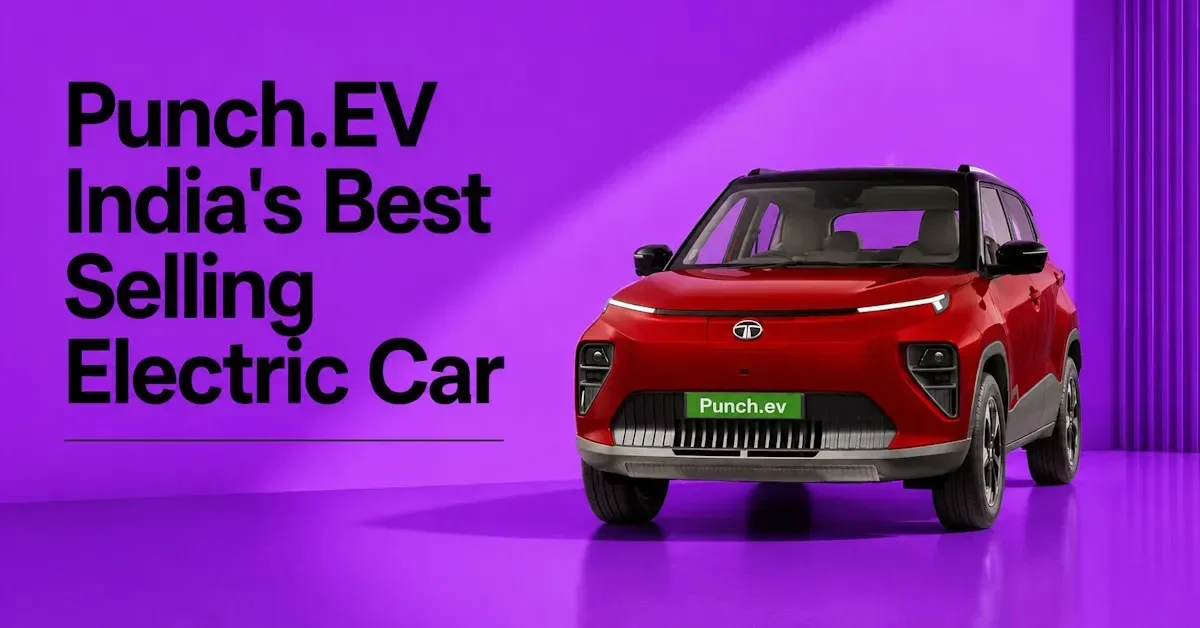
The Tata Punch.ev achieved an aggregate sales volume of 3,681 units during May 2026. This volume represents an escalation of 14% when evaluated against the performance recorded in April 2026, a surge that effectively propelled the model to become the premier electric passenger vehicle choice across the country.
Primary catalysts fueling the accelerating consumer demand for the Punch.ev involve its distinct combination of rugged sports utility styling, compact footprint, and competitive retail pricing. Tata Motors additionally implemented a product lifecycle refresh by introducing an upgraded Punch.ev facelift, which now arrives equipped with an enhanced 40 kWh energy storage option, revised onboard amenities, and a highly contemporary visual aesthetic.
The refreshed iteration features integrated rear LED illumination strips, revised alloy wheel geometries, a expanded 10.25-inch infotainment display, cooled front seating architecture, and a peripheral surround-view monitoring system. Engineering specifications from Tata Motors indicate that the 40 kWh powertrain specification delivers an official ARAI-validated driving range reaching 468 km on a single charge. This operational capability positions the model as one of the most functional electric utility vehicles available in its respective marketplace classification.
Regarding the retail cost structure for the refreshed Tata Punch.ev, the vehicle entered the Indian marketplace with a base price of Rs 9.69 lakh and extends up to Rs 12.59 lakh for the highest tier. Consumer adoption has been further stimulated by the implementation of an innovative Battery as a Service program. Under this specific acquisition model, customers can acquire the physical vehicle framework for an upfront expenditure of Rs 6.49 lakh while managing operational costs through a separate battery utilization tariff fixed at Rs 2.6 per kilometer.
As detailed in the preceding analysis, the Tata Punch.ev captured the leading industry position in India by accumulating 3,681 unit sales.
Shifting focus to the runner-up position within the domestic market, Mahindra’s recently debuted XEV 9S clinched the second spot by generating a total volume of 3,502 units. The battery-powered utility vehicle has rapidly cemented its status as an exceptionally lucrative product premiere, contrasting sharply with the design philosophy of the smaller Punch.ev. The Mahindra contender is configured as a spacious 7-seater SUV and offers buyers a choice between 59 kWh, 70 kWh, and 79 kWh battery architectures.
The third position on the national sales ladder was retained by another product from the Tata Motors portfolio, specifically the Nexon.ev, which previously held the crown as the dominant electric car in the region. Throughout May 2026, manufacturing facilities transitioned a total of 2,649 units to the dealer network. The model maintained a steady upward trajectory by posting a 6% sequential expansion rate. Despite intensifying market rivalries, the Nexon.ev successfully defended its podium placement.
Conversely, JSW MG Motor’s Windsor EV, which had recently gained momentum as a highly sought-after new entrant, encountered an abrupt commercial deceleration. During May 2026, the Windsor EV slipped to the fourth spot after logging total deliveries of 2,032 units. The monthly performance translates to a notable 38% contraction when contrasted against its April output.
The fifth highest-volume electric passenger vehicle in India was identified as the Mahindra XEV 9E, representing a highly distinct silhouette in the current automotive landscape. This specialized coupe-styled electric SUV generated a respectable monthly volume of 1,939 units. Furthermore, the XEV 9E demonstrated robust momentum by registering a 20% month-on-month acceleration in deliveries. This particular model is retailed with a choice of either 59 kWh or 79 kWh energy storage systems.
In the outer ranks beyond the leading five models, the Tata Harrier.ev demonstrated commercial presence by securing 1,833 unit sales. MG’s established ZS EV followed closely in the tracking sequence by accumulating 1,562 deliveries, while Maruti Suzuki’s newly introduced e Vitara proved its market potential by logging an institutional volume of 1,439 units.
Concurrently, the Tata Curvv.ev exhibited sustained forward progress, accounting for 1,288 units placed during the calendar month. At the same time, the VinFast Limo Green successfully surpassed the significant four-digit volume threshold by documenting exactly 1,026 vehicle sales.
Future Outlook
The rapid diversification of India’s electric vehicle market in 2026 indicates an accelerating transition toward sustainable mobility. With traditional high-volume models facing fresh competition from multi-battery platforms and alternative ownership structures like Battery as a Service, manufacturers are increasingly forced to innovate on pricing. The upcoming quarters are expected to see intensified competition as production capacities scale for newly launched vehicles like the Maruti Suzuki e Vitara and entry-level luxury offerings, potentially driving higher monthly volumes across the passenger vehicle segment.
FAQs
Which electric vehicle recorded the highest sales in India during May 2026?
The Tata Punch.ev secured the top position as the best-selling electric vehicle in India, registering total sales of 3,681 units during the month.
What is the starting price of the updated Tata Punch.ev facelift?
The vehicle is priced from Rs 9.69 lakh up to Rs 12.59 lakh. Alternatively, under the Battery as a Service program, buyers can purchase the car for Rs 6.49 lakh and pay a separate battery rental fee of Rs 2.6 per kilometer.
How did the total Indian EV market perform on a month-on-month basis in May 2026?
The domestic electric passenger vehicle market expanded by 8.2% month-on-month, with total volumes climbing to 26,620 units in May compared to 24,592 units in April.
What battery options are available for the second best-selling EV, the Mahindra XEV 9S?
The 7-seater Mahindra XEV 9S SUV is manufactured with three distinct energy storage options, including 59 kWh, 70 kWh, and 79 kWh battery packs.