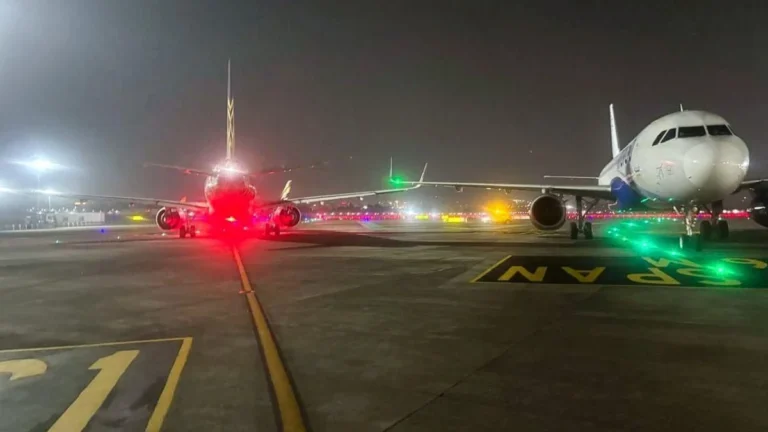
Asia-Pacific Hubs Drive Historic Growth in Air Travel
Aviation networks across the Asia-Pacific region are undergoing a massive structural transformation as rising passenger demand and infrastructure investments drive unprecedented air travel growth, establishing the corridor as the global center of aviation gravity.
Key Highlights
- China, India, Indonesia, Vietnam, and Thailand are leading a structural expansion shifting global aviation dynamics.
- Low-cost carriers are democratizing Indian and Indonesian aviation, connecting secondary and tertiary regions.
- Rapid terminal expansions in Vietnam and Thailand manage intense tourism inflows through digital processing.
- Gateway infrastructure face operational pressures, runway bottlenecks, and capacity constraints during peak hours.
Published on June 21, 2026
Aaviation networks across the Asia-Pacific are undergoing a massive structural transformation as rising passenger demand and infrastructure investments drive unprecedented air travel growth. Led by China, India, Indonesia, Vietnam, and Thailand, governments and commercial airlines are expanding fleets, constructing new terminals, and opening direct routes to handle record-breaking passenger volumes.
While these developments are improving regional connectivity and lowering fares, they are also placing pressure on key gateways. Travelers planning journeys through the region are advised to monitor flight availability and prepare for increased traffic at both primary and secondary airports.
Travel & Transportation
Quick Summary
Unified Regional Surge: China, India, Indonesia, Vietnam, and Thailand are driving a structural expansion that is shifting the center of global aviation gravity to the Asia-Pacific.
Indian Domestic Boom: India is transitioning from metro-centric hubs to a multi-city ecosystem, utilizing low-cost carriers to connect secondary and tertiary cities.
Archipelagic Connectivity: Indonesia is expanding flight frequencies and secondary airports to link remote island networks with main economic hubs.
High-Speed Expansion: Vietnam and Thailand are strengthening international gateways, utilizing digital check-ins and new routes to manage heavy tourism flows.
Middle-Class Demand: Rising incomes are turning air travel into a routine mobility option rather than a luxury, boosting both budget and premium carriers.
Context Paragraph:
The rapid expansion of airline networks and airport facilities is managed by national civil aviation authorities in coordination with regional transport ministries. As middle-class populations expand and trade links strengthen, these agencies are implementing long-term development plans to accommodate the surge in domestic and international traffic.
This alignment between corporate fleet expansion and state-backed infrastructure projects is the key driver of air travel growth in 2026, establishing the Asia-Pacific as the most active aviation corridor in the world.
Event and Incident Details: Asia-Pacific Hubs Drive Unprecedented Air Travel Growth
The aviation surge across the Asia-Pacific is characterized by coordinated investments in capacity and connectivity. Rather than being isolated to single markets, the expansion is highly interconnected, with growth in one country stimulating demand and route options across neighboring nations. China, India, Indonesia, Vietnam, and Thailand are leading this transformation, each leveraging unique geographic and economic advantages to reshape regional travel patterns.
To outline the specific strategies and operational characteristics of the key markets driving this aviation expansion, the table below highlights their focus areas, primary airlines, and infrastructure goals:
| Country / Market | Core Drivers of Aviation Growth | Key Infrastructure Focus Areas | Role of Low-Cost Carriers (LCCs) | Strategic Position in Region |
|---|---|---|---|---|
| China | Long-term planning, high domestic integration, recovering long-haul fleets | Large-scale airport construction, high-capacity corridors, province links | Supporting role; market led by major full-service state carriers | Primary coordinator of transcontinental and regional networks |
| India | Mass democratization, massive domestic demand, rising urban incomes | Transition from metro hubs to direct secondary and tertiary routes | Critical; low-cost carriers are making air travel affordable and accessible | Core engine of South Asian passenger volume and domestic expansion |
| Indonesia | Archipelagic geography, essential transport needs, expanding coastal tourism | Upgraded facilities, new runways, decentralized secondary airports | High; budget airlines provide essential inter-island links | Backbone of national and regional connectivity across island networks |
| Vietnam | Strong tourism inflows, rising outbound demand, expanding middle class | Rapid terminal expansions, airport upgrades under heavy passenger pressure | High; driving aggressive international route expansion | High-velocity hub connecting major Southeast Asian travel corridors |
| Thailand | Tourism strength, high inbound traffic year-round, secondary destinations | Bangkok gateway upgrades, capacity increases in regional airports | Significant; budget lines support tourism spread beyond cities | Stable regional connector linking long-haul and short-haul paths |
Risk and Impact: Operational Pressures and Capacity Constraints Faced by Regional Gateways
While the rapid increase in capacity has improved connectivity, it has also introduced several operational challenges:
Airport Congestion: Growing passenger volumes are placing heavy pressure on terminal check-in areas and customs queues at primary gateways.
Infrastructure Bottlenecks: Runway capacity limits and airspace congestion are causing minor delays at peak hours in fast-growing hubs.
Intense Carrier Competition: As budget airlines aggressively enter new routes, traditional carriers face price pressures and must optimize their services.
Aviation Fuel Volatility: Rising operations mean airlines are highly sensitive to fuel prices, prompting fleet modernization to reduce fuel costs.
Secondary Gateways Strain: The shift toward direct flights to secondary cities requires local airports to quickly upgrade their safety and navigation systems.
What Authorities and Industry Bodies Say About Air Travel Growth
Civil aviation regulators and international transport associations are highlighting the long-term benefits of this capacity expansion. Regional commerce departments note that the integration of digital tools—including automated processing, AI-driven ground operations, and real-time flight tracking—is essential for airports to handle these record passenger volumes. Authorities emphasize that the growth is not a temporary trend but a permanent shift, with Asia-Pacific hubs setting new benchmarks for efficiency.
In their regional updates, aviation bodies report that international connectivity is reshaping both passenger and cargo markets. The International Air Transport Association (IATA) points out that fleet expansion and new aircraft deliveries are enabling airlines to open previously unserved direct routes, reducing travel times and detour costs.
Additionally, regional aviation reports highlight that cargo demand is rising, supported by e-commerce expansion and global supply chain integration, providing airlines with a steady secondary revenue stream that helps stabilize passenger ticket prices during fuel price fluctuations.
Practical Traveler Advice: Navigating High-Volume Asia-Pacific Aviation Networks
For travelers planning to fly within the Asia-Pacific region, transport authorities suggest the following guidelines:
Utilize Digital Check-In Services: Use airline mobile apps and airport self-service kiosks to check in and print bag tags, avoiding long terminal queues.
Consider Secondary Airports: When traveling to regional destinations, look for flights landing at secondary airports to avoid primary gateway congestion.
Allow Extra Connection Buffer: With busy runways and high traffic, ensure your layovers are long enough to accommodate potential minor delays.
Compare Budget and Full-Service Options: Take advantage of the intense competition between carriers, comparing budget airline base fares with full-service packages that include baggage.
Prepare for Electronic Customs Processing: Many regional airports have introduced automated immigration gates; ensure your passport is ready for biometric scanning.
Track Local Flight Status Apps: Monitor real-time flight trackers and airport alert systems for the most up-to-date arrival and departure information.
Broader Context: Shifting Gravity in the Global Aviation Order
The rise of the Asia-Pacific region as the primary engine of air travel growth represents a significant shift in global travel patterns. Historically, North American and European networks dominated international travel. Today, the rise of the middle class in China, India, and Southeast Asia has created a massive, self-sustaining passenger base. This domestic demand provides a buffer for the region’s airlines, allowing them to remain profitable even when international long-haul routes face disruptions.
This structural shift is also driving massive aircraft order books, with regional carriers leading the world in fleet modernization. By acquiring fuel-efficient, next-generation aircraft, airlines in China, India, and ASEAN countries are lowering their seat-mile costs, allowing them to offer highly competitive pricing. This investment cycle ensures that the region will continue to lead global aviation developments for the next decade.
What to Expect Next / Looking Ahead
Over the next few years, airports and airlines in the Asia-Pacific are expected to complete key infrastructure projects, including new terminal openings in Bangkok, Ho Chi Minh City, and Delhi. Travelers should expect further digital integration, with facial recognition boarding and AI baggage tracking becoming standard across major hubs.
As long-term investments in runway capacity and route networks continue, the region is on track to consolidate its position as the core engine of global air mobility and travel connectivity. The ongoing aviation surge demonstrates that the Asia-Pacific has firmly established itself as the central hub of air travel growth. Led by the scale of China, the rapid domestic growth of India, the inter-island networks of Indonesia, and the tourism-driven routes of Vietnam and Thailand, the region is transforming global travel. By utilizing digital tools, planning routes through secondary airports, and staying informed of airport updates, international travelers can effectively navigate this high-growth ecosystem.
Future Outlook
The next phase of regional growth will heavily rely on environmental sustainability frameworks and advanced airspace management systems. As fleet counts swell across ASEAN and South Asian markets, balancing net-zero carbon targets with rapid infrastructure deployment remains the ultimate long-term hurdle for regulators.
FAQs
What is driving the air travel growth in the Asia-Pacific region?
The expansion is primarily driven by expanding middle-class populations, rising urban incomes, corporate fleet expansions, and state-backed airport infrastructure investments across major markets like China, India, and Southeast Asia.
How are airports managing the increased passenger volume?
Airports are implementing digital tools such as automated biometric check-ins, AI-driven ground operations, self-service kiosks, and real-time tracking systems alongside physical terminal expansions to improve terminal efficiency.
What operational challenges are these aviation networks facing?
The rapid surge has introduced terminal congestion, airspace bottlenecks, runway capacity limits at peak hours, intense budget carrier competition, and increased economic exposure to aviation fuel price volatility.