Portugal DR Congo World Cup Draw Features Historic Indian Heritage Connection
A historic 1-1 stalemate between Portugal and the Democratic Republic of Congo at the 2026 FIFA World Cup highlighted a rare convergence of global footballing identities, showcasing two prominent athletes of Indian heritage competing against each other on the game’s grandest international stage.
Key Highlights
- Portugal and DR Congo played to a 1-1 tie in their Group K opener in Houston.
- Goalkeeper Diogo Costa and midfielder Samuel Moutoussamy established a unique milestone for the Indian diaspora.
- Outspoken criticism from Cristiano Ronaldo’s sister sparked rumors of internal friction within the Portuguese squad.
- Arsenal legend Thierry Henry criticized Ronaldo for an individualistic performance during the match.
HOUSTON, Texas — A unprecedented milestone in international football transpired on June 17, 2026, as Portugal and the Democratic Republic of Congo battled to a 1-1 tie in Houston, featuring two athletes of Indian ancestry lining up on opposing sides. The tournament fixture captured international focus due to the shared cultural ancestry linking Portuguese goalkeeper Diogo Costa and Congolese midfielder Samuel Moutoussamy to India.
The Group K opening match generated significant field drama alongside a profound transnational narrative. Portugal entered the stadium as the heavy betting favorite, but a disciplined and energetic Congolese squad secured a historic tournament point. The African nation also celebrated its inaugural goal at this specific phase of the competition, providing a massive psychological lift to their group campaign.
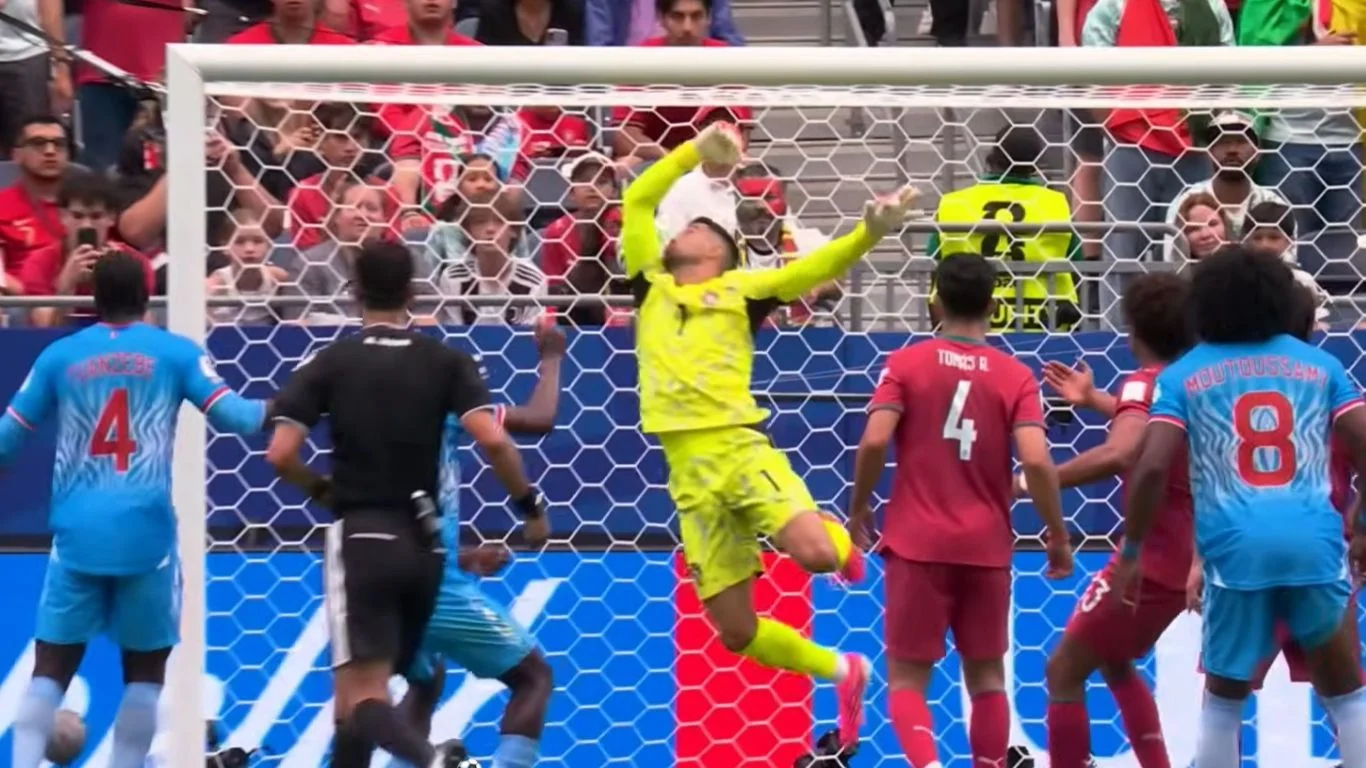
The European side initiated the scoring when João Neves found the net in the sixth minute of play. DR Congo recalibrated quickly, establishing their tactical rhythm and intensifying their offensive pressure. The equalizer arrived late in the opening half when Yoane Wissa outleaped the defense to convert a powerful header. Diogo Costa failed to deflect the shot despite early Portuguese dominance. Following the interval, both managers searched for a decisive goal. Portugal increased final-third pressure, whereas DR Congo maintained defensive compacting and launched rapid counter-attacks. Neither faction broke the parity, leaving the final score at 1-1 as points were split.
The match gained distinction because it placed two professionals of Indian descent onto the identical World Cup pitch simultaneously. Samuel Moutoussamy anchored the midfield for DR Congo, while Diogo Costa guarded the net for Portugal. Their intersecting lineage underscored the massive geographical spread of the Indian diaspora across Europe, Africa, and the Caribbean, illustrating how historical migration patterns continue to influence elite modern sports. Analysts observed how infrequently such demographic intersections occur within international football, particularly during a prestigious tournament where diverse global identities clash.
Samuel Moutoussamy was born on August 12, 1996, within Paris, growing up in a multicultural home consisting of a Congolese mother and an Indo-Guadeloupean father of Tamil ancestry. His paternal family roots trace back to South Indian laborers who relocated to the Caribbean during the late 19th century.
Operating as a defensive midfielder, Moutoussamy has played internationally for DR Congo since 2019. In club football, he represents the Greek organization Atromitos. Against Portugal, he executed a highly disciplined midfield performance, recording an 84% pass completion rate alongside two critical tackles that disrupted the opposing attack.
Diogo Costa maintains his personal connection to India via his paternal grandfather, Augusto da Silva Costa, who was born in Aldona, Goa, during the era of Portuguese colonial governance. The goalkeeper was born on September 19, 1999, in Rothrist, Switzerland, before advancing through the Portuguese developmental system.
Serving as the captain for FC Porto, Costa has secured a reputation as a premier European goalkeeper, previously appearing at the 2022 World Cup, UEFA Euro 2024, and anchoring Portugal’s 2025 UEFA Nations League championship. Against DR Congo, he surrendered one goal to Wissa’s first-half header but sustained his composure to direct the backline.
This particular fixture will be remembered for elements far beyond the scoreboard, injecting a rich cultural narrative into the tournament. The performances of Moutoussamy and Costa established an enduring benchmark for Indian-origin representation in elite football. While the 1-1 scoreline highlighted Congolese resilience and exposed Portuguese offensive inefficiency, the match produced a historic legacy.
The post-match atmosphere in the Portuguese camp grew tense after Katia Aveiro, the sister of 41-year-old forward Cristiano Ronaldo, publicly suggested on social media that teammates were intentionally sabotaging her brother. Ronaldo failed to record a single shot on target during the match, occurring less than 24 hours after Lionel Messi scored a hat-trick for Argentina against Algeria.
Aveiro, 48, posted a scathing critique on Instagram, questioning why the squad suddenly appeared unable to pass effectively or execute standard counter-attacks, labeling the tactical displays as strange. She additionally endorsed online criticism targeted at midfielder Bruno Fernandes.
Portuguese media representative Vitor Pinto minimized allegations of an organized squad boycott against Ronaldo but acknowledged the severe threat of internal polarization. Pinto noted that Portugal failed to create space or communicate efficiently with their star center-forward.
Manchester City defender Ruben Dias, 29, attempted to dismiss the escalating controversy, stating that criticism is a standard element of international tournaments. The four-time English Premier League champion emphasized that the squad remains unified and focused on closing out outside media noise.
Conversely, former French international Thierry Henry, serving as a television analyst, attributed the dropped points directly to Ronaldo’s positioning. The 48-year-old pundit argued that the Al-Nassr forward displayed selfish tendencies on the pitch that disrupted his teammates’ scoring opportunities.
Future Outlook
Group K remains highly competitive following this opening stalemate. Portugal will need to resolve internal tactical disagreements and squad friction before their next group matches if they hope to mirror their historic 1966 third-place World Cup finish. Meanwhile, DR Congo’s historic point puts them in a strong position to advance to the knockout rounds. The performance of both Samuel Moutoussamy and Diogo Costa will likely inspire greater scouting and development focus within the Indian diaspora, as global football organizations increasingly recognize the intersecting lineages shaping modern national teams.
FAQs
What was the final score of the Portugal vs DR Congo match?
The Group K opening match between Portugal and DR Congo at the 2026 FIFA World Cup concluded in a 1-1 draw in Houston, Texas.
Which players of Indian origin made history during this World Cup game?
Portuguese goalkeeper Diogo Costa, whose grandfather was born in Goa, and DR Congo midfielder Samuel Moutoussamy, who possesses Tamil heritage via his father, both started the match.
What controversy arose regarding Cristiano Ronaldo after the match?
Cristiano Ronaldo’s sister, Katia Aveiro, openly criticized the Portuguese team on social media, implying that teammates were failing to pass the ball to him and sabotaging his World Cup goals.