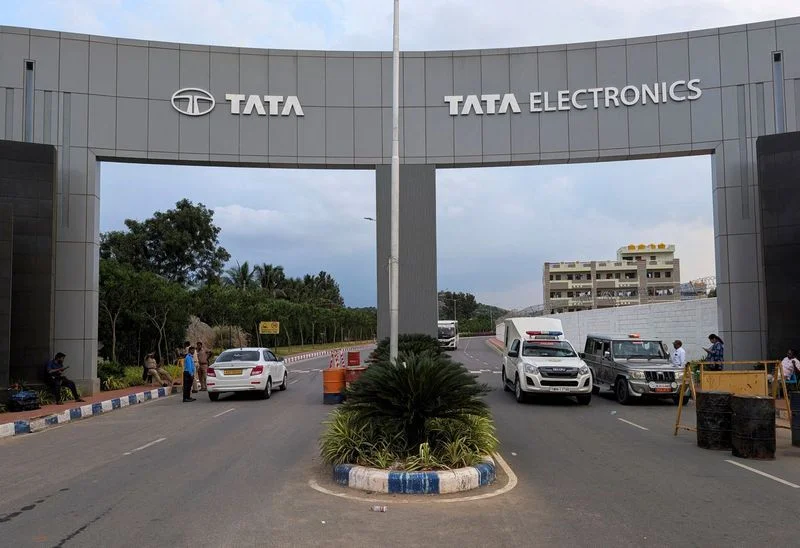
India Probes Tata iPhone Factory Waste After Farmer Health Issues
A regional health department in India is examining the impact of chemical effluents from a Tata manufacturing facility producing iPhone parts on local agriculturists, following reports of dermatological conditions caused by territorial degradation.
Key Highlights
- Regional health administrators launched an investigation into water discharge from a Tata iPhone component plant in Hosur.
- Laboratories detected E. coli in adjacent agricultural water sources, indicating sewage leaks.
- The factory remains central to Apple’s goal to construct 26% of global iPhones in India by 2026.
- Tensions escalated between local agricultural workers and corporate security personnel over site photography.
A state health department is investigating how liquid waste from an Apple supplier facility run by Tata has affected local growers, after multiple individuals reported skin irritation stemming from field pollution.
The medical inquiry creates an additional obstacle in an environmental dispute that serves as a critical indicator for India’s strategy to transform into a primary production center for Apple devices. The Tata Electronics facility situated in Hosur, located in the southern territory of Tamil Nadu, received an official warning from the regional pollution regulatory body on May 25, 2026, for allegedly fouling groundwater systems in bordering fields.
Tata announced in a public statement that environmental regulators halted their investigation after verifying that assessments of recently gathered water from inside the premises showed no signs of pollution.
The environmental regulatory board and regional administrators have declined to comment publicly and did not reply to electronic correspondence or phone inquiries. Apple similarly refrained from commenting on the matter and did not address press inquiries.
Tata failed to respond to multiple follow-up inquiries.
According to administrative insiders and an official memo, district medical investigators have run an independent inquiry since late May 2026 following grievances from agricultural workers regarding the facility, which commenced operations in 2021 to manufacture iPhone rear casings and electronic elements.
A medical assessment discovered that liquid flowing from the Tata facility generated a powerful, offensive odor and rendered regional water resources toxic for livestock consumption, according to a May 27, 2026, document dispatched by Anish Parvin, an official medical officer in the village of Ullugurukkai where the plant operates, to the state-operated Institute of Vector Control and Zoonoses in Hosur.
Effluents discharged from Tata Electronics have gathered in adjacent crop fields and are fouling the clean water reserves inside nearby wells, stated the correspondence, which remains unreleased to the public. The document added that individuals are suffering from skin-related medical conditions due to the ongoing contamination.
Parvin confirmed receiving complaints from local cultivators regarding medical issues, though no specific diagnoses have been formally confirmed by doctors.
Medical personnel sent two separate water samples obtained from the affected farmlands to a regional state laboratory for scientific evaluation, an administrative source confirmed.
The two collected samples revealed the presence of E. coli, a biological bacterium tracking back to sewage infrastructure that signals fecal contamination inside the local water network, according to a public health laboratory report dated May 30, 2026.
The inquiry by regional medical teams remains active as officials await an additional round of diagnostic test evaluations, stated Rajesh Kumar C, a senior health administrator managing public medical operations in the district.
Key State for Apple, India
The environmental clash places rural agricultural families against the Tata Group, a massive conglomerate serving as a primary manufacturing partner for Apple as the technology firm attempts to shift production networks away from Chinese facilities. India remains positioned to assemble 26% of all global iPhones by the year 2026, marking a major expansion from just 6% recorded four years prior, according to data from analytical firm Counterpoint.
Tamil Nadu operates as a primary industrial center, hosting a separate Tata assembly site alongside massive industrial complexes run by Samsung and Hyundai Motor.
The administrative focus on the Tata facility intensified after grievances raised by local growers prompted the Tamil Nadu Pollution Control Board to demand clarification from corporate executives while warning that the facility faced a potential operational shutdown.
Freshly uncovered records indicate that agricultural workers initially conveyed their concerns in a December 8 communication addressed to Tata management. The correspondence, organized by a local community group and 15 distinct farmers, claimed that factory waste fouled local streams, reservoirs, and subsoil water, stopping all agricultural cultivation.
It remains unverified if Tata management delivered any formal reply to the community communication.
An individual familiar with internal factory operations stated that a mechanical pump malfunction occurred within the corporate water processing setup in December, causing processed sewage to enter a rainwater storage basin before spilling into an external lake.
Tata personnel responded immediately to halt the drainage and completed repairs on the broken pump machinery, the individual stated.
The official code of conduct for Apple suppliers mandates that manufacturing partners discover, regulate, and minimize liquid waste while performing constant diagnostic tracking of all processing machinery. The corporate policy also demands that partners stop the pollution of rainwater runoff and satisfy every regional environmental authorization.
Government Test Reports
Environmental regulators gathered fluid samples in April from a pair of open wells situated near the industrial site. Diagnostic records revealed total dissolved solids, which calculate minerals, saline levels, and heavy metals in liquid, at 1084 and 1286 milligrams per liter. Those readings sit at more than double the 500 milligrams per liter limit established by the Bureau of Indian Standards for safe human consumption.
Industrial operations can drive up dissolved solid concentrations, leaving water dangerous for humans, local fish populations, and native wildlife without major processing, stated Nidhi Paliwal, a co-founder at the non-profit organization Paani Earth Foundation, who examined the regulatory data.
A corporate environmental review published by Tata in 2023 asserted that water quality metrics around the manufacturing grounds aligned with Indian safety benchmarks.
Field observations at the industrial location showed dark fluid inside an open agricultural well. Along sections of the factory boundary, accumulated pools of water appeared green and filled with scum.
Cultivators claim the polluted water killed active crops and stripped the surrounding soil of natural fertility.
If farmers plant seeds using this water supply, the crops sprout briefly before drying up and dying, stated Gurumoorthy V, 40, who previously cultivated tomatoes, legumes, and rice on neighboring land plots.
Independent verification of the agricultural damage or immediate verification of the water metrics was not possible.
The local dispute grew confrontational when a member of the rural community stepped onto Tata property to take photographs of a basin suspected of holding industrial waste, causing a security employee to retrieve a firearm from a nearby vehicle. The agricultural group challenged the guard before the brief standoff concluded without violence.
History of India’s iPhone Manufacturing Push
The Indian government has heavily incentivized local electronics manufacturing through financial programs to challenge China’s dominance in the global technology supply chain. Tamil Nadu has emerged as the nucleus of this industrial pivot, drawing billions in infrastructure investments from multinational corporations. However, rapid industrialization in historically rural zones like Hosur has triggered ongoing friction between corporate entities expanding production lines and traditional farming communities dependent on finite natural water tables.
FAQs
What is being investigated at the Tata iPhone components factory in Hosur?
State health authorities are investigating complaints that liquid discharged from the Tata Electronics plant has contaminated nearby agricultural lands and groundwater, causing skin issues among local farmers and making water unsafe for livestock.
What did the laboratory tests reveal about the water quality near the factory?
Testing conducted by a district public health laboratory revealed the presence of E. coli bacteria in water samples from nearby farms, indicating sewage contamination. Additionally, tests showed total dissolved solids levels up to 1286 mg/l, which is more than double the acceptable Indian drinking water standard of 500 mg/l.
How has Tata Electronics responded to the pollution allegations?
Tata stated that the state pollution control board dropped its scrutiny after recent internal water sample analyses indicated no contamination. A source also noted that a temporary pump failure in December caused a brief wastewater overflow, which was quickly repaired.
Why is this specific factory important to Apple’s global supply chain?
The Hosur plant manufactures iPhone back covers and components, serving as a cornerstone of Apple’s strategy to diversify manufacturing outside of China. India is projected to manufacture 26% of the world’s iPhones by 2026.