Ashwin Criticizes India Over Sundar T20I Role
Ravichandran Ashwin criticized the Indian team management for failing to define a clear role for all-rounder Washington Sundar in T20I cricket. Ashwin highlighted tactical inconsistencies regarding Sundar’s batting position and bowling deployment following India’s recent defeat against Ireland in Belfast.
Key Highlights
- Ravichandran Ashwin questioned the tactical utilization of Washington Sundar in India’s T20I setup.
- Sundar bowled only 1 over and scored 9 runs batting at position No. 6 against Ireland.
- Statistics reveal Sundar completed his full 4-over quota in just 25 out of 57 bowling innings.
- Analysts suggest replacing Sundar with Vaibhav Sooryavanshi for the upcoming second T20I match.
Spanning 9 years and 61 T20Is, yielding 274 runs and 51 wickets alongside a T20 World Cup crown, India struggles to optimize Washington Sundar. Veteran spinner Ravichandran Ashwin noted that the team management provides minimal clarity regarding the tactical responsibilities assigned to the young utility player.
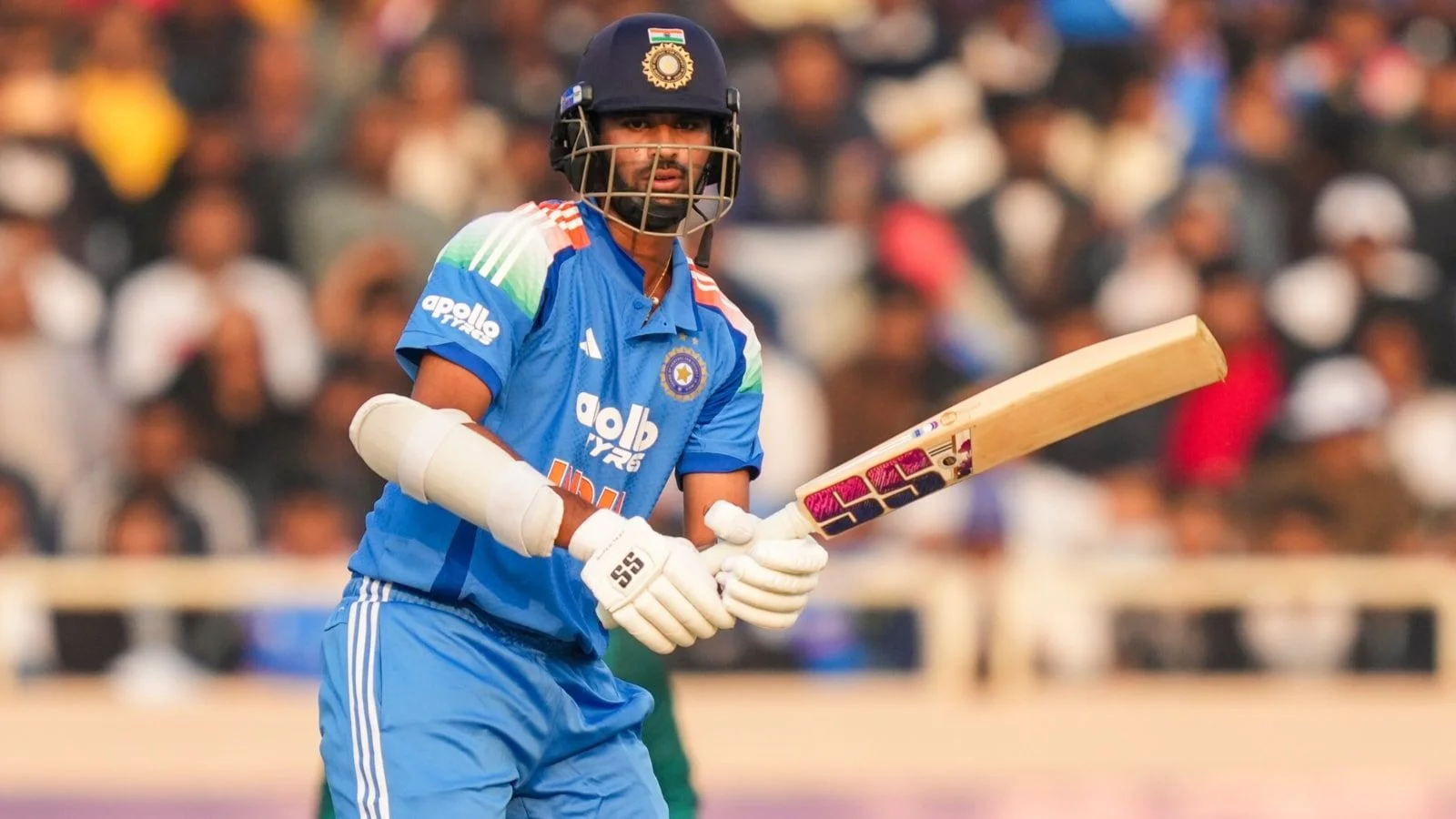
These critical observations emerged after India suffered a surprising defeat against Ireland during the Belfast T20I international match. Sundar delivered a solitary over conceding 19 runs and managed just 9 runs off 12 deliveries while operating down the order at the vital No. 6 batting slot.
Ravichandran Ashwin has questioned India team management for unclear role for Washington Sundar.
Ashwin explained on his personal digital platform that the national team management heavily supports Sundar as a permanent fixture. He observed that despite this continuous selection reassurance, the leadership group fails to define a distinct, specialized function for the player during live match situations.
The legendary off-spinner emphasized that Sundar sometimes bowls merely 1 over or remains completely unused in the field. He recalled that decision-makers previously benched vice-captain Axar Patel during the T20 World Cup to accommodate Sundar, illustrating the immense internal backing the all-rounder commands.
This executive confidence contrasts sharply with Sundar’s irregular bowling deployment throughout his international career. Across 57 T20I matches where he registered bowling spells, the off-spinner finished his complete allowance of 4 overs on only 25 occasions, leaving his tactical development incomplete.
Examining his recent 10 bowling appearances illustrates this management trend clearly. Sundar fulfilled his 4-over limit twice, delivered 2 overs across 3 separate matches, and received a single over during 5 individual games, demonstrating highly erratic tactical utilization.
Ashwin argued that the current strategy represents a severe misallocation of Sundar’s cricket capabilities. He suggested introducing him immediately after the powerplay concludes, granting him a guaranteed 4-over spell to properly evaluate his long-term potential as a reliable international asset.
Sundar’s batting statistics show a strike rate of 129.24 across 26 T20I innings. These performance numbers generally fall short of modern standards required for a specialized lower-order finisher tasked with accelerating scoring rates during the final overs.
The senior cricketer challenged this batting deployment, asserting that the team expects Sundar to execute duties unaligned with his natural cricketing attributes. He noted that forcing specific profiles onto players often hampers their international progression and overall team synergy.
Ashwin concluded that Sundar lacks the baseline traits of a traditional power-hitting finisher. He recommended utilizing him in a versatile, floating capacity, mirroring how former leaders Rohit Sharma and Rahul Dravid successfully deployed Axar Patel to disrupt opposing bowling strategies.
Future Outlook
The upcoming second T20I encounter against Ireland forces India to reconsider its tactical configuration and player personnel. Crashing to a defeat in Belfast exposes structural issues within the playing eleven, intensifying pressure on the team management to implement immediate adjustments before the series concludes.
Cricket analysts suggest that replacing Washington Sundar with Vaibhav Sooryavanshi represents a highly logical squad adjustment. This tactical substitution would allow the team to recalibrate its batting order by promoting Sanju Samson to the critical No. 3 position without disturbing the overall squad balance.
Introducing fresh talent like Sooryavanshi provides India with dynamic options in the top order while allowing established players to assume roles better suited to their experience. This reshuffling addresses the analytical criticisms raised by veteran players concerning the misuse of all-rounders in short-format cricket.
Further bowling adjustments remain under consideration as India looks to level the series. Experts indicate that Prince Yadav should replace fast bowler Prasidh Krishna to inject variation into the seam attack, especially after recent weather disruptions delayed prospects like Suryansh Shedge from experiencing local conditions.
These team selection dilemmas unfold as India simultaneously navigates broader global cricket narratives. While the men’s team resolves internal role definitions, the ICC actively combats online abuse in women’s cricket, demonstrating a comprehensive shift toward player protection across all formats of the international game.
Additionally, individual player developments like Tilak Varma addressing gaps in his spin game highlight the continuous evolution required at the international level. India’s ability to refine its tactical blueprints will determine its success as international schedules become increasingly demanding.
FAQs
Why did Ravichandran Ashwin criticize the utilization of Washington Sundar?
Ravichandran Ashwin pointed out that the Indian team management has failed to assign a clear, specific role to Washington Sundar, often underutilizing his bowling capabilities and playing him out of position as a lower-order finisher.
What are Washington Sundar’s bowling statistics in T20Is?
Washington Sundar has played in 61 T20Is and bowled in 57 matches, completing his full 4-over quota on only 25 occasions. His recent matches show highly inconsistent usage by the team management.
What batting position did Washington Sundar occupy against Ireland?
During the T20I match against Ireland in Belfast, Washington Sundar batted at the No. 6 position, scoring 9 runs off 12 balls, a role Ashwin considers unsuitable for his strengths.
Who are the suggested replacements for India’s upcoming T20I matches?
Cricket experts suggest that introducing Vaibhav Sooryavanshi for Washington Sundar and replacing Prasidh Krishna with Prince Yadav would be logical changes to improve team balance and performance.