Yogi Adityanath Slams Congress on 1975 Emergency Anniversary
Uttar Pradesh Chief Minister Yogi Adityanath condemned the 1975 Emergency as the darkest period in the democratic history of India, accusing the Congress party of subverting constitutional ideals to maintain political power during a commemorative event held in Lucknow on Thursday.
Key Highlights
- Chief Minister Yogi Adityanath labeled the 1975 Emergency as the darkest chapter in Indian democracy.
- He accused current opposition leaders of abandoning their predecessors’ anti-Congress principles.
- The event marked the 51st anniversary of the Emergency, observed as “Samvidhan Hatya Diwas.”
- Adityanath contrasted historical political suppression with current central welfare achievements.
The CM was speaking at the ‘Loktantra Senani Samman Samaroh’ held in the state capital to mark the 51st anniversary of the Emergency—observed as ‘Samvidhan Hatya Diwas’
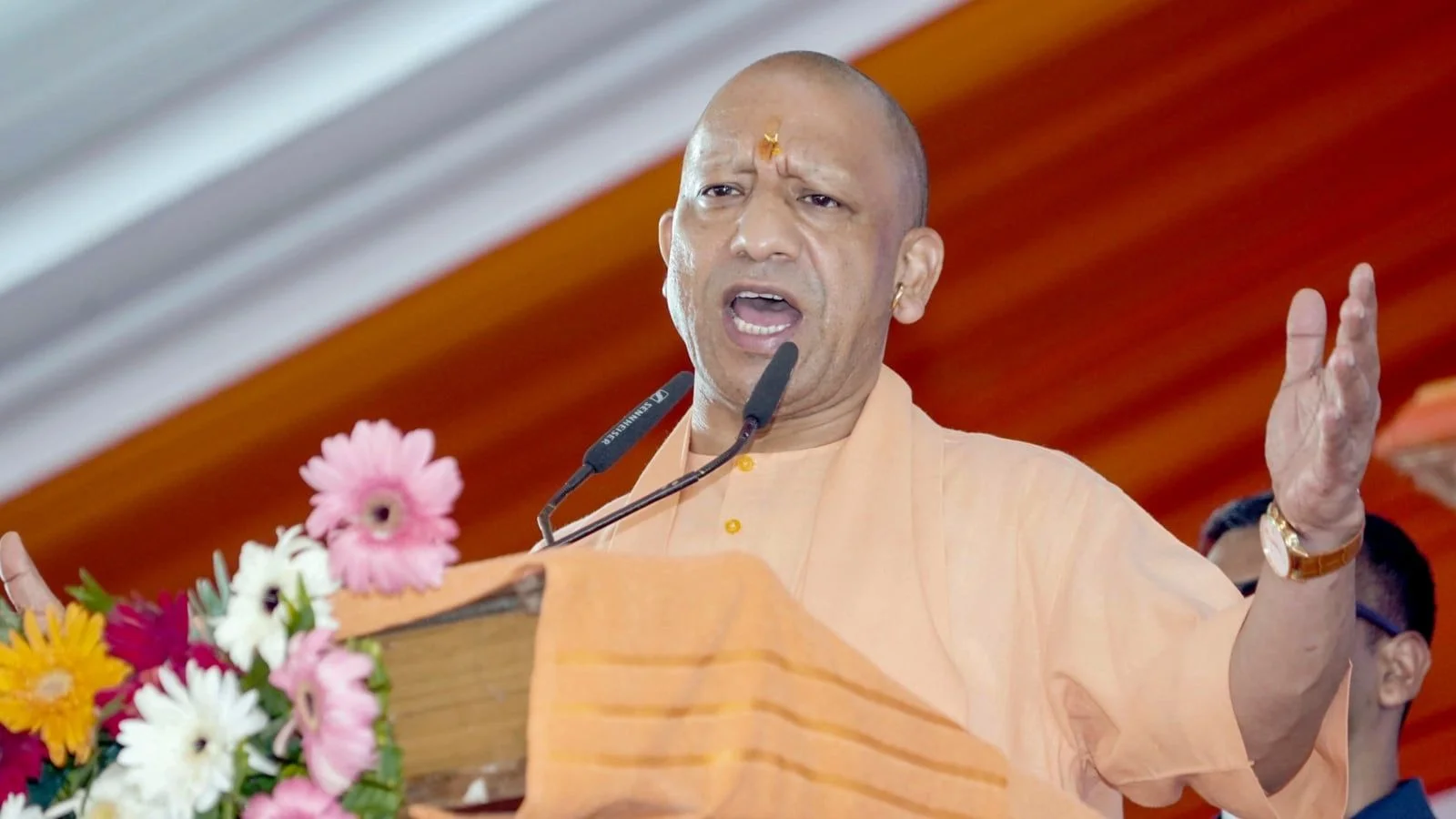
The Chief Minister highlighted several central government achievements as evidence of a strengthened democracy. File Image: PTI
Characterising the 1975 Emergency as the darkest chapter in India’s democratic history, Uttar Pradesh Chief Minister Yogi Adityanath on Thursday accused the Congress party of attacking the constitutional dreams of Babasaheb Ambedkar out of a selfish desire to retain political power.
Speaking at the “Loktantra Senani Samman Samaroh” held in the state capital to mark the 51st anniversary of the Emergency—observed as “Samvidhan Hatya Diwas”—the Chief Minister also targeted contemporary opposition leaders, stating that the current generation of Lalu Prasad Yadav and the late Mulayam Singh Yadav has forgotten the excesses of the Congress and is now practising politics under its shadow.
The Chief Minister stated that the Congress had committed a historic sin by imposing the Emergency on June 25, 1975, to prevent the implementation of an adverse court order and to strangle national democracy. He argued that the suspension of citizens’ rights, the curtailment of judicial powers, and the imposition of media censorship were all orchestrated to suppress dissent from political parties, social organisations, and the youth.
In a direct critique of current political dynamics, the Chief Minister pointed out that the Preamble to the Constitution was altered during this period. He alleged that the current leadership of the Congress is misleading the public by carrying copies of the Constitution while representing a legacy that systematically weakened it. He urged the younger generation to recognise this history, noting that “Samvidhan Hatya Diwas” was instituted precisely to foster this historical awareness.
The Chief Minister drew a sharp contrast between past and present regional politics, recalling that Samajwadi Party founder Mulayam Singh Yadav had consistently opposed forging alliances with the Congress. He remarked that the current successors are endangering that political legacy by aligning with a declining Congress party.
According to the Chief Minister, these political factions continue to promote dynastic politics and weaken democratic frameworks, acting in opposition to foundational constitutional values.
Invoking Prime Minister Narendra Modi’s statements at the G-20 summit, the Chief Minister asserted that India is the mother of democracy, with democratic traditions embedded deeply in its history. He maintained that the true strength of a democracy is reflected in welfare schemes designed to support individuals standing at the final rung of society.
The Chief Minister highlighted several central government achievements as evidence of a strengthened democracy, including the provision of housing for 4 crore people, toilets for 12 crore families, cooking gas connections for 10 crore households, and free rations for 80 crore citizens. He added that the baseline of governance under the current administration remains strictly focused on inclusive development without any discrimination based on caste, faith, religion, or language, urging citizens to remain vigilant against forces that have historically subverted democratic processes.
The commemorative event was attended by state Finance and Parliamentary Affairs Minister Suresh Kumar Khanna, several legislators, senior party officials, and a large gathering of Loktantra Senanis who were formally honoured during the programme.
Historical Context of the 1975 Emergency
The Emergency was declared by Prime Minister Indira Gandhi on June 25, 1975, and remained in effect for a 21-month period until March 21, 1977. This era allowed the prime minister to rule by decree, suspending civil liberties, jailing political opponents, and silencing the press.
The declaration followed an adverse ruling by the Allahabad High Court, which invalidated Indira Gandhi’s election victory due to electoral malpractices. In response, her administration utilized constitutional emergency provisions to jail prominent opposition leaders, including Jayaprakash Narayan, Atal Bihari Vajpayee, and Lal Krishna Advani. The Central government recently designated June 25 as “Samvidhan Hatya Diwas” to ensure future generations remember this unprecedented political crackdown.
FAQs
What is Samvidhan Hatya Diwas?
Samvidhan Hatya Diwas is observed on June 25 to commemorate the anniversary of the 1975 Emergency declaration. The day is dedicated to honoring those who fought against the authoritarian regime and raising historical awareness among younger generations.
Who are Loktantra Senanis?
Loktantra Senanis are individuals who actively protested and resisted the suspension of democratic rights during the Emergency period between 1975 and 1977. Many of these individuals were imprisoned or persecuted for defending democratic principles.
Why did Chief Minister Yogi Adityanath criticize the opposition?
Chief Minister Yogi Adityanath criticized modern opposition leaders for forming alliances with the Congress party. He noted that their predecessors, such as Mulayam Singh Yadav and Lalu Prasad Yadav, originally established their political movements by fighting against the Congress party’s Emergency excesses.
What central welfare statistics did the Chief Minister highlight?
The Chief Minister pointed out that democracy has been reinforced through massive welfare metrics, including housing for 4 crore individuals, toilet facilities for 12 crore households, cooking gas utilities for 10 crore families, and free nutritional rations for 80 crore citizens.