India Democracy Dispute: AAP Alleges Emergency As BJP Fires Back
A severe political dispute has erupted in India as opposition and ruling party leaders clash over the structural health of the nation’s democratic institutions, trading sharp accusations regarding historical and modern authoritarianism.
Key Highlights
- AAP Delhi President Saurabh Bhardwaj claims India is operating under an undeclared emergency that began 12 years ago.
- Bhardwaj alleges major federal agencies and transparency laws are facing unprecedented state coercion.
- BJP leaders countered the claims on June 25, observing ‘Samvidhan Hatya Diwas’ to remember the 1975 Emergency.
- Chief Ministers from Rajasthan and Chhattisgarh condemned the Congress party for historical constitutional violations.
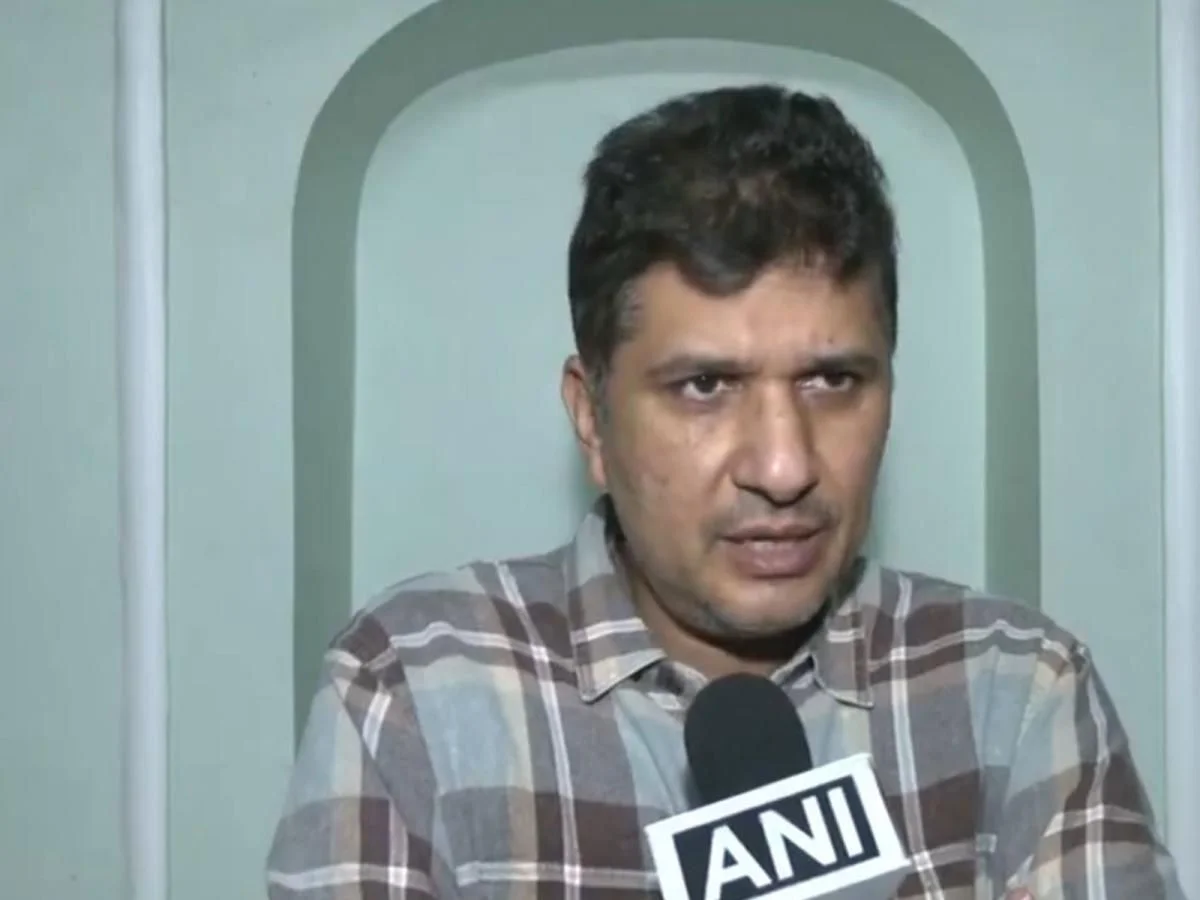
New Delhi , June 25 : Aam Aadmi Party (AAP) Delhi President Saurabh Bhardwaj on Thursday expressed hopelessness over the current state of India’s democratic framework, alleging that the nation is experiencing conditions akin to an undeclared emergency.
Speaking to ANI, Bhardwaj emphasised that the preservation of democracy is inextricably linked to the autonomy and integrity of the country’s foundational institutions on the occasion of ‘Samvidhan Hatya Diwas’.
Bhardwaj asserted that key bodies, including the Election Commission, the Enforcement Directorate (ED), the Central Bureau of Investigation (CBI), and the Income Tax Department, are facing unprecedented pressure. He also highlighted the erosion of transparency mechanisms like the Right to Information (RTI) Act as a critical blow to democratic accountability.
“If democracy is to be saved, the most important thing is to protect the country’s institutions, constitutional institutions, whether it is the Election Commission, ED, CBI, Income Tax Department, or the Right to Information Act,” he said.
According to the AAP leader, the weakening of these pillars began with the change in central leadership 12 years ago. He argued that the current administration’s approach has effectively paralysed the independence of these offices.
The AAP Delhi President drew a sharp parallel between the current political climate and the former Emergency era of the past. He suggested that while no formal declaration has been made, the systemic impact on civil liberties and institutional function reflects an “emergency-like” state.
“For the last 12 years, we have seen that after Prime Minister Narendra Modi came into power, all these constitutional institutions are being murdered, and almost emergency-like conditions are prevailing in the country today without any declaration of emergency,” Bhardwaj stated.
Meanwhile, Bharatiya Janata Party (BJP) leaders hit back at the Congress party, reminding the nation of the atrocities committed during the 1975 Emergency.
In Jaipur, Rajasthan, Chief Minister Bhajanlal Sharma said the youth must be educated on how the Congress “murdered” the Constitution decades ago.
“The way they (Congress) murdered the Constitution… they put people, journalists, volunteers, and patriots behind bars. Today you will see that many of them were arrested from the very beginning, without complete information… This should be told to our future generations, our youth, about how Congress murdered the Constitution. Our freedom fighters fought for our country’s freedom, and the democracy fighters have worked to save our Constitution,” Sharma said.
Voicing a similar opinion, Chhattisgarh Chief Minister Vishnu Deo Sai, speaking in Raipur, described June 25 as a day of mourning for democracy.
“Today is 25 June, and we are observing this day as ‘Samvidhan Hatya Diwas’ because it was on this day in 1975 that the Emergency was imposed in the country, effectively murdering democracy and the Constitution. All non-Congress leaders were imprisoned, and the rights guaranteed by the Constitution, as well as the rights of the media, were snatched away. Citizens were deprived of their fundamental rights, and many families were also ruined,” Sai remarked.
On June 25, 1975, the then-President Fakhruddin Ali Ahmed issued the Emergency Proclamation under Article 352, citing “internal disturbance.”
India was placed under an Emergency between June 25, 1975 and March 21, 1977. The then Prime Minister Indira Gandhi is widely criticised for the suspension of fundamental rights during the period, and for arresting opposition leaders, including Jayaprakash Narayan, under the stringent Maintenance of Internal Security Act (MISA). JP Narayan had led the Sampoorn Kranti Bihar Movement against the Congress government in the 1970s.
As per the Shah Commission reports, the period witnessed mass detention, a sterilisation drive, and censorship of the press.
The BJP marks June 25 as “Samvidhan Hatya Diwas”.
History of the 1975 Indian Emergency
The 1975 Emergency remains one of the most controversial periods in modern Indian political history. Initiated via a midnight proclamation by President Fakhruddin Ali Ahmed under Article 352 of the Constitution, it suspended the democratic framework of the country for a direct span of 21 months.
During this interval, the administration under Prime Minister Indira Gandhi systematically jailed political adversaries, silenced the press through sweeping censorship, and suspended primary civil liberties. The heavy-handed measures implemented during this era continue to serve as a primary talking point for contemporary political debates regarding authoritarian overreach and constitutional preservation.
FAQs
Why does the BJP observe June 25 as Samvidhan Hatya Diwas?
The BJP marks this date to commemorate the anniversary of the 1975 Emergency declaration, aiming to highlight historical actions by the Congress party that they characterize as a systemic dismantling of the Indian Constitution.
Which central institutions did Saurabh Bhardwaj claim are under pressure?
The AAP leader explicitly stated that the Election Commission, the Enforcement Directorate (ED), the Central Bureau of Investigation (CBI), and the Income Tax Department are facing immense executive interference.
How long did the historical Indian Emergency last?
The state of Emergency was active in India for nearly two years, running specifically from June 25, 1975, until its official revocation on March 21, 1977.