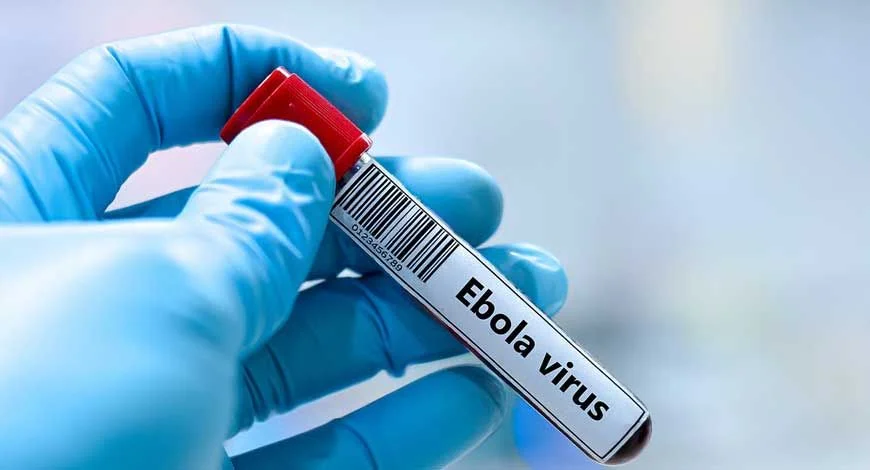
White House Demands $1.4B Emergency Funds for West Africa Ebola Response The White House requested
White House Demands $1.4B Emergency Funds for West Africa Ebola Response The White House requested $1.4 billion from Congress to contain a spreading Ebola outbreak in Central Africa, amid a broader $87.6 billion wartime spending package. The dynamic funding includes human security, quarantine network implementation, and global health defense.
Key Highlights
- The executive branch requested $1.4 billion specifically targeting the worsening Ebola viral spread.
- The health request sits inside a larger $87.6 billion emergency national security package sent to Congress.
- Funding targets an $800 million quarantine infrastructure in Kenya alongside global surveillance.
- Lawmakers express immediate friction over preceding executive freezes on global medical assistance.
The executive mansion is requesting upward of $1.4 billion in emergency capital from lawmakers to combat an expanding Ebola virus epidemic, including $800 million dedicated to humanitarian stabilization, according to senior administration officials.
This fiscal maneuver forms a segment of a multi-billion dollar supplemental request finalized on Wednesday via an official executive notification dispatched to capital hill.
The structural blueprint earmarks $800 million to construct an isolation and quarantine facility based in Kenya for American nationals exposed to the contagion, alongside provisioning medical gear, emergency treatment, tracking networks, and rigorous localized infection protocols.
Federal health directors are simultaneously lobbying for $500 million in international health security capital. These specific reserves aim to insulate the domestic population by enhancing border verification, laboratory infrastructure, and cross-border public-private partnerships.
An additional $90 million is designated for immediate diplomatic contingencies. This includes funding secure extractions and specialized bio-containment transport for infected American citizens requiring high-tier domestic medical units.
Legislative strategists warn the package faces severe headwinds inside the Capitol. Lawmakers, including a faction of conservative congressional representatives, remain deeply frustrated by previous executive decisions to freeze previously authorized foreign humanitarian aid and international medical assistance.
The geopolitical timing draws sharp scrutiny, following systemic budget contractions hitting the U.S. Agency for International Development and African disease prevention networks right before this current viral emergency materialized.
Serious response needed The current epidemic in the Democratic Republic of Congo is driven by the uncommon Bundibugyo ebolavirus variant. Total infections have surpassed 1,000 individuals, claiming 267 lives, marking the fastest-accelerating transmission rate recorded during the opening month of any known outbreak, per World Health Organization tallies.
Historically, the two most devastating outbreaks occurred across West Africa between 2014 and 2016, primarily destabilizing Guinea, Sierra Leone, and Liberia, followed by a separate multi-year crisis inside Congo starting in 2018.
Public health researchers note that an outbreak of this magnitude demands an immediate, heavily capitalized intervention to prevent uncontrolled international geographic expansion.
Analysts estimate the $1.4 billion figure corresponds to field requirements, contrasting it with the $266 million total American expenditure deployed during the less severe Congolese viral wave between 2018 and 2020.
Operational specifics remain contentious, particularly the capital allocated for the isolation complex in East Africa, a structural buffer designed to intercept potential viral vectors before they reach the domestic mainland.
Washington previously authorized emergency capital, with the Centers for Disease Control and Prevention freeing $107 million in urgent contingencies while signaling this crisis could mutate into the most severe outbreak on record.
Federal agencies modified historical protocols by supplying experimental monoclonal antibody therapies directly to international clinical trial pipelines, pivoting from previous mandates reserving these cutting-edge therapeutics exclusively for domestic patients.
Concurrently, European health authorities confirmed a humanitarian medical officer returning to France from a deployment in Central Africa tested positive for the disease, representing that nation's initial imported case.
Despite the European transmission, international health directors maintained that the verified probability of immediate, uncontained global vector acceleration remains statistically nominal.
The Broader $87.6 Billion Budget Request
The health emergency request arrived on Capitol Hill conjoined to a massive $87.6 billion supplemental funding bill predominantly designed to finance ongoing military operations in the Middle East. The overarching defense package allocations include:
| Allocation Category | Requested Funding | Core Objective |
|---|---|---|
| Department of Defense | $67.0 billion | Operation Epic Fury military costs and munitions restocking |
| Agricultural Assistance | $11.1 billion | Economic relief and subsidies for domestic farmers |
| Ebola Outbreak Response | $1.4 billion | International humanitarian aid, containment, and tracking |
| District Infrastructure | $500 million | Capital construction projects around Washington, D.C. |
Historical Context and Future Outlook
The sudden request for $1.4 billion in emergency health funds marks a significant escalation in global bio-defense spending, drawing immediate comparisons to the historical West African outbreak of 2014-2016. During that period, international delays in funding severely hampered initial containment efforts, allowing the virus to spread exponentially across multiple borders. The current deployment of an experimental antibody drug indicates a more proactive medical strategy. However, the integration of health funding into a highly contested $87.6 billion wartime supplemental bill complicates its legislative path. Moving forward, the realization of the Kenyan quarantine center and advanced tracking networks hinges entirely on the administration's ability to navigate deep political divisions regarding foreign aid spending and broader military commitments.
FAQs
What strain of the virus is causing the current Ebola outbreak?
The current outbreak is linked to the rare Bundibugyo strain of the virus, which has infected over 1,000 people and resulted in 267 deaths within its initial stages.
Why is the White House funding a quarantine center in Kenya?
The White House has earmarked part of the $1.4 billion request to build an $800 million quarantine center in Kenya to monitor and treat Americans exposed to the virus before they return to the United States.
How does this funding request compare to past Ebola spending?
The $1.4 billion proposal represents a massive increase compared to the $266 million the United States spent during the smaller Democratic Republic of Congo outbreak between 2018 and 2020.
Why is the emergency Ebola funding tied to a larger spending bill?
The health funding is part of a broader $87.6 billion supplemental request submitted to Congress, which includes $67 billion for defense costs and $11.1 billion for domestic agricultural aid.