Former Australian PM Scott Morrison Joins Indian Visa Firm BLS International
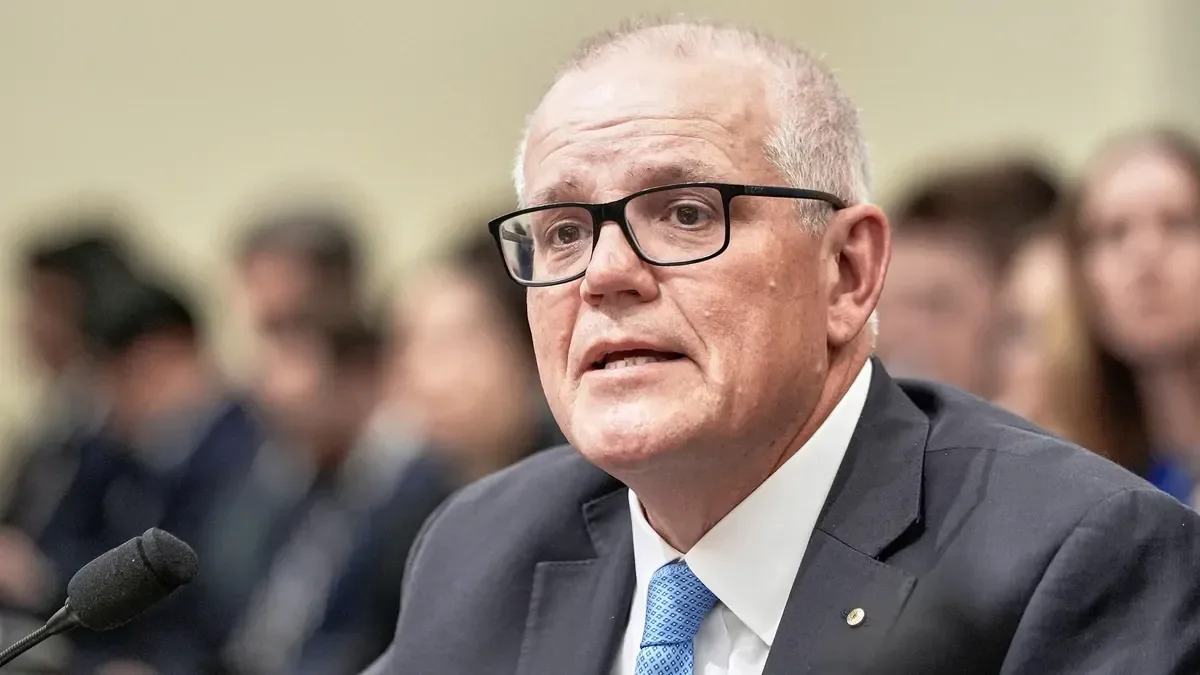
Former Australian Prime Minister Scott Morrison has accepted a corporate position with BLS International, an Indian visa and citizenship services provider. The appointment coincides with intense domestic debate regarding immigration levels and public service outsourcing.
Key Highlights
- Former Prime Minister Scott Morrison joins Indian visa processing firm BLS International to guide its global growth strategy.
- The corporate appointment draws heavy criticism from political opponents citing his administration’s public service record.
- The Coalition, under new opposition leadership, simultaneously signals a more restrictive approach to national immigration policy.
- Labor government officials defend targeted skilled migration as vital to resolving the domestic housing crisis.
As the Liberal Party campaigns for stricter limitations on immigration to Australia, former Prime Minister Scott Morrison has secured an unexpected private sector role.
Karl Stefanovic speaks out after Nine departure
The former leader is now a corporate strategist for an Indian firm managing international passport, visa, and identity services.
His recruitment by BLS International, which markets itself as a globally trusted, tech-enabled, AI-powered service partner, drew sharp condemnation from critics who highlight his administration’s connection to automated welfare debts.
The New Delhi-headquartered corporation announced it intends to leverage his economic, trade, and commercial background to advance its long-term expansion through technology deployment, government relations, and public-sector restructuring.
According to corporate disclosures, his public career emphasized market economics, financial sector regulation, infrastructure investment, and international trade diversification.
The organization noted that the former prime minister possesses an established background collaborating with corporate boards, private equity funds, and international advisory operations.
In official corporate communications, Australia’s 30th Prime Minister expressed enthusiasm for expanding the enterprise, which was established in 2005.
He described the enterprise as a trusted partner to public administrations across multiple continents with a reputation for executing government-to-citizen services.
He stated that he aims to offer strategic insights supporting growth plans that provide public administrations with better mechanisms to serve citizens and international travelers.
He noted that future public service delivery requires governments and corporate partners to integrate innovation, national security, efficiency, and system integrity.
He anticipated that the corporation would expand its market share in government-to-citizen services to fulfill these evolving public demands.
Since assuming leadership of the Opposition in 2026, Angus Taylor has advocated for restrictive immigration targets as the Liberal Party competes for voters aligned with Pauline Hanson’s One Nation.
This week, Taylor declined to explicitly confirm whether the Coalition maintains its commitment to multiculturalism while avoiding direct endorsement of rival political demands for cultural homogeneity.
When questioned multiple times regarding whether the Coalition would match populist demands to dismantle multicultural policies, the Opposition leader stated his preference was to see residents embracing core Australian values.
Last month, independent reporting highlighted Labor frontbencher Tony Burke praising the contributions of the growing Indian diaspora while arguing structured immigration forms part of the national housing solution.
In an extended policy discussion with media host Pawan Luthra, the Home Affairs Minister, who oversees immigration and citizenship, stated Australia requires highly skilled migrants more than ever before.
Burke noted that 50% of practicing doctors and registered nurses nationwide were born overseas, alongside 25% of the tradespeople required to construct domestic housing infrastructure.
Greens Senator Barbara Pocock, a prominent critic of previous Coalition governance models, stated that the corporate appointment should raise immediate concerns for taxpayers and citizens.
She stated that the nation is still managing the severe consequences of the previous administration’s automated decision-making frameworks and an excessive reliance on outsourcing core public operations.
The Senator asserted that public administration was left severely diminished while major consulting corporations secured historic profit margins under his leadership.
She argued that the prospect of the former leader advising global outsourcing firms would please corporate profiteers but disadvantage citizens who fund low-quality privatized public services.
Since exiting parliament in 2022, the former prime minister has also maintained a role with American Global Strategies LLC, an international consulting firm connected to the defense sector.
Historical Context
The transition of former political leaders into international corporate advisory roles is a well-established practice in Australian public life, though it frequently invites scrutiny regarding lobbying rules and post-ministerial employment ethics. Scott Morrison’s shift to BLS International places him at the center of global government-to-citizen technology procurement, an industry that expanded dramatically between 2010 and 2026 as nations digitized border infrastructure. This appointment occurs against the backdrop of systemic public service changes initiated during his tenure as prime minister from 2018 to 2022, a period marked by unprecedented reliance on external consultancies and automated compliance systems. The domestic political blowback reflects deep partisan divisions over public sector privatization and the structural integrity of automated government processes.
FAQs
What is Scott Morrison’s new role at BLS International?
The former Australian Prime Minister has been hired to utilize his economic, trade, and commercial background to assist the company’s long-term growth, institutional partnerships, and government engagement strategies.
What services does BLS International provide?
Founded in 2005, BLS International is a global tech-enabled service partner headquartered in New Delhi that specializes in managing visa, passport, citizenship, and government-to-citizen services for various nations.
Why is this corporate appointment attracting political criticism?
Critics, including representatives from the Greens, argue that his transition to a government services outsourcing firm is concerning given his past administration’s record on public service privatization and automated compliance programs.
What is the current Opposition stance on immigration?
Under the leadership of Angus Taylor in 2026, the Opposition has pushed for a tougher stance on immigration levels and focused on promoting core Australian values amidst shifting political dynamics.