WEL Energy Trust Election Sparked by Statistical Row
Top contenders in the upcoming WEL Energy Trust election are locked in a fierce dispute regarding financial statistics used in promotional campaign materials.
Key Highlights
- Candidates disagree over the presentation of community grants and power discounts distributed during their respective tenures.
- The infrastructure trust oversees assets valued at more than $1.1 billion for over 102,000 regional connections.
- A minor calculation error was conceded by the incumbent team, though they maintain the overarching financial trends remain accurate.
- The voting window closes officially at midday on June 26, 2026.
Michael West and his Your Discounts Team have leveled a series of serious accusations against Alan Chew and the competing MORE Team. West claimed his rivals deployed deceptive numbers and manipulated public data to influence voters ahead of the poll.
The allegations were quickly dismissed as a minor and irrelevant grievance by Chew, a prominent member of the MORE Team and the established founder of the Houston Technology Group.
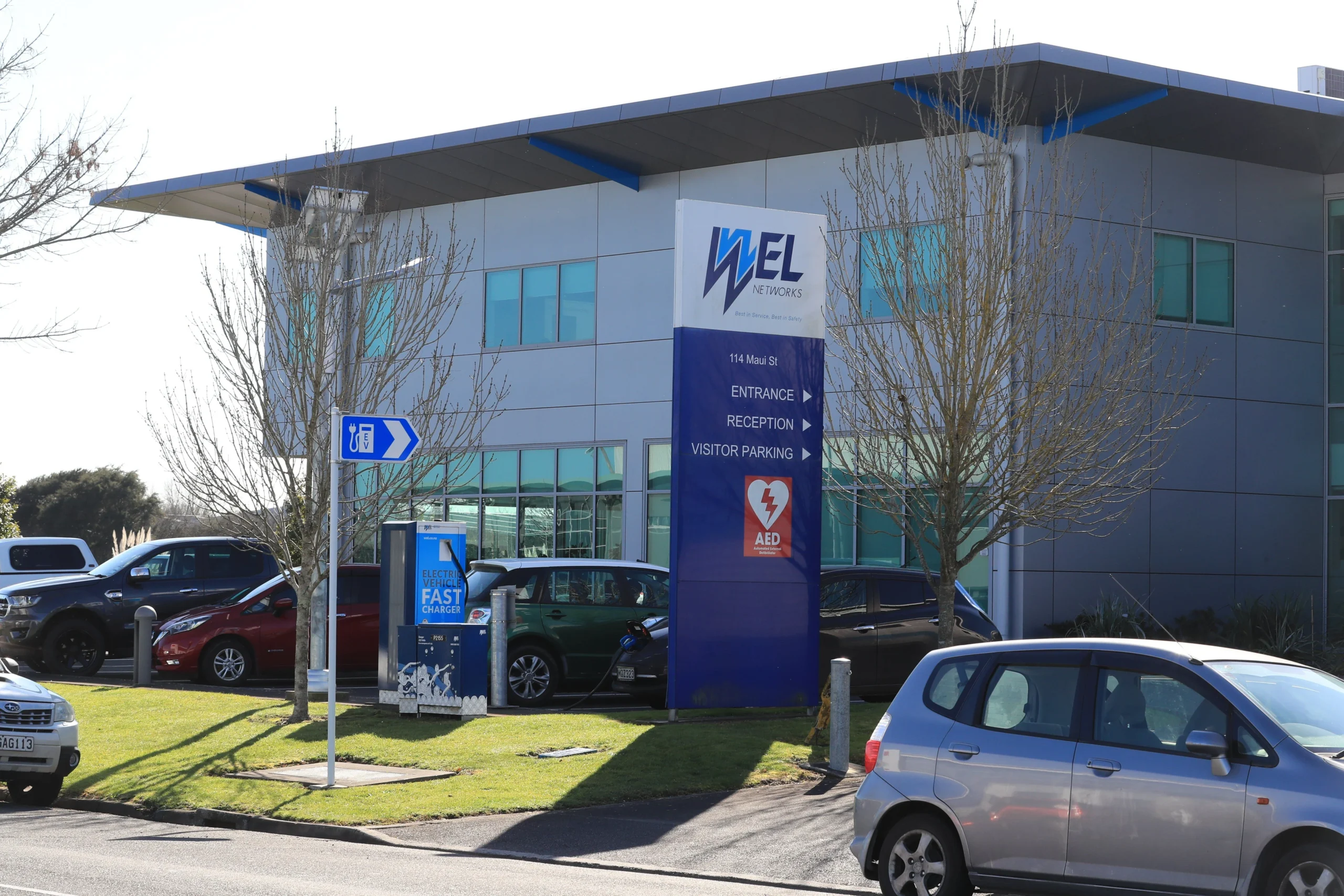
The regional Waikato Trust holds stewardship over community assets exceeding $1.1 billion, operating a network that links upward of 102,000 residential properties and commercial entities to power suppliers. Historic voter turnout for this specific energy entity election rarely climbs past 12%.
West raised formal objections to the specific phrasing in Chew’s published candidate profile. He argued that noting a 2023 re-election alongside figures showing a 61% lift in grants, a 41% rise in power discounts, and a 35.8% discount surge for the 2026/27 period gave an inaccurate impression. He asserted these metrics wrongly implied all milestones occurred exclusively within that single three-year governance cycle.
He countered that genuine audited records spanning financial year 2023 to financial year 2026 demonstrated an 85% expansion in community funding, while actual electricity discounts shifted upward by a mere 2.8%.
Furthermore, he noted that although an escalation in consumer discounts achieved authorization for the 2026/27 fiscal cycle, the verified rate increase sits at 29% rather than the 35.8% published across candidate bio pages.
He additionally identified what he termed inaccurate data regarding the MORE Team’s public assertion that they successfully elevated consumer discounts by a total of $13 million over the preceding three years.
He pointed out that total distributions grew from $14.2 million in the 2024 financial year to $18.7 million by the 2027 financial year. He noted that even if 2024 is utilized as a foundational metric and individual yearly gains are combined—specifically $0.1 million in 2025, $0.3 million in 2026, and $4.5 million in 2027—the overall accumulation reaches only $4.9 million.
He stated that his objective is to highlight public misinformation that incorrectly makes specific candidates appear responsible for financial milestones they did not personally secure.
Defending his published information, Chew argued his political unit utilized aggregate sums from their full triennium term and contrasted those directly against the prior term managed by the Your Discounts Team.
Chew stated this specific analytical approach was intentionally selected to prevent biase favoring either his own administration or the rival Your Discounts faction.
He explained that isolated tracking of a single calendar year within any given three-year term creates highly volatile outcomes depending entirely on the specific twelve-month bracket chosen.
He stated the data variance represented an inconsequential 0.06% macro discrepancy that did not alter the fundamental trajectory. He further stressed that revised checks proved the MORE Team actually outperformed several initial claims, noting community grants surged by 73% instead of the cited 61%.
Responding directly to claims that referencing three years should strictly dictate consecutive calendar periods rather than standard political terms, Chew insisted that an extremely small fraction of the voting public would interpret the language in the manner West suggested.
He remarked that identical linguistic phrasing is regularly deployed across central government operations, indicating it represents a standard and widely understood communication practice.
Chew later acknowledged minor arithmetic slips existed within the initial datasets, clarifying that updated, verified metrics indicate community grants expanded by 73.9%, power discounts grew by 37.2%, and aggregate distributions rose by 49.8%.
The official voting period for the ongoing trust election concludes strictly at noon on June 26.
Future Outlook
The outcome of this statistical debate could heavily influence the historical 12% voter turnout, pushing tech-savvy consumers to demand real-time, transparent data dashboards from future trust managers. As regional energy demands grow, the incoming board will face immediate pressure to reconcile these conflicting accounting methodologies and deliver the promised 29% to 37.2% discount increases amid tightening scrutiny from rival factions.
FAQs
What is the WEL Energy Trust?
The WEL Energy Trust is a community organization in the Waikato region that manages more than $1.1 billion in public infrastructure assets. It oversees the local network connecting over 102,000 homes and businesses to electricity providers and distributes millions in community grants and consumer discounts.
Why are the candidates disputing election statistics?
Candidates are debating how financial growth figures were calculated and presented in official election materials. One side claims the figures distort the timeline of when power discounts and grants actually increased, while the other side maintains that using full three-year terms is standard practice.
When does voting close for the WEL Energy Trust election?
Voting for this election period concludes officially at noon on June 26, 2026. Turnout for the asset trust election historically remains low, with fewer than 12% of eligible voters typically participating.