UAE Fast-Tracks Negotiations to Purchase India’s BrahMos Supersonic Missiles
The United Arab Emirates is accelerating high-level negotiations with New Delhi to purchase flagship defense systems, including the BrahMos supersonic cruise missile and Akashteer air defense network. The rapid procurement drive comes as Gulf nations actively seek to diversify their military suppliers amid shifting geopolitical dynamics in the Middle East.
Key Highlights
- The UAE is fast-tracking talks to acquire the India-Russia co-developed BrahMos supersonic cruise missile.
- Abu Dhabi is also evaluating the Akashteer automated air defense command and control system.
- The potential arms procurement follows regional instability and a desire to reduce reliance on Western suppliers.
- Indian defense exports surged to more than $4 billion for the fiscal year ending March 2026.
The United Arab Emirates is accelerating diplomatic talks with India to secure premier military hardware, highlighted by the BrahMos supersonic cruise missile. This strategic pivot aims to diversify the nation’s weapons inventory following heightened regional friction linked to the US-Israeli conflict involving Iran, according to four independent sources.
The defense discussions also encompass the potential procurement of India’s Akashteer air defense command and control platform. This fully automated network architecture was co-developed by the Indian Army alongside state-manufactured Bharat Electronics Limited to integrate diverse radar, surveillance, and defensive missile assets into a unified real-time shield.
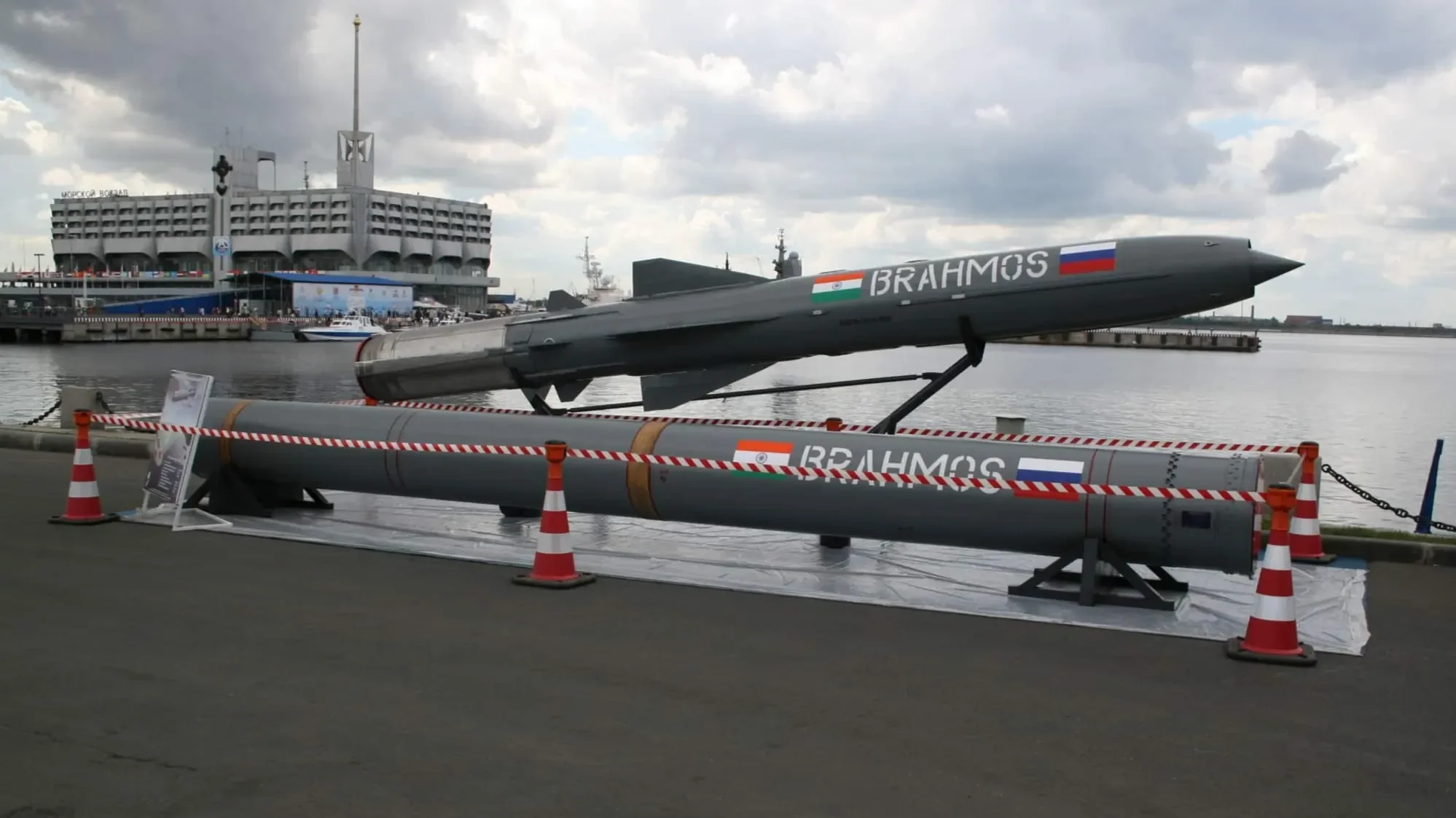
Co-developed through a joint venture between Russia and India, the BrahMos platform ranks among the fastest operational cruise missiles globally. The versatile weapon reaches velocities of up to Mach 3 and can be deployed across land, maritime, and aerial combat platforms, offering flexible operational capabilities.
“The United Arab Emirates has expressed formal interest in several of our advanced weapons assets, specifically the BrahMos and Akashteer platforms,” a source confirmed to reporters. “The bilateral negotiations between India and the UAE remain in their preliminary phases but are advancing at a rapid pace.”
Abu Dhabi and neighboring Gulf states are thoroughly re-evaluating long-term defense frameworks to minimize vulnerabilities. This transition toward alternative arms vendors intensified after their logistical and defensive exposure during recent Middle Eastern stability disruptions, prompting a structural shift away from exclusive reliance on traditional Western partners.
The two nations previously solidified their expanding alliance on January 19, 2026, by ratifying a sweeping defense and security protocol. This milestone agreement effectively reinforced their Comprehensive Strategic Partnership, paving the way for deeper technological integration and collaborative military manufacturing.
This foundational bilateral framework extends directly into civil nuclear energy cooperation through the formal passage of the Sustainable Harnessing and Advancement of Nuclear Energy for Transforming India (SHANTI) legislation. The law streamlines the joint production and deployment of large-scale reactors and Small Modular Reactors.
Beyond defense and energy corridors, New Delhi and Abu Dhabi pledged to double their bilateral trade footprint to $200 billion within the next six years. Their expansive cooperation roadmap additionally targets deep-tech integration, space exploration, food security networks, and high-performance advanced computing clusters.
This rapid bilateral alignment unfolds alongside a newly minted trilateral defense alliance uniting Saudi Arabia, Pakistan, and Turkiye. Simultaneously, reports indicate that Riyadh is attempting to assemble a distinct military coalition alongside Egypt and Somalia, calculated specifically to offset expanding Emirati influence across the region.
These evolving regional fractures are accelerating a broader geopolitical alignment linking India, the UAE, Israel, and Ethiopia. This coalition is structurally designed to protect vital maritime chokepoints, particularly throughout the strategically sensitive Gulf of Aden and the critical Bab al-Mandab Strait.
The alliance intends to construct a regionally anchored security network that mitigates dependence on external global superpowers. Within this matrix, New Delhi utilizes its signature SAGAR and MAHASAGAR maritime doctrines to establish itself as the primary security guarantor across the wider Indian Ocean expanse.
The United Arab Emirates contributes vital financial and logistical backing to this geopolitical framework, heavily leveraging its extensive commercial port infrastructure investments within Somaliland. This positioning helps project collective naval power while countering the regional influence models of China, Turkiye, and Pakistan.
This defense synergy simultaneously establishes a highly receptive commercial market for indigenous Indian defense platforms. Many of these hardware systems are seamlessly integrated with cutting-edge Israeli technologies, allowing them to be deeply embedded directly into regional security configurations across the Horn of Africa.
Ultimately, the growing defense partnership functions as a critical southern operational anchor for the India–Middle East–Europe Economic Corridor. This logistical network secures international trade routes against asymmetric disruptions while acting as a robust strategic counterweight to China’s multi-continental Belt and Road Initiative.
Future Outlook
The impending defense transaction, which analysts estimate could develop into a massive multi-billion-dollar framework, marks a major milestone for New Delhi’s defense export strategy. India’s total defense exports skyrocketed to more than $4 billion for the fiscal year ending March 2026, up from a mere $7.26 million during the 2013–2014 period. This exponential expansion is heavily supported by BrahMos Aerospace, which posted a historic revenue growth of 48.6% over the 2025–2026 cycle.
While the UAE currently operates premium American hardware, including the Patriot and Terminal High Altitude Area Defense systems, incorporating Indian systems provides unprecedented strategic flexibility. Because the BrahMos platform is an Indian-Russian joint development, final export clearance requires formal authorization from Moscow. However, defense analysts at the Stockholm International Peace Research Institute indicate that Russia’s close diplomatic ties with Abu Dhabi mean approval will not pose an obstacle. If finalized in the coming weeks, the deal solidifies the UAE’s maritime security near the critical Strait of Hormuz while positioning India as a premier global arms exporter following successful BrahMos contracts with the Philippines and Vietnam.
FAQs
What defense systems is the UAE planning to buy from India?
The UAE is in advanced preliminary discussions to acquire the BrahMos supersonic cruise missile and the Akashteer automated air defense command and control system.
Why does the BrahMos missile sale require Russian approval?
Because the BrahMos missile was jointly developed through an Indian and Russian defense partnership, any export contract to a third nation requires formal authorization from Moscow.
How much have India’s defense exports grown recently?
India’s defense exports grew to over $4 billion for the fiscal year ending March 2026, representing a massive increase from $7.26 million recorded in 2013–2014.