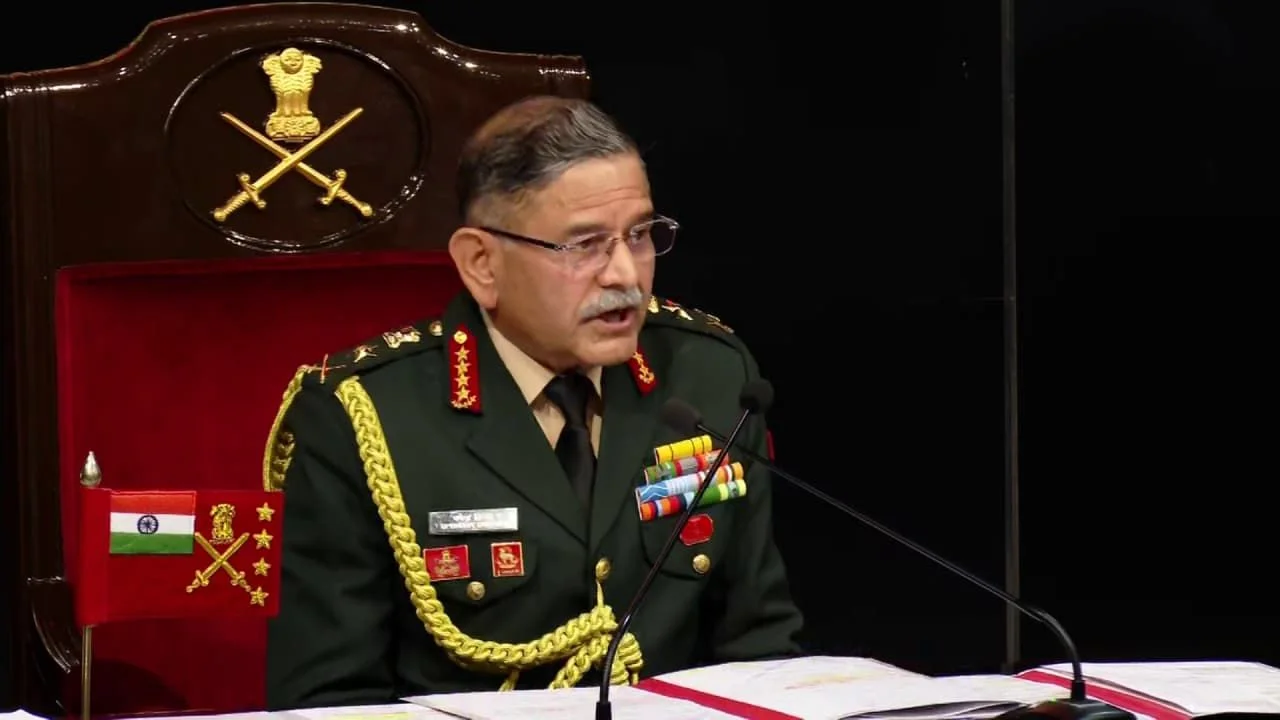
Drone General Upendra Dwivedi Leaves Transformed Indian Army
General Upendra Dwivedi will conclude his tenure as Chief of Army Staff on June 30, 2026, delivering a profoundly modernized military optimized for contemporary conflicts through sweeping technological integrations and structural overhauls.
Key Highlights
- Armed forces deployed 50,000 aerial drones and established over 25 operational hubs.
- Created specialized military units including Bhairav Battalions and Ashni Platoons for multi-domain warfare.
- Validated domestic drone manufacturing and electronic warfare capabilities during Operation Sindoor.
- Convened 32 nations at the UNTCC Chiefs Conclave to strengthen global strategic partnerships.
As General Upendra Dwivedi prepares to exit his post as Chief of Army Staff on June 30, 2026, he bequeaths a military structure fundamentally evolved from the entity he initially commanded. The metrics outline this transition, featuring 50,000 operational drones, more than 25 nationwide logistical hubs, an operational radius spanning 500 kilometers, nearly 25 strategic policy manuals, and a major military assembly uniting 32 distinct countries. These milestones have earned him the moniker “Drone General” among defense circles.
However, statistics alone fail to convey the underlying strategic philosophy. They represent the final outcomes rather than the initial tactical calculus. General Dwivedi intentionally prioritized immediate, aggressive modernization over long-term, incremental planning cycles to address emerging global defense realities.
Geopolitical conflicts unfolding in Ukraine and Gaza provided immediate, real-time evidence of contemporary combat dynamics. These theaters demonstrated that future warfare is rapid, transparent, and dictated by unmanned aerial systems, electronic warfare mechanisms, and precision-guided munitions.
Conventional military structures relying heavily on massive infantry deployments and legacy hardware lacked the capabilities required for these environments. General Dwivedi identified this operational disparity and initiated rapid protocols to eliminate the vulnerability.
The resulting changes bypassed superficial modifications to introduce entirely new tactical formations. Specialized assets like Bhairav Battalions, Ashni Platoons, Divyastra Batteries, and Rudra All Arms Brigades were engineered specifically to execute sophisticated, multi-domain defense operations.
The newly deployed drone and counter-drone hubs distributed across the nation serve active operational roles rather than symbolic functions. Furthermore, the leadership aggressively accelerated domestic drone manufacturing programs to eliminate strategic dependencies on foreign defense supply chains.
The conceptual framework received equal developmental focus. Nearly 25 codified policy and strategy frameworks provided the intellectual scaffolding for this organizational pivot. These directives mandated that every individual soldier gain operational literacy in unmanned systems to shift the entire institutional culture.
Operation Sindoor
Operation Sindoor successfully demonstrated the practical integration of these institutional reforms. During the live exercises, the Indian Army synchronized unmanned aerial systems, loitering munitions, electronic warfare platforms, and real-time intelligence feeds into a cohesive combat system. This field deployment transitioned theoretical concepts into validated operational doctrines. Defense analysts have since classified Operation Sindoor as the modern benchmark for India’s future combat strategy, confirming the efficacy of the infrastructure developed under General Dwivedi’s leadership. The outgoing chief simultaneously prioritized international defense diplomacy.
The UNTCC Chiefs Conclave successfully gathered delegates from 32 sovereign nations under a unified defense platform. Concurrently, an initiative titled “Friends for Life” established an active network linking approximately 100,000 international alumni who graduated from Indian military training establishments. Dual-use infrastructure developments across frontier zones addressed both civilian connectivity and forward military deployment requirements. These initiatives directly complemented core defense priorities.
The overarching strategy underscored a singular truth: a potent contemporary military apparatus must remain deeply interconnected with global allies and derive operational resilience from external geopolitical partnerships.
To remain informed on these developments, follow Breaking News Today alongside the latest reporting from regional and international sectors. Access live feeds, analytical insights, and thorough reporting on India News, international developments, Indian defence updates, Kerala narratives, and Karnataka updates. Track every major political and current affairs timeline as events progress. Monitor real-time meteorological reports from the IMD covering major cities weather forecasts, featuring explicit Rain advisories, Cyclone alerts, and regional temperature trends. Secure the Asianet News Official App via the Android Play Store or iPhone App Store to receive immediate, certified news dispatches globally.
Future Outlook
The systemic integration of unmanned technologies and autonomous networks under General Dwivedi establishes a permanent foundation for India’s defense architecture. Future iterations of the army are projected to expand upon this framework by incorporating artificial intelligence into swarm drone operations and border surveillance. This technological baseline ensures that subsequent military leadership can rapidly scale electronic countermeasures and domestic defense production to match evolving regional security threats.
FAQs
When does General Upendra Dwivedi retire?
General Upendra Dwivedi is scheduled to retire from his position as Chief of Army Staff on June 30, 2026.
What is Operation Sindoor?
Operation Sindoor was a live military campaign utilized by the Indian Army to field-test and validate the integrated deployment of drones, loitering munitions, electronic warfare, and real-time intelligence networks.
Why is General Dwivedi referred to as the “Drone General”?
He earned this title due to his aggressive modernization campaign, which oversaw the deployment of 50,000 drones, the creation of over 25 specialized hubs, and the authoring of nearly 25 drone-centric military policy documents.