Serbian President Vucic Announces Resignation Amid Protests
Serbian President Aleksandar Vucic announced his impending resignation during a massive rally in Belgrade, bowing to pressure from intense, student-led anti-government demonstrations. The sudden decision cuts his mandate short and triggers early presidential and parliamentary elections in the Balkan nation, reshuffling the country’s political future.
Key Highlights
- President Aleksandar Vucic will step down from his post within the coming weeks.
- The resignation forces early national elections, which must occur within 90 days of his official exit.
- Mass public outrage escalated following a tragic infrastructure collapse in November 2024 that killed 16 people.
- Vucic is tipped to run for the position of prime minister to maintain his political influence.
BELGRADE, Serbia — Populist leader Aleksandar Vucic declared Saturday that he will vacate the presidency in a matter of weeks, a move that opens the door for snap elections after sustained youth-led demonstrations fractured his absolute control over state power.
The head of state omitted the exact date of his formal resignation or the scheduling parameters for the upcoming legislative and presidential ballots. Analysts have long speculated about this maneuver, suggesting Vucic intends to pivot back to the office of prime minister, a position that holds greater constitutional authority in Serbia.
Legal frameworks prevent Vucic from seeking a third consecutive term as president under current Serbian election statutes. Regular cycles for both the parliament and the head of state were originally slated to take place next year.
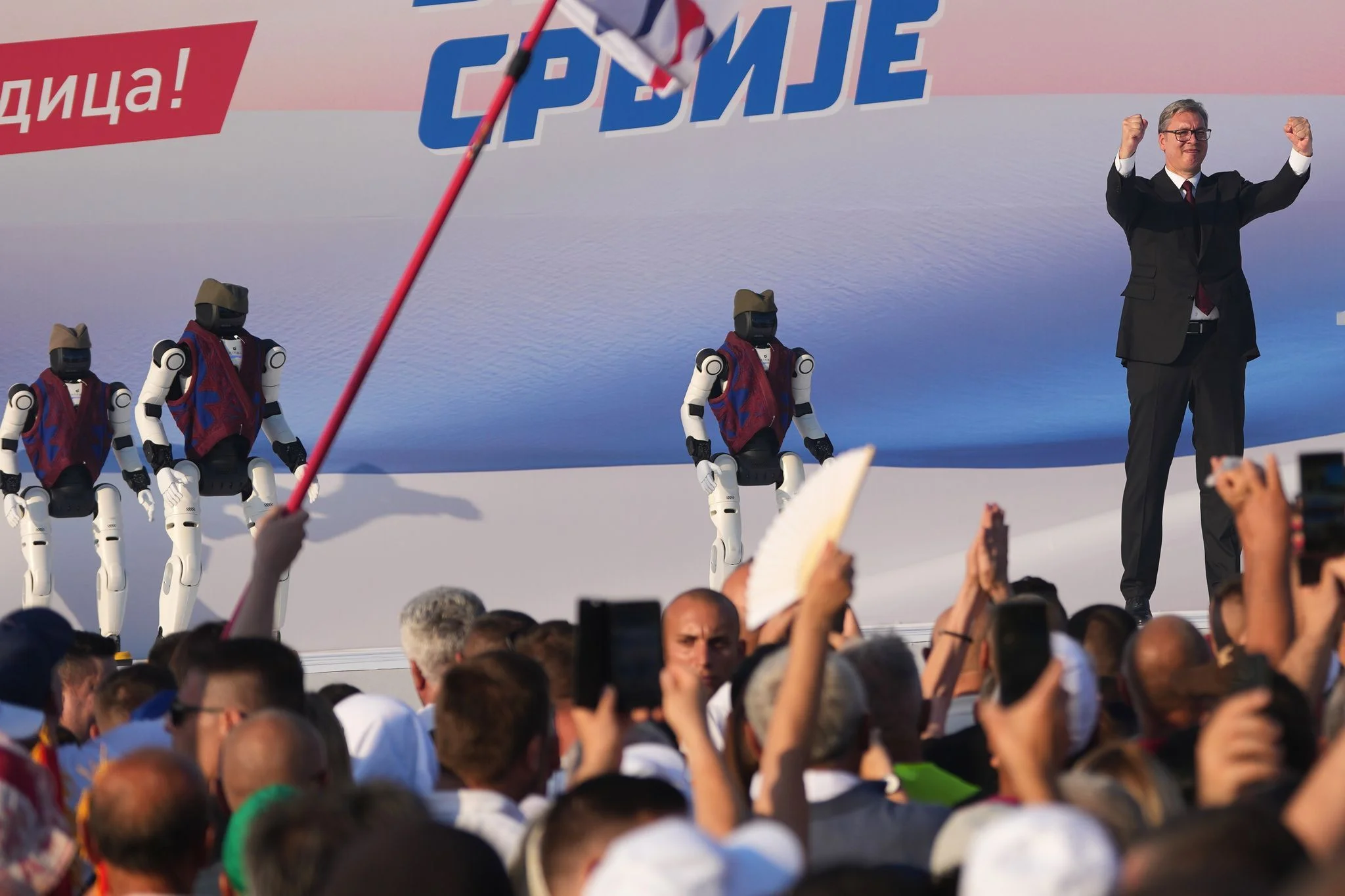
Addressing a crowd of 207,000 loyalists in central Belgrade, Vucic confirmed his remaining tenure would last only a few weeks before he tenders his official resignation. He pledged to actively campaign for his right-wing Serbian Progressive Party (SNS) during the forthcoming electoral cycle.
Vucic confidently proclaimed to his followers that the party would achieve its most decisive electoral victory to date, signaling that this address would mark his final speech as the serving president of the republic.
University student organizations have spearheaded over a year of continuous mobilization against Vucic’s autocratic governance, demanding snap parliamentary contests. The president had consistently delayed formalizing an election timeline until this weekend’s declaration.
The populist leader has systematically consolidated state control since the SNS took governance 14 years ago. However, a catastrophic railway canopy collapse in northern Serbia in November 2024 ignited months of civil unrest, with citizens demanding accountability for the infrastructure failure that claimed 16 lives.
Vucic countered the civilian opposition aggressively while simultaneously drawing sharp condemnation from the European Union over democratic deterioration and a severe suppression of independent media channels. Security forces have jailed hundreds of dissidents amid mounting allegations of police brutality and unlawful detentions.
Demonstrators continue to maintain that the fatal structural collapse at the Novi Sad railway hub stems directly from systemic, state-sponsored corruption and negligence embedded in major public works projects.
Details of statement made by Vučić
The Serbian leader announced his decision on June 27, while addressing supporters at a pro-government rally in Belgrade.
Vucic reiterated that his presidency was entering its final days, directly challenging critics who claimed he would never relinquish his office.
He confirmed the transition would initiate early presidential and parliamentary elections across the republic.
The specific domestic triggers pushing the immediate announcement were not fully detailed in the address.
Vučić’s previous statements, protests in Serbia
The state executive previously dropped multiple hints regarding a premature departure from office. During an official state visit to China in May 2026, Vucic openly posited his early retirement plan, though he dismissed concurrent opposition rallies in the capital as politically empty.
By early June, the president clarified his trajectory during a national broadcast on Radio Belgrade, revealing his intent to exit the presidency specifically to contest the prime ministership.
He emphasized that this institutional transition would materialize far quicker than public consensus anticipated.
Concurrently, deep domestic volatility persisted as fresh demonstrations paralyzed Novi Sad. Protesters flooded the streets to voice systemic grievances against the SNS administration, directly linking the 16 fatalities at the transit station to state corruption.
Future Outlook
The political landscape in Serbia faces an unprecedented transition as Vucic prepares to shift from the presidency to a potential bid for prime minister. Because early presidential elections must take place within 90 days of a formal resignation, Serbia is looking at a condensed campaign window. Parliamentary elections are anticipated to occur between late September and mid-November 2026. This rapid electoral timeline will test the endurance of the student-led opposition movement against the entrenched institutional power of the ruling Serbian Progressive Party.
FAQs
Why is Serbian President Aleksandar Vucic resigning?
President Vucic is stepping down to trigger early presidential and parliamentary elections. The move follows more than a year of intense, youth-led anti-government protests and public fury over a fatal train station accident. Vucic also intends to seek the more powerful office of prime minister.
When will the early elections in Serbia take place?
Following Vucic’s formal resignation, presidential elections must legally be held within 90 days. Additionally, Vucic previously indicated that parliamentary elections would be scheduled to take place between the end of September and mid-November 2026.
What triggered the recent mass protests in Serbia?
While protests against Vucic’s autocratic rule have been ongoing for over a year, unrest spiked after a concrete canopy collapsed at a railway station in Novi Sad in November 2024. The disaster killed 16 people, sparking widespread accusations of corruption and negligence in state infrastructure projects.