Rajasthan Steps Up Uniform Civil Code Implementation
The state government of Rajasthan has initiated steps to roll out the Uniform Civil Code, aligning with a broader national legislative agenda. A newly established high-level panel will formulate the statutory framework, standardizing diverse personal laws across the state while drawing intense scrutiny from opposition parties and minority organizations.
Key Highlights
- High-Level Panel Established: Former Supreme Court Judge Ranjana Prakash Desai will head the drafting committee for the state’s upcoming legal code.
- Core Statutory Changes: The law mandates registration for marriages, divorces, and live-in relationships while granting equal ancestral property rights to daughters.
- Exemptions for Tribal Communities: Indigenous groups are excluded from the code to safeguard their traditional customs and constitutional autonomy.
- Intense Political Resistance: Congress leaders and Muslim representatives have pledged protests, accusing the administration of targeting minority rights.
By Our Correspondent
JAIPUR: Rajasthan has commenced administrative preparations to enforce a Uniform Civil Code, becoming the latest state ruled by the Bharatiya Janata Party to advance this policy. Following the legislative model established by Uttarakhand, Rajasthan operates as the fifth state to officially pursue the standardized legal code.
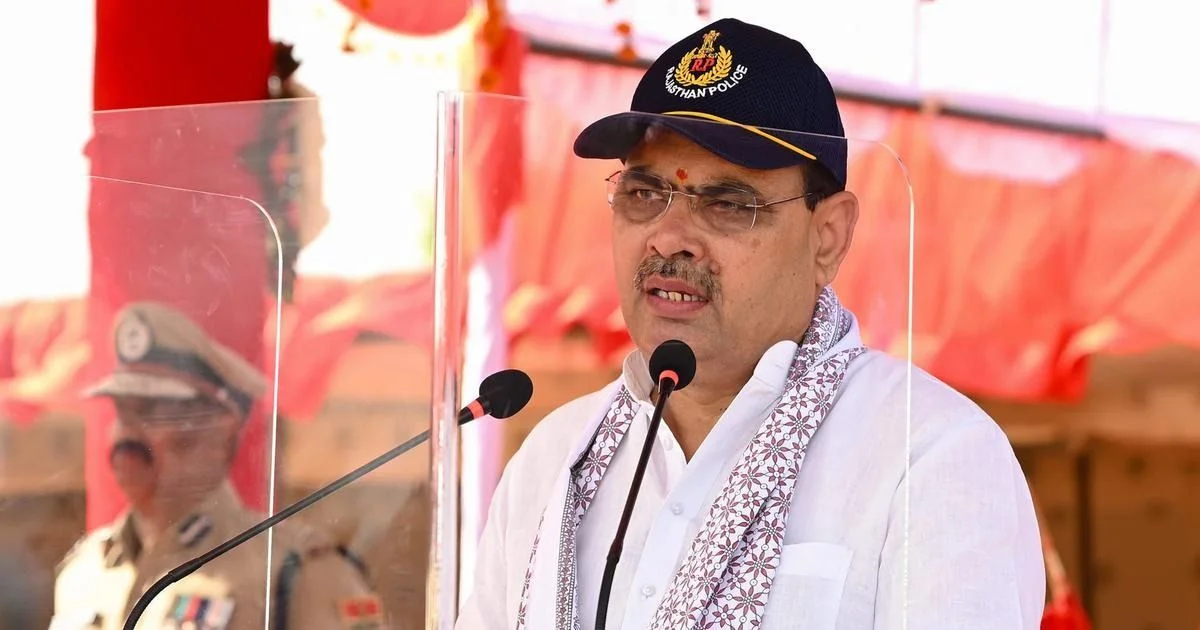
The administration led by Chief Minister Bhajan Lal Sharma set up a specialized drafting panel to construct the legislative blueprint. Observers note that the policy push risks altering the stable communal equilibrium historically maintained between the majority and minority populations across the state.
Critics argue that overriding individual personal laws could generate widespread social dissatisfaction and cultivate long-term societal fragmentation. The state cabinet formally sanctioned the formation of this legal advisory group during its executive session on June 22.
Crucial provisions under the planned code dictate the compulsory recording of all marriages and divorces. Furthermore, the statute completely outlaws polygamy, institutes mandatory registration for cohabiting couples, and establishes equal ancestral estate inheritance rights for male and female descendants. The administration states it aims to deliver an advanced legal framework tailored to state-specific social dynamics.
While Uttarakhand successfully codified its civil laws in February 2024, states like Gujarat and Assam swiftly initiated parallel legislative processes. Madhya Pradesh has similarly organized a drafting panel, though all participating states have exempted indigenous tribal tracts, sparking debates regarding selective legal application.
State Law Minister Jogaram Patel confirmed after the cabinet assembly that retired Supreme Court Justice Ranjana Prakash Desai will lead the panel drafting the Rajasthan Uniform Civil Code 2026 Bill. The committee includes former bureaucrat Shatrughna Singh, Additional Advocate General Basant Singh Chhaba, retired academic Ramswaroop Agarwal, and legal specialist Shuchi Chauhan. The Additional Chief Secretary for Home serves as member-secretary.
To maximize transparency, the panel plans to execute public consultations across all administrative divisions. Additionally, residents can upload legislative recommendations through a specialized digital portal.
Patel explained that the primary goal remains instituting uniform civil regulations for all residents, regardless of faith, caste, or clan. Currently, separate religious statutes dictate marriage, separation, estate division, adoption, and alimony, which the upcoming code seeks to unify. The minister emphasized that eliminating these disparities intends to protect women from systemic discrimination and ensure gender parity.
The governing party asserts this legal transition fulfills the mandate of Article 44 of the Indian Constitution under the Directive Principles of State Policy. Patel reiterated that tribal heritage will remain legally protected, promising that the transition will offer a progressive trajectory for regional governance.
Presently, citizens belonging to diverse faiths follow distinct personal frameworks for family, estate, and marital disputes. Once the unified code secures passage, these separate religious legal systems will lose their statutory authority within the state.
The administration selected judicial, statutory, and administrative professionals to compose the working group. This panel will evaluate legislative frameworks from other territories to formulate a model fitting the cultural conditions of the state. The final draft will head to the legislative assembly following cabinet clearance.
Expressing dissent, Congress Minority Cell Head M.D. Chopdar stated that opposition activists would launch public demonstrations if the assembly passes the bill. Chopdar accused the government of eroding constitutional minority protections, linking the move to recent anti-conversion laws.
Syed Sarwar Chishti, a prominent representative from the Ajmer Dargah, characterized the committee formation as detrimental to minority interests. He questioned the equity of granting specific legal exemptions to tribal communities based on tradition while denying similar autonomous considerations to Muslim citizens.
Local minority organizations have accused the administration of leveraging the legal transition for electoral advantage. Given deep-seated anxieties regarding specific clauses of the code, these groups are urging the state government to engage in comprehensive mediation with community leaders.
Political experts observe that the unified code remains a fundamental ideological objective that consolidates the ruling party’s core voters. Although the state historically lacks the sharp religious divisions seen in other regions, identity-driven issues provide a distinct electoral advantage in urban centers and conservative strongholds.
Future Outlook
The introduction of the uniform civil code framework in Rajasthan marks a significant step toward national legal consolidation, but its implementation faces complex legal and social hurdles. The upcoming divisional consultations will serve as a crucial gauge of public sentiment, balanced against potential legal challenges regarding minority rights and religious freedom under the Constitution. As the drafting panel reviews frameworks from other states, the final bill will likely set a major precedent for how state governments balance uniform gender equality laws with deep-seated cultural diversity.
FAQs
What is the primary purpose of the Rajasthan Uniform Civil Code?
The code aims to replace distinct religious personal laws with a single, uniform civil framework governing marriage, divorce, inheritance, adoption, and maintenance for all citizens.
Who is leading the drafting committee in Rajasthan?
The state government has appointed retired Supreme Court Judge Ranjana Prakash Desai to head the high-level drafting committee.
Are tribal communities included under the new law?
No, the state government has explicitly exempted tribal communities from the purview of the code to protect their unique customs, traditions, and constitutional safeguards.
What are the key legal changes proposed under the code?
The proposed legislation mandates the registration of marriages, divorces, and live-in relationships, enforces a total ban on polygamy, and guarantees equal ancestral property rights for daughters.