NYC Primary Wins Fuel Democratic Identity Crisis
New York Mayor Zohran Mamdani secured a major political victory during the state primary elections on Tuesday, June 23, 2026, as three progressive candidates he backed won competitive Democratic congressional races, signaling a powerful shift within the city’s political establishment.
Key Highlights
- Three progressive insurgents backed by Mayor Zohran Mamdani won safe Democratic House seats in New York City.
- Two victorious candidates were explicitly endorsed by the Democratic Socialists of America, while the third had strong movement backing.
- The left-wing victories have sparked immediate criticism from national Republicans and concern among centrist Democrats.
- A critical upcoming Senate primary in Michigan will test the national strength of this progressive surge outside deep-blue enclaves.
The daring strategy by New York City Mayor Zohran Mamdani to challenge established political structures yielded significant results during the primary voting on Tuesday night. Two insurgent progressives he championed successfully unseated incumbent Democratic representatives, while a third ally secured victory in a vacant House race.
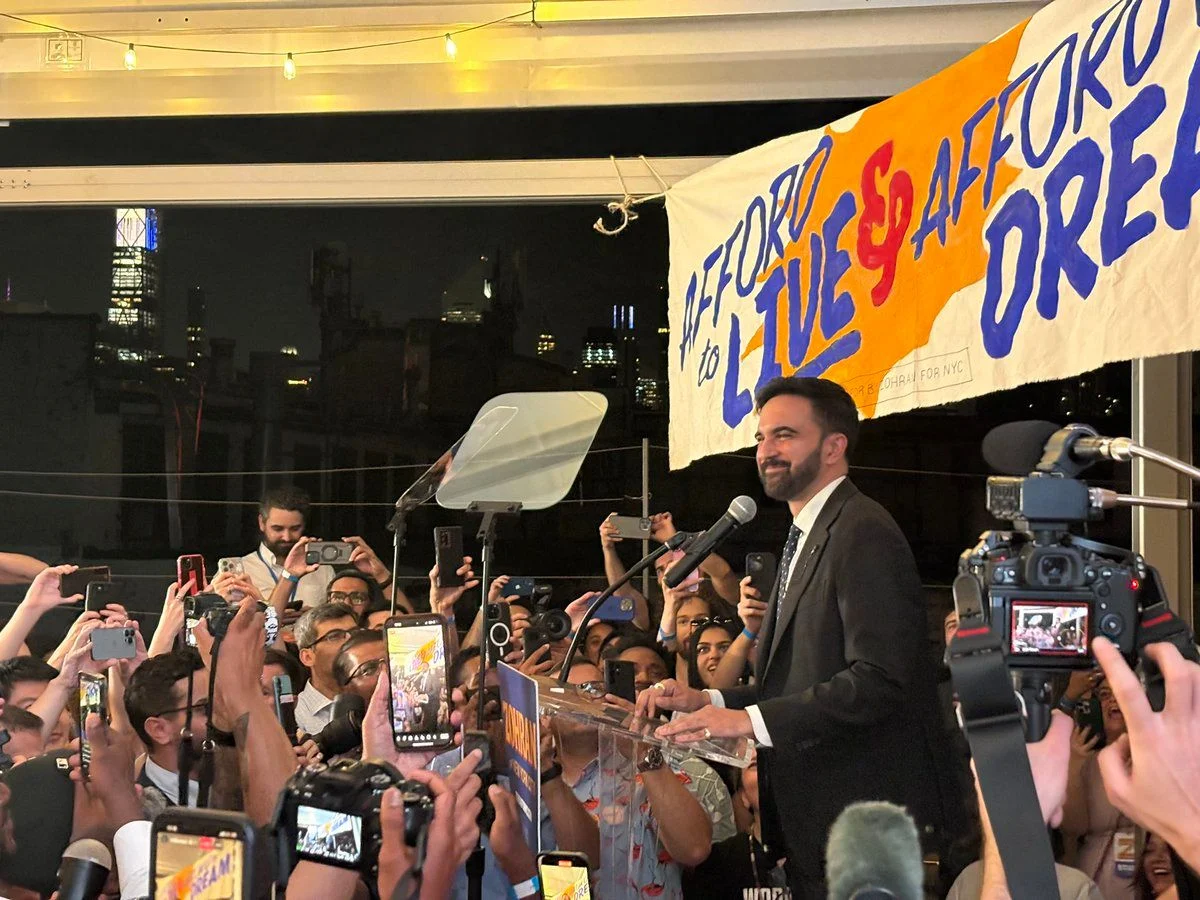
This outcome demonstrates that Mamdani’s personal electoral triumph last year marked the initiation of a broader political realignment rather than the conclusion of an isolated campaign, as the municipal leader informed supporters during a victory celebration held in Brooklyn late Tuesday.
The Democratic Socialists of America officially backed two of the triumphant primary contenders, activist Darializa Avila Chevalier and state lawmaker Claire Valdez. The third victorious candidate, Brad Lander, also advanced with substantial assistance from the same progressive network that originally propelled Mamdani to office.
All three congressional districts captured by the Mamdani-aligned slate are heavily favored to remain under Democratic control during the general election in November. The specific district won by Valdez, spanning sections of Brooklyn and Queens undergoing gentrification, contains such a distinct left-leaning constituency that locals frequently refer to it as the “Commie Corridor.”
These primary outcomes highlight the intense internal pressures fracturing the Democratic coalition as the party seeks to regain legislative majorities. Much like the populist uprising of frustrated Republican voters that elevated Donald Trump in 2016, a significant portion of the Democratic electorate is discarding mainstream leaders perceived as too accommodating to opponents and ineffective on core policy goals.
However, the ascendance of left-wing candidates could complicate national strategy. These polarizing figures potentially threaten Democratic prospects in moderate suburban districts where control of Congress will ultimately be determined in the late 2026 midterms.
National Republicans immediately capitalized on the primary results to attack the opposition party. House Majority Leader Steve Scalise, a Louisiana Republican, labeled the development a radical takeover, mockingly calling the primary results the Bolshevik Revolution of 2026 and declaring Mamdani’s control over local Democrats absolute.
It remains uncertain how far the political ripples of Tuesday’s primary will travel beyond the local metropolitan area. If Democrats manage to secure a slim House majority as current projections suggest, an expanding caucus of left-wing representatives could create significant legislative friction for party leadership, mirroring the factional gridlock that hindered Republican governance.
Looking further ahead, the long-term repercussions could alter the dynamics of the next presidential primary cycle in 2028, when primary voters will evaluate whether they favor a confrontational fighter or a unifying figure.
In a formal communication, Mamdani stated that building a party capable of winning in 2028 and beyond motivated his aggressive primary interventions, despite the strategy alienating traditional party brokers with whom he previously maintained cooperative alliances.
Nevertheless, electoral trends in heavily progressive urban areas do not always serve as reliable national indicators. The path to a democratic legislative majority depends on competitive swing districts rather than secure metropolitan strongholds. Out of 71 battleground House seats identified by national strategists, two-thirds voted for Trump during the 2024 presidential race.
Former New York Representative Steve Israel, a past head of the Democratic congressional campaign arm, noted that isolated primary contests in ultra-progressive districts do not represent the broader national party. Israel emphasized that political developments in competitive heartland regions like Brooklyn, Iowa, provide a more accurate gauge of national trends.
A clearer evaluation of progressive momentum outside traditional coastal strongholds will occur this August in Michigan. The state, which backed Trump twice, features an intense Democratic primary contest for a vacant United States Senate seat.
Prominent left-wing figures, including Vermont Independent Senator Bernie Sanders, have united behind former Detroit health director Abdul El-Sayed. El-Sayed currently maintains an advantage in multiple state polls against moderate competitors Representative Haley Stevens and state Senator Mallory McMorrow.
El-Sayed has drawn sharp contrasts by characterizing recent military actions in Gaza as a genocide, advocating for a universal Medicare-for-all healthcare system, and calling for the total abolition of Immigration and Customs Enforcement. His potential nomination for a crucial Senate seat currently held by Democrats has raised significant anxiety within the party regarding their ability to maintain chamber control.
Third Way vice president Matt Bennett warned that conservative strategists previously weaponized left-wing activist rhetoric regarding law enforcement and immigration against moderate swing-district Democrats who rejected those positions. Bennett highlighted that Chevalier, who unseated Congressional Hispanic Caucus Leader Adriano Espaillat on Tuesday, previously advocated for dissolving police forces, borders, and correctional facilities.
Terming these platforms extreme, Bennett argued that mainstream Democratic figures must explicitly separate themselves from the radical positions championed by the insurgent wing of the party.
Conversely, Israel noted that leadership must address the systemic economic anxieties causing younger demographics to reject establishment politics. He suggested that their underlying frustrations focus on tangible economic challenges rather than purely ideological battles.
Younger demographics are primarily seeking accessible pathways to homeownership, affordable childcare options, reasonable healthcare expenses, and general financial stability. Israel concluded that the party must craft economic frameworks that directly speak to a generation convinced the traditional American economic promise has been compromised by a biased system.
A multiracial coalition consisting largely of younger, college-educated urban voters proved decisive in propelling this group of democratic socialist candidates to victory across the New York primaries this week. This mobilization has granted the insurgent faction enhanced leverage while solidifying its structural influence over metropolitan political systems.
Future Outlook
The shifting dynamics within the Democratic party point toward an intense ideological showdown heading into the 2026 midterms and the 2028 presidential race. While progressive factions are successfully expanding their urban base by mobilizing younger, diverse voters, party strategists face the difficult task of balancing this enthusiasm with the moderate platforms required to win crucial swing states. The upcoming August primary in Michigan will serve as a decisive test of whether the populist left can successfully export its model to the American Midwest or if its influence remains confined to safe metropolitan enclaves.
FAQs
Who is Zohran Mamdani?
Zohran Mamdani is the Mayor of New York City who successfully backed a slate of progressive and democratic socialist candidates in the 2026 state primary elections, establishing himself as a significant political force.
Which candidates won the New York congressional primaries with progressive backing?
Darializa Avila Chevalier, Claire Valdez, and Brad Lander won their respective Democratic primary races with strong backing from Mayor Mamdani and progressive organizations.
What is the “Commie Corridor” in New York?
The “Commie Corridor” is a local political nickname for a heavily left-leaning congressional district that encompasses rapidly gentrefying neighborhoods within Brooklyn and Queens.
Why are moderate Democrats concerned about the primary results?
Moderate Democrats worry that the controversial positions held by far-left urban candidates, such as abolishing ICE or defunding law enforcement, will be weaponized by Republicans against moderate candidates running in competitive swing districts.
What upcoming election will test the national strength of the progressive movement?
The Democratic primary election in August 2026 for a vacant U.S. Senate seat in Michigan, where progressive Abdul El-Sayed faces moderate opponents, will serve as a key indicator of the movement’s strength outside of liberal urban centers.