Speaker Johnson Meets Trump to Resolve Voter ID Standoff
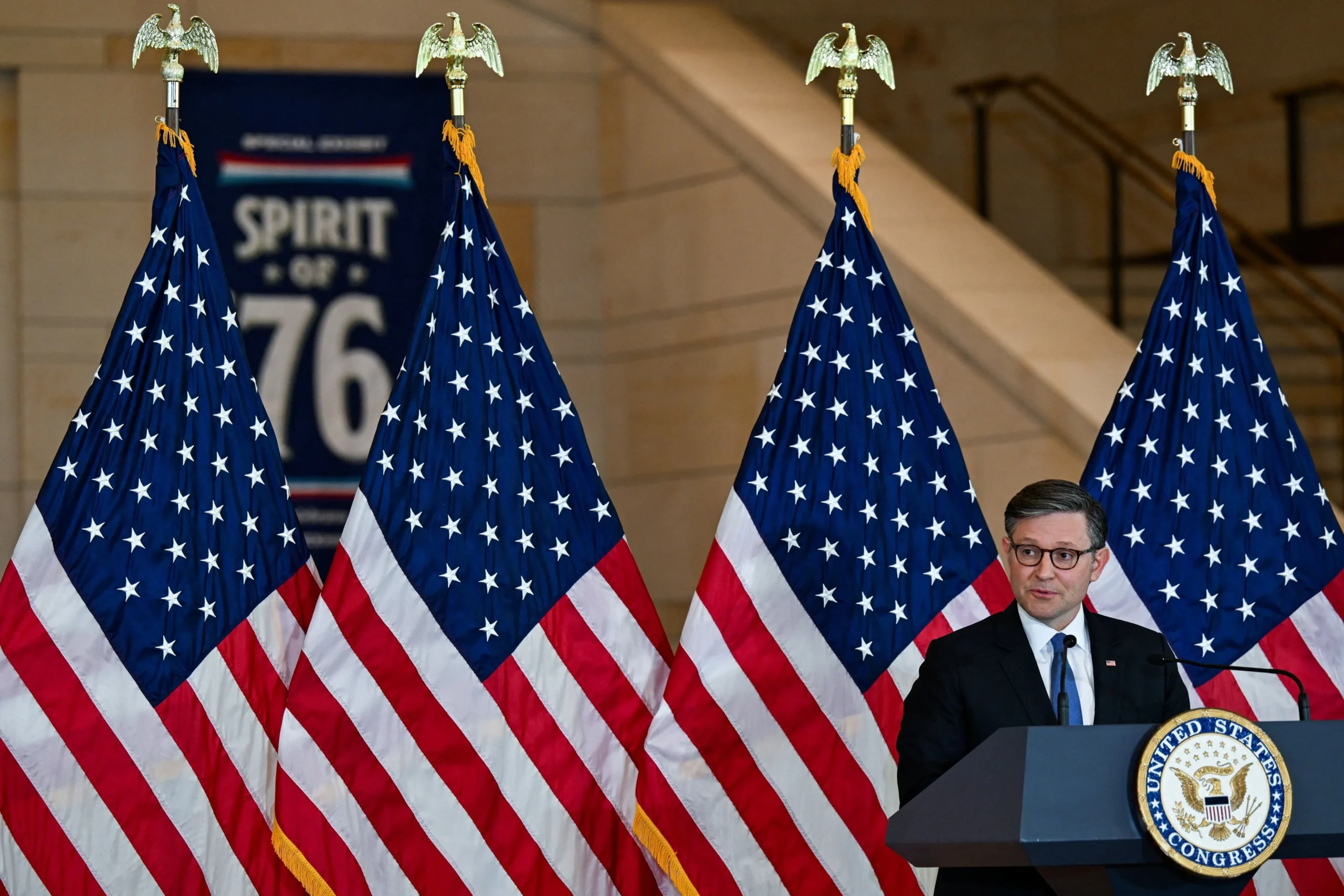
House Speaker Mike Johnson scheduled a high-stakes meeting with Donald Trump on Thursday to resolve a intensifying congressional deadlock over a stalled federal voting restrictions package. Trump has designated this controversial election legislation as his primary legislative objective, triggering a severe legislative paralysis within the Republican-controlled House of Representatives.
Key Highlights
- House Speaker Mike Johnson met Donald Trump to resolve a severe legislative impasse over the stalled SAVE America Act.
- Hardline House Republicans effectively halted all floor proceedings until the Senate advances the strict voter ID legislation.
- Trump retaliated against Senate inaction by abruptly withdrawing from a major bipartisan housing relief bill signing ceremony.
- The legislative shutdown forced the House and Senate to adjourn early for the July 4 recess, delaying critical spending bills.
A day after a volatile private meeting between Trump and Senate Republicans, ultraconservative lawmakers led by Representative Anna Paulina Luna blocked all legislative activity on the House floor. The hardline faction vows to obstruct all bills until the Senate approves the SAVE America Act, which has failed five times in the Senate since March 2026.
Trump applied parallel leverage against Senate leadership on Wednesday by suddenly boycotting a high-profile signing ceremony for a popular, bipartisan housing bill. Congressional Republican leaders intended to showcase that economic legislation as concrete proof they are tackling soaring living costs, which remains the premier voter concern ahead of the crucial November 2026 midterm elections.
The critical midterm elections will dictate whether Republicans maintain their narrow congressional majorities. The upcoming ballot will determine control of both chambers, making the current internal party warfare over legislative strategy highly risky for leadership.
Trump and Johnson planned to map out a viable legislative trajectory for the voting bill during their session. According to a source familiar with the strategy, the leaders also intended to reschedule the canceled signing event for the bipartisan housing legislation.
Hours following the executive meeting, the Senate adjourned a day ahead of schedule for a two-week July 4 recess. Leadership filed out without taking any legislative action on the voting measure, disregarding intense pressure applied to Senate Republican leaders, including Senate Majority Leader John Thune.
“I will not be voting to re-open the floor until the Senate gets back to Washington,” Luna declared on social media following the chamber’s early departure. She added that John Thune was actively avoiding the issue because he refuses to push the voter identification mandate across the finish line.
Holding an exceptionally tight 218-212 majority, Johnson faces a rigid math problem where he can drop no more than two votes on any party-line measure encountering unified Democratic resistance. While Johnson struggles with a turbulent conference, his procedural hurdle is lower than Thune’s, where Senate rules mandate a 60-vote threshold for most bills.
During a press briefing on Thursday, eight conservative hardliners reinforced their total opposition to advancing any House legislation while the Senate remains out of session. Representative Ralph Norman, a leading voice in the ultraconservative House Freedom Caucus, asserted that the chamber should halt all legislative business until senators return.
House Republican leaders attempted to bypass the conservative blockade to pass vital bills supporting military veterans and funding key government institutions, including the State Department, for fiscal year 2027, starting October 1, 2026. Instead, the gridlocked chamber abandoned legislative efforts and joined the Senate in leaving Washington early.
TRUMP FOCUSED ON VOTING RULES
The SAVE America Act introduces sweeping mandates requiring valid photo identification for federal elections and explicit proof of U.S. citizenship to register. Additionally, the federal framework compels state governments to submit their proprietary voter registration databases to federal authorities for systemic screening.
The legislation faces fierce, unified resistance from congressional Democrats. Although the bill successfully cleared the House of Representatives in February 2026, it has subsequently languished in the upper chamber without tracking a path toward regular floor consideration.
Trump is simultaneously demanding that the legislation implement severe national restrictions on mail-in voting. This specific demand has sparked quiet concern among regional Republican strategists who warn that limiting mail options could inadvertently depress GOP voter turnout across vital rural regular voting districts.
Opponents and civil rights analysts state the bill targets an engineered, statistically non-existent phenomenon of non-citizen voting. Trump has repeatedly used unverified claims of non-citizen voting to explain his 2020 presidential election loss to Joe Biden, a narrative independent analysts have thoroughly debunked.
Democratic lawmakers warn that the aggressive documentation mandates would structurally disenfranchise millions of eligible American citizens. Many vulnerable voters do not possess immediate, affordable access to primary identity documents like an official passport or a certified birth certificate.
Several mainstream Republicans have issued internal warnings that Trump’s singular focus on the voting bill creates an ideal political opening for opposing campaigns. Democrats hope to seize total control of both the House and Senate in November 2026 and have rapidly weaponized the current legislative paralysis.
“People are clearly struggling, and that’s what public sentiment shows unequivocally, and Donald Trump has failed to solve that challenge,” House Democratic leader Hakeem Jeffries stated during a television appearance on Thursday.
Jeffries further accused Trump of intentionally destroying a vital, consensus-driven housing initiative designed to build affordable residential units for working families. He stated citizens are struggling under what he characterized as a failing economic approach driven by Trump and congressional Republicans.
Historical Context
The intra-party warfare dividing congressional Republicans over election law mirrors a broader historical trend of institutional friction during high-stakes midterm election cycles. Historically, political parties holding razor-thin majorities face systemic vulnerability when ideological factions leverage procedural rules to force votes on base-motivating issues.
The current standoff over the SAVE America Act echoes past budget and legislative standoffs where populist wings of the party chose total legislative shutdown over incremental policy compromise. This structural tension between governing pragmatism and ideological purity continues to define modern congressional operations.
FAQs
What is the SAVE America Act?
The SAVE America Act is a proposed piece of federal legislation that would require individuals to provide proof of U.S. citizenship when registering to vote and present a photo ID to cast a ballot in federal elections. It also mandates that states share voter rolls with federal agencies.
Why did the House of Representatives shut down early?
A group of hardline conservative House Republicans blocked all legislative activity on the floor to protest the Senate’s failure to vote on the SAVE America Act. This internal party blockade forced leadership to cancel planned votes on veterans’ affairs and government funding, leading to an early recess.
How does the thin Republican majority affect House votes?
With a narrow 218-212 majority, House Speaker Mike Johnson can only afford to lose two Republican votes on any piece of legislation if all Democrats vote against it. This tight margin gives small factions of hardline conservatives immense leverage to halt the legislative process.
Why are Democrats opposed to the voting legislation?
Democrats argue that the bill targets an unproven problem of widespread non-citizen voting. They contend that the strict documentation requirements would systematically disenfranchise eligible American citizens, particularly low-income, minority, and elderly voters who may lack easy access to birth certificates or passports.