Nepal Prime Minister Clarifies Border Talks with India
Nepal Prime Minister Balendra Shah confirmed that his administration has not requested UK intervention to resolve territorial disagreements with India. Shah emphasized that the border issues will be managed directly through bilateral diplomacy between the two neighboring states.
Key Highlights
- Prime Minister Balendra Shah rejected reports of asking Britain to mediate the border friction with India.
- The premier specified that historical documentation from the British era might be utilized as evidence.
- Nepal maintains its territorial claims over the disputed Kalapani and Lipulekh regions.
- The statement was delivered during a major political address in Chitwan on June 22, 2026.
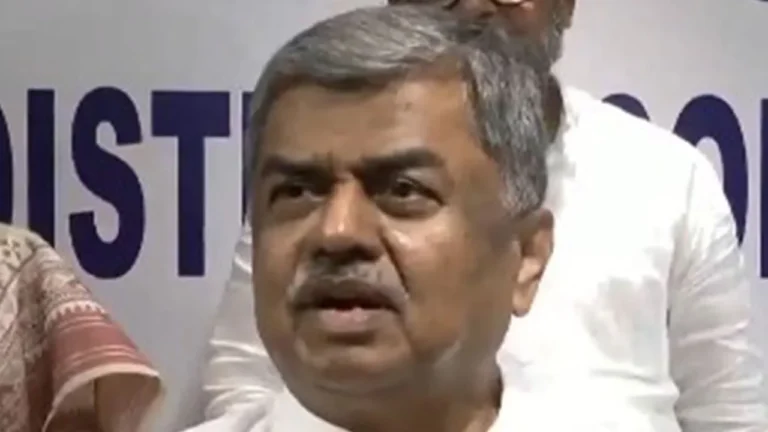
Nepal Prime Minister Balendra Shah on Sunday clarified that his government has not sought Britain’s mediation to resolve the long-standing border dispute with India, stressing that the issue would be addressed through bilateral talks between the two neighbouring countries.
Speaking at the first general convention of the ruling Rastriya Swatantra Party (RSP) in Chitwan district, Shah said Nepal had only referred to the possibility of presenting historical evidence from the British colonial period if required during discussions on the boundary issue.
STORY CONTINUES BELOW THIS AD
“We said that if evidence from the time of British rule (in India) is needed, we will bring it. We didn’t ask for their mediation,” he said.
First Published: June 22, 2026, 09:13 IST
History of the Boundary Disagreement
The territorial friction centers on the Kalapani, Lipulekh, and Limpiyadhura regions. Nepal bases its sovereign claims on the 1816 Treaty of Sugauli signed with the British East India Company, asserting the Mahakali River defines its western border. India maintains administrative control and historical usage of the area.
FAQs
Did Nepal ask the United Kingdom to mediate its border dispute with India?
No. Prime Minister Balendra Shah explicitly stated that Nepal has not requested British mediation and intends to settle the territorial matter exclusively via bilateral discussions with India.
What role does British colonial history play in the Nepal-India border talks?
The Prime Minister noted that Nepal reserves the option to present historical maps and archival evidence dating back to the British colonial administration in India to support its claims during direct negotiations.
Which specific territories are contested between Nepal and India?
The primary areas of contention involve Kalapani, Lipulekh, and Limpiyadhura, which sit at a strategic tri-junction between Nepal, India, and China.