Akal Takht Summons Punjab AAP MLAs Spurring Secularism Debate
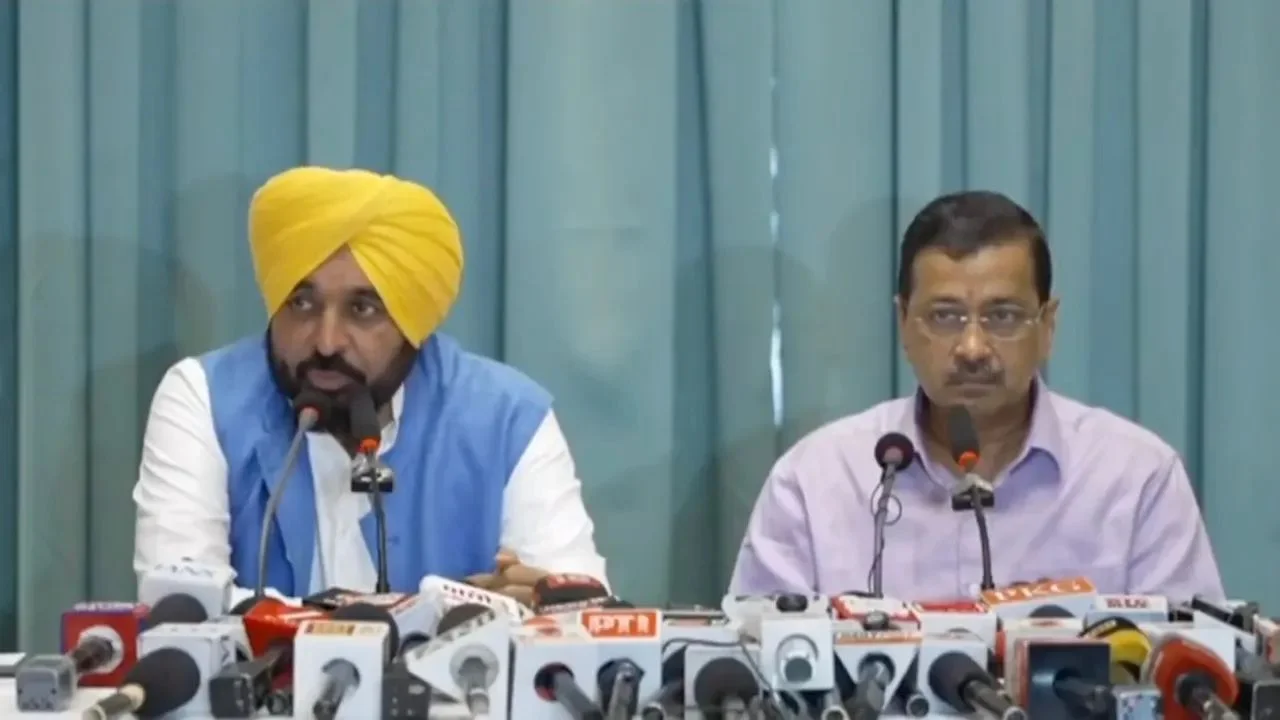
Punjab Chief Minister Bhagwant Mann announced that AAP’s Sikh legislators will present themselves before the Akal Takht on June 29, 2026. This decision follows a summons over a recent anti-sacrilege law, sparking a broader national conversation regarding the boundaries between elected constitutional governance and traditional religious authority.
Key Highlights
- Punjab Chief Minister Bhagwant Mann confirmed Sikh ministers and MLAs will appear before the Akal Takht on June 29, 2026.
- The highest temporal seat of Sikhism issued the summons concerning amendments made to the state’s anti-sacrilege legislation in April 2026.
- Non-Sikh cabinet members have been directed to convey their perspectives to the religious body in writing.
- The situation has triggered a wider debate on selective secularism and the intersection of legislative duties with religious edicts.
Akal Takht summons AAP MLAs, why is secularism debate quieter in Punjab?
The June 29 appearance has turned the anti-sacrilege law row into a wider debate on religious authority, elected power and selective secular outrage
The directive from the Akal Takht instructing Sikh lawmakers from Punjab to appear before it has initiated a complex dialogue extending past the ruling Aam Aadmi Party. This development follows confirmation by Chief Minister Bhagwant Mann on Sunday that party legislators from the community will comply with the order.
Concurrently, cabinet members who are not from the Sikh faith have been instructed to submit their official positions via written correspondence.
The immediate dispute centers on whether elected representatives must account to a religious institution regarding statutory laws enacted within the state assembly.
A broader query emerges over the relative absence of intense secular discourse, which typically erupts when state officials appear accountable to theological leaders.
These specific summons originated from Akal Takht Jathedar Giani Kuldeep Singh Gargajj regarding the Jaagat Jot Sri Guru Granth Sahib Satkar (Amendment) Act, 2026.
This particular legislation, passed by the state assembly in April 2026, enhanced penal measures against acts of sacrilege, introducing maximum punishments up to life imprisonment for critical offenses.
However, the Akal Takht alongside segments of the clergy expressed dissatisfaction with the passage of the bill, citing insufficient dialogue with the Shiromani Gurdwara Parbandhak Committee and the wider Panth.
While the current administration designed the statute to address public grievances regarding sacrilege, the religious leadership views the situation as a contest over who retains the ultimate right to dictate norms concerning sacred texts.
Such friction represents a recurring theme within the regional political landscape.
The Akal Takht holds a distinct position in history, wielding considerable temporal influence where its official pronouncements carry immense civic and spiritual consequence.
Consequently, democratic administrations in the region frequently navigate relationships with these bodies when dealing with deep-seated community sentiments, though this instance directly intersects with parliamentary legislation.
Statutes crafted by lawmakers remain firmly within constitutional boundaries, meaning modifications or revocations are legally restricted to the legislature itself, despite external critique.
This intersection highlights the core of the ongoing constitutional query.
Observer questions remain whether compliance with such summons signals institutional deference, tactical political necessity, or a compromise of constitutional principles, raising doubts about how a similar dynamic involving a different faith would be perceived nationally.
Analyst Abhijit Iyer-Mitra noted the visible silence from traditional secular commentators as an elected political cabinet prepares to answer directly to a theological entity.
These observations underscore perceived inconsistencies in how religious interventions are evaluated across varied regional and communal frameworks in Indian governance.
Within the state, the paradigm remains intricate because the institution cannot be categorized simply as an interest group, given its deep historical role as a temporal power center.
Nevertheless, the administration operates strictly under constitutional mandates, ensuring that statutory powers cannot be formally subordinated to clerical instructions.
The ruling party appears focused on de-escalating potential institutional friction.
The Chief Minister noted that recommendations from the religious leadership could be openly evaluated, attempting to balance institutional reverence with the defense of a law aimed at guarding sacred scriptures.
The political atmosphere has been further strained by an ongoing controversy involving a disputed video recording.
The footage in question reportedly depicts an individual resembling the political leader engaged in objectionable conduct alongside specific faith-related imagery, though the Chief Minister has strongly dismissed the clip as a fabricated political smear.
Varying forensic assessments have emerged, with the religious body claiming the recording is verifiable, while state authorities present alternative findings stating the individual is not the Chief Minister.
In response, the Chief Minister indicated he would convey his formal explanation regarding this matter to the institution in writing.
Ultimately, the legislative dispute and the video controversy have converged into a significant political and religious challenge for the current state leadership.
How CRPF chief’s social media outreach is changing grievance redressal mechanism in the force
On June 13, 2026, a paramilitary soldier originating from Uttar Pradesh utilized social media to share a public request accompanied by images of his child, who had been missing since September 2025.
The digital appeal gained traction when an online user forwarded the message, directly alerting the central paramilitary leadership and its Director General, GP Singh.
The agency chief reacted swiftly, clarifying that high-level coordination with regional law enforcement in Uttar Pradesh and Uttarakhand had been active since January 2026, though definitive breakthroughs remained pending.
This incident underscores a broader pattern of active digital engagement by the veteran 1991-batch officer since assuming leadership of the central force.
Earlier on June 8, 2026, a specialized commando operating in Jharkhand reported via digital channels that family members had faced a physical assault by local elements at their residence in Kanpur.
The Director General acknowledged the report immediately, instructing the personnel to transition the detailed communication to official electronic mail for systematic tracking.
The current leadership regularly utilizes online networks to address communications from active and retired cadres seeking direct organizational intervention.
Whether internal operational issues or external domestic challenges faced by personnel families arise, the leadership directly engages with regional civil administrators to secure resolutions.
Internal metrics indicate that by May, the Director General received over 6,000 official grievances, personally evaluating more than 3,800 cases since taking command in January 2025.
Furthermore, over 530 inquiries achieved resolution through senior regional commanders, while approximately 300 cases concluded during preliminary assessments.
The current system relies on a structural hierarchy where initial reviews are managed by a specialized Board of Officers before escalating further up the command chain.
Operational grievances within the organization are now categorized across three distinct tiers: the primary station level, the central headquarters board, and final directorial review.
The paramilitary organization represents the largest internal security force under the Union Home Ministry, commanding roughly 3.25 lakh active personnel organized into more than 240 battalions.
An anonymous internal source stated that the massive scale of the organization necessitated a direct, institutional channel linking active personnel, veterans, and martyr families directly with top leadership.
The official noted that this specific methodology mirrors communication strategies previously deployed by the officer during prior law enforcement leadership roles in Assam.
While thousands of updates arrive via personal mobile networks and messaging platforms, the leadership mandates formal email submissions to preserve institutional integrity and track solution metrics efficiently.
Exclusive: Why Modi Cabinet reshuffle may move beyond the Monsoon Session of Parliament
While speculation is rife over who may be inducted or dropped from the Modi Cabinet, the BJP’s internal discussions are centred on parliamentary arithmetic
Administrative sources indicate that Prime Minister Narendra Modi is unlikely to execute a restructuring of the Union Cabinet prior to the conclusion of the upcoming Monsoon Session of Parliament.
This deliberate timeline is attributed to complex legislative projections regarding upcoming structural constitutional amendments.
The current focus of the administration emphasizes securing tactical legislative majorities for critical parliamentary sessions rather than altering the immediate composition of the ministerial council.
These insights emerge amidst heightened political discussion following the exit of Minister of State George Kurian after his legislative term concluded.
While public commentary remains focused on individual ministerial appointments, internal party deliberations are prioritizing parliamentary numbers over specific personnel changes.
Insiders reveal that the leadership is closely calculating the majorities required for significant constitutional reforms, particularly those concerning demographic delimitation and gender-based legislative reservations.
Because such structural enactments demand margins well beyond standard majorities, managing alliances within and outside the coalition remains a primary strategic objective.
Consequently, ministerial positions are being approached as key tactical components, rendering the timing of any structural changes highly contingent on legislative schedules.
Future Outlook
The intersection of state legislation and religious oversight in Punjab points to a complex future regarding how constitutional secularism is defined regionally. As the June 29 appearance concludes, legal experts anticipate future state bills on religious matters will undergo more extensive preliminary reviews with bodies like the SGPC to prevent jurisdictional deadlocks. Concurrently, the operational transformations within India’s largest paramilitary force suggest a permanent shift toward digitized, transparent internal governance, setting a precedent for other central security apparatuses throughout 2026 and beyond.
FAQs
Why did the Akal Takht summon Punjab’s Sikh legislators?
The summons were issued by Jathedar Giani Kuldeep Singh Gargajj regarding the passage of the Jaagat Jot Sri Guru Granth Sahib Satkar (Amendment) Act, 2026. The religious leadership stated that the anti-sacrilege law was enacted without proper consultation with the Akal Takht and the Shiromani Gurdwara Parbandhak Committee.
When are the AAP MLAs scheduled to appear before the religious body?
The Sikh ministers and members of the Legislative Assembly from the Aam Aadmi Party are scheduled to make their appearance on June 29, 2026.
What changes have been introduced to the CRPF grievance mechanism?
Under Director General GP Singh, a three-tier grievance redressal system has been established, moving from the local unit level to a Board of Officers at headquarters, and finally to the Director General level, utilizing social media outreach backed by formal email tracking.
Why is the Union Cabinet expansion being delayed past the Monsoon Session?
The postponement is driven by parliamentary calculations. The government is prioritizing numeric management for major upcoming constitutional legislations, such as delimitation and women’s reservation bills, making the timing of ministerial changes a strategic political instrument.