Pawan Khera Attacks PM Modi Over Trump G7 Meeting
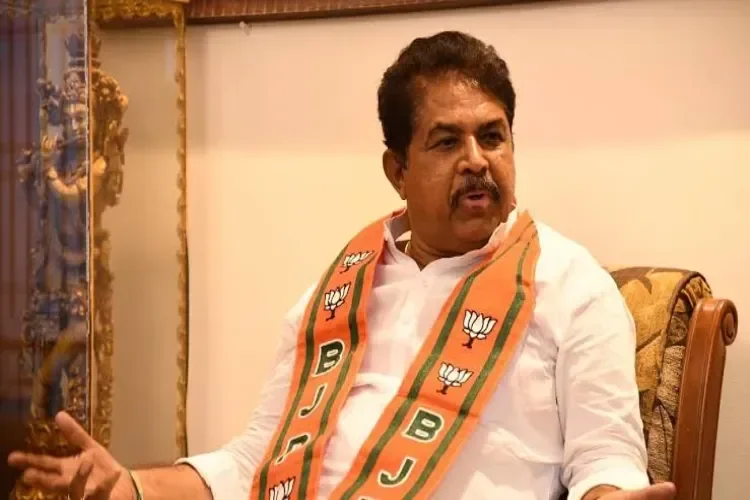
Congress leader Pawan Khera launched a fierce assault on Prime Minister Narendra Modi on Saturday, claiming his dialogue with US President Donald Trump displayed institutional weakness. Khera alleged the administration failed to protect national interests following the killing of three Indian mariners and ignored critical trade and geopolitical conflicts.
Key Highlights
- Congress spokesperson Pawan Khera accused PM Narendra Modi of surrendering India’s diplomatic leverage during his recent meeting with US President Donald Trump.
- The opposition highlighted the recent killing of three unarmed Indian sailors by the US military in the Gulf of Oman as a key unaddressed issue.
- Criticism was directed at New Delhi’s handling of the bilateral trade pact and the administration’s reliance on prepared notes during high-level diplomatic talks.
- Official briefs contradicted Khera, showing PM Modi raised maritime safety, while Foreign Secretary Vikram Misri noted prioritisation of the impending trade deal.
New Delhi — Congress spokesperson Pawan Khera launched a stringent critique against Prime Minister Narendra Modi on Saturday regarding his diplomatic engagement with US President Donald Trump. Khera claimed the Prime Minister demonstrated compliance and failed to uphold domestic interests after the reported killing of three Indian sailors.
Addressing reporters at a press briefing, Khera stated that the nation witnessed a distressing spectacle this week. He claimed that the Prime Minister appeared visibly deferential before Trump, reading directly from official papers while repeatedly using the term “Excellency” during their bilateral interaction.
The Congress leader questioned the choice of terminology used during the high-level meeting. Khera noted that even the official interpreter refrained from translating the phrase literally, opting instead for the standard designation of “Mr. President,” which raised concerns over the adherence to standard diplomatic protocols.
Khera asserted that the bilateral exchange failed to mirror the geopolitical stature of India. He remarked that the interaction resembled a corporate subordinate addressing a company owner rather than a leader representing 1.5 billion citizens, causing widespread dismay and anger within the country.
Drawing parallels with historical Indian leadership, Khera invoked former Prime Ministers including Indira Gandhi, Rajiv Gandhi, PV Narasimha Rao, Atal Bihari Vajpayee, and Dr. Manmohan Singh. He maintained that prior administrations had never conceded ground or compromised the nation’s dignity in such a manner.
Turning to security matters, Khera highlighted the recent deaths of three unarmed Indian citizen sailors, alleging that Washington failed to offer any formal remorse or apologies. He stated that the incident occurred just days ago, yet received no substantial American acknowledgement during the talks.
Khera claimed that the US President offered praise on superficial matters rather than addressing critical state issues. He alleged that the Prime Minister returned to New Delhi satisfied with personal compliments while failing to secure official accountability for the lost lives of Indian citizens.
The opposition leader further referenced recent diplomatic friction involving US Secretary of State Marco Rubio and External Affairs Minister S. Jaishankar. Khera questioned the utility of seeking external validation from the US administration, calling the perceived diplomatic imbalance a dishonour to the world’s largest democracy.
Concluding his statement, Khera penalised the Prime Minister’s extensive usage of prepared scripts during spontaneous state interactions. Labeling the leader as a “Slips PM,” he drew comparisons to regional chief ministers in Rajasthan and Haryana, criticizing the inability to converse without written aids.
The deaths of Indian sailors
The diplomatic row follows the killing of three Indian maritime workers during a US military strike on the Palau-flagged oil tanker MT Settebello in the Gulf of Oman. Washington targeted the vessel under allegations of violating the US trade blockade on Iranian shipping ports.
The deceased individuals were identified as maritime cadet Aditya Sharma, fitter Shivanand Chaurashiya, and chief engineer Patnala Suresh. Following the strike, India’s Ministry of External Affairs summoned US Charge d’Affaires Jason Meeks to lodge a strong diplomatic protest.
MEA spokesperson Randhir Jaiswal confirmed that India conveyed severe anxieties regarding the safety of ships operating with domestic crews. External Affairs Minister S. Jaishankar additionally escalated the strategic maritime issue directly during an official meeting with US Secretary of State Marco Rubio.
Government readouts contradicted Khera’s claims, confirming that PM Modi raised the security situation directly during the G7 session on June 17. Modi emphasized that hundreds of thousands of Indian citizens manage global maritime vessels, making their operational protection a supreme national priority.
President Trump offered a brief response during the meeting, acknowledging the inherent dangers of the maritime profession. The American leader stated that it remains a difficult sector and affirmed that both administrations would continue working together on security parameters.
The Bilateral Trade Agreement
Bilateral trade dynamics remain a point of economic friction after the Trump administration levied heavy tariffs on Indian exports, driven partly by New Delhi’s procurement of Russian crude oil. Negotiations for an interim trade deal have been underway to resolve these market distortions.
US Ambassador to India Sergio Gor announced in early June that 99% of the preliminary trade pact had been ironed out. Commerce and Industry Minister Piyush Goyal supported this assessment, stating that primary phases were secure while negotiators ironed out minor structural elements.
A specialized US trade delegation, managed by chief negotiator Brendan Lynch, held discussions in New Delhi between June 2 and June 4. During the subsequent G7 assembly, Trump described Modi as a highly capable negotiator and stated a deal was imminent.
Khera conversely alleged that the Prime Minister accepted an asymmetrical trade framework without sufficient pushback. Foreign Secretary Vikram Misri later clarified that the trade framework remained a core objective during the G7 summit to eliminate economic ambiguities observed over the past year.
Operation Sindoor ceasefire claims
Operation Sindoor represents India’s targeted cross-border military retaliation following a terrorist strike at the Pahalgam tourist destination in Indian-administered Kashmir, which claimed 26 lives. New Delhi held Islamabad accountable for the assault, a charge Pakistan rejected.
India initiated Operation Sindoor on May 7, striking designated militant positions across Pakistan and Pakistan-administered Kashmir. Pakistan counter-mobilized with Operation Bunyanun Marsoos, launching aerial strikes against military installations within Indian-administered Kashmir and the domestic mainland.
Following four days of sustained aerial warfare, Trump declared a ceasefire on May 10. India maintains that the cessation of hostilities was achieved via direct communication channels between New Delhi and Islamabad, independent of third-party mediation.
External Affairs Minister S. Jaishankar clarified that foreign powers were informed that any cessation of military firing depended entirely on direct Pakistani communication with India’s military leadership. The official G7 bilateral readout did not explicitly mention Pakistan-sponsored cross-border terrorism.
Foreign Secretary Misri explained that brief diplomatic formats prevent exhaustive reviews of every regional security matter. He noted that India’s long-standing security concerns regarding cross-border terrorism remain thoroughly understood by geopolitical partners in Washington.
Trump on BRICS, India’s response
The US President has consistently criticized the BRICS coalition, characterizing the economic bloc as a direct challenge to the supremacy of the US dollar. Trump threatened to implement 100% tariffs on member states, claiming his economic policies caused the alliance to fracture.
India, holding the BRICS rotating chairmanship for 2026, has maintained a diplomatic stance. Commerce Minister Piyush Goyal clarified that New Delhi has no intent to establish a shared BRICS currency, while Jaishankar confirmed that de-dollarisation is not part of India’s economic agenda.
During the G7 event, Khera claimed that Modi failed to counter Trump’s assertions regarding the decline of the BRICS alliance. Foreign Secretary Misri later indicated that the bilateral talks prioritized immediate commercial interests, specifically the pending trade agreement, over institutional debates.
Future Outlook
The diplomatic fallout from the G7 summit highlights the delicate balancing act India faces in 2026 as it manages its strategic autonomy. While opposition forces utilize visual optics to challenge the administration’s foreign policy strength, formal state dynamics indicate deep structural engagements on trade and maritime security. The impending finalization of the India-US interim trade agreement will serve as the next real metric of bilateral parity. Furthermore, as India steers its BRICS chairmanship through escalating Western tariff threats, New Delhi’s capability to insulate its macroeconomy from geopolitical crossfire will remain under intense scrutiny by domestic and international observers alike.
FAQs
What did Pawan Khera criticize regarding the Modi-Trump meeting?
Congress leader Pawan Khera claimed that Prime Minister Narendra Modi exhibited a weak diplomatic stance during his interaction with US President Donald Trump at the G7 summit. He criticized the use of formal titles, the reliance on written notes, and an alleged failure to strongly defend Indian interests.
Did PM Modi raise the issue of the deceased Indian sailors with Donald Trump?
Yes. Contrary to assertions made by the opposition, official government records indicate that Prime Minister Modi raised the issue of maritime safety directly during the G7 assembly on June 17, emphasizing the security of Indian crews working worldwide.
What caused the deaths of the Indian sailors in the Gulf of Oman?
Three Indian maritime workers were killed when the US military launched a strike against the Palau-flagged oil tanker MT Settebello. The US administration accused the vessel of breaching its economic blockade on Iranian shipping ports.
What is the current status of the India-US Bilateral Trade Agreement in 2026?
According to statements from US Ambassador Sergio Gor and Indian Commerce Minister Piyush Goyal, approximately 99% of the interim trade pact has been finalized. Negotiations are concluding on a few remaining minor points following high-level delegation meetings in June 2026.