Conservatives Secure Seismic Aberdeen South By-Election Victory
The Scottish Conservatives achieved a historic triumph in the Aberdeen South by-election following a dramatic collapse in support for the Scottish National Party. Tactical voting significantly altered the political outcome, delivering a major blow to the ruling party in Scotland during the early hours of Friday morning.
Key Highlights
- The Scottish Conservatives secured a historic victory in Aberdeen South, marking a major shift in the region.
- The Scottish National Party suffered a severe collapse in its local vote share compared to previous results.
- Energy policy and the future of the North Sea oil and gas sector emerged as central battlegrounds.
- The Scottish National Party successfully retained its seat in the Arbroath and Broughty Ferry contest.
Douglas Lumsden secured the Aberdeen South constituency for the Scottish Conservatives by claiming a total of 14,308 votes. Party insiders noted that widespread tactical voting among the electorate played an essential role in delivering this outcome.
The political shift was underscored by a severe drop in support for the Scottish National Party. Their total plunged to 8,258 votes, down from the 15,213 votes they secured during the 2024 general election.
SNP concede defeat in Aberdeen South as Tories gain seat
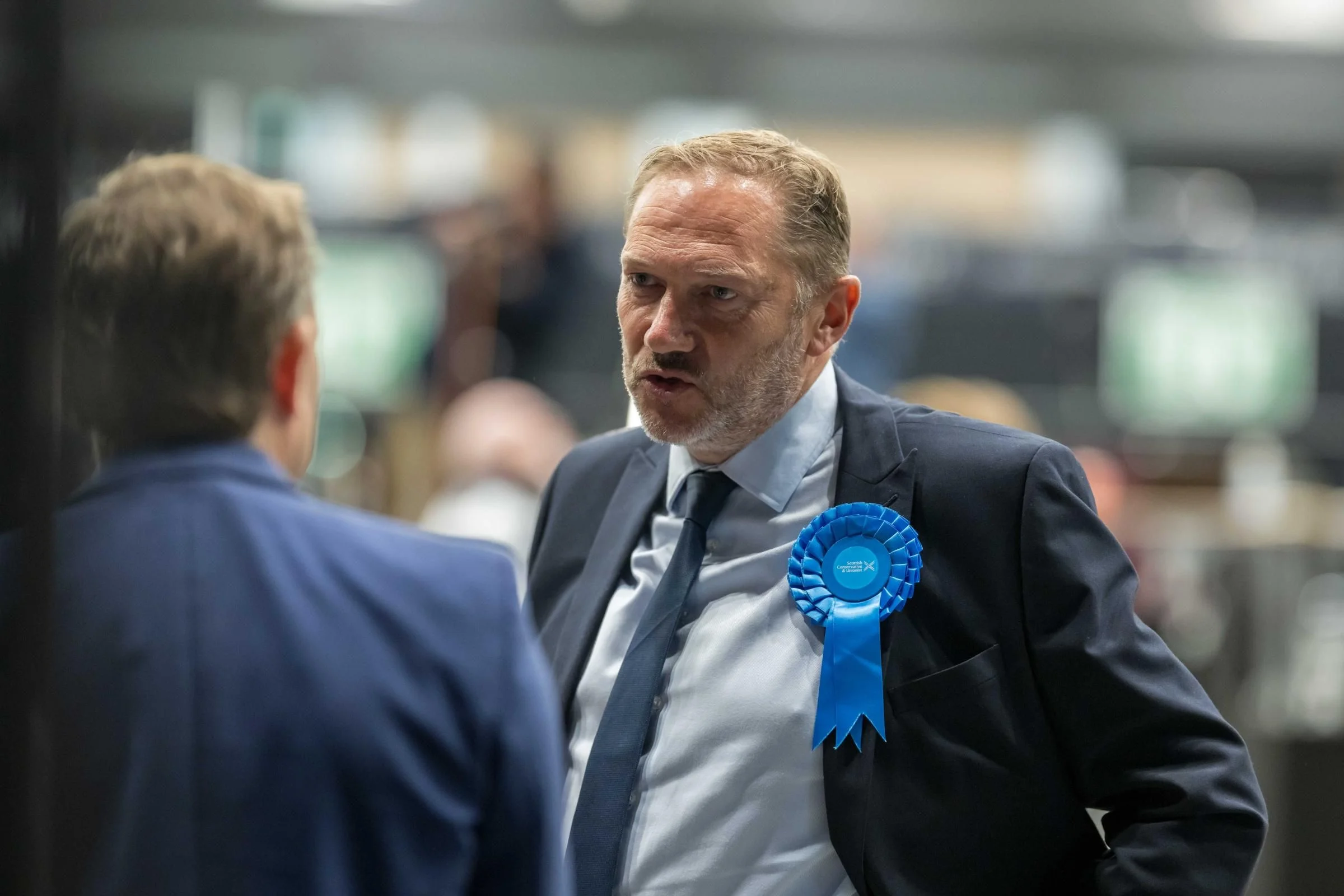
Scottish Tory MSP Douglas Lumsden has won the Aberdeen South by-election taking the seat from the SNP.
Mr Lumsden addressed attendees at the P&J Live venue in Aberdeen after the declaration. He expressed his immediate desire to represent the city at Westminster and advocate directly for the regional economy.
The newly elected representative emphasized that the legislative focus must protect local infrastructure. He declared that the energy sector requires immediate stability and long-term political commitment from the central government.
The incoming Member of Parliament directed a clear warning toward the current Labour administration regarding industrial strategy. He asserted that the election outcome signals an urgent requirement to reassess national energy policies.
Mr Lumsden insisted that the government must authorize new drilling permits to safeguard employment across the region. He demanded an immediate end to the energy profits levy to protect thousands of industrial roles.
The substantial victory represents the first time the Scottish Conservatives have won a Scottish by-election since 1967. This milestone prompted immediate internal discussions within the defeated party regarding their strategic direction.
Stephen Flynn, the previous representative for the constituency, expressed public concern regarding the management of the Mr Flynn acknowledged the difficult outcome for his colleagues in the region. He emphasized that the local party organization must evaluate its approach to connect with voters effectively.
The former representative reminded supporters that the party previously lost the seat in 2017. He noted that they successfully reclaimed the constituency two years later through focused political campaigning.
Mr Flynn expressed absolute confidence that a identical recovery remains possible for the movement. He insisted that electoral success will return if the organization corrects its current policy platform.
An internal party figure criticized the current positioning of the leadership regarding regional energy extraction. The source suggested that the public found the platform ambiguous and lacking in necessary strength.
First Minister John Swinney utilized social media to communicate his deep personal disappointment with the voting figures. He maintained that the core support for his movement remains fundamentally resilient across Scotland.
The First Minister explicitly blamed organized tactical voting for undermining their candidate’s chances. He offered public congratulations to Mr Lumsden while commending the dedication of the defeated candidate, Richard Thomson.
Mr Thomson stated to members of the press that the opposition deployed immense financial resources. He remarked that the sheer volume of competing campaign materials created an exceptionally challenging environment.
The candidate insisted that the recent legal developments involving Peter Murrell had no impact. He argued that the former chief executive’s actions did not alter the choices of local voters.
Mr Thomson suggested that individuals who raised the legal matter were already committed opposition voters. He stated that those specific voting intentions were established a long time prior to the poll.
The unseated candidate directed criticism toward major television networks for their selective editorial focus. He argued that broadcasters prioritized an English constituency vote in Makerfield over the dual Scottish contests.
The Scottish National Party managed to secure a victory in the parallel contest. Lara Bird successfully retained the seat representing Arbroath and Broughty Ferry following a vacancy.
The seat became available after Stephen Gethins chose to exit Westminster to pursue a career in Holyrood. Ms Bird successfully navigated the contest to keep the constituency under her party’s control.
The professional lawyer and political adviser finished the contest with 9,802 votes. Bill Reid, representing the Reform party, finished in second place after securing 4,841 votes.
Ms Bird acknowledged that the parallel declaration in the north represented a highly successful evening for opposition forces. She noted that the loss of the northern seat was undeniably a setback.
The newly elected representative emphasized that local political dynamics varied significantly between the two constituencies. She expressed immense satisfaction with the specific gains achieved by her campaign team.
Ms Bird concluded by highlighting that her campaign achieved both a larger majority and a higher vote share. She expressed deep pride in the collective efforts of her localized campaign organization.
History of Aberdeen South
The Aberdeen South constituency has historically served as a volatile political battleground within Scotland. The seat frequently transitions between the Scottish Conservatives and the Scottish National Party depending on wider economic trends.
The region remains uniquely sensitive to shifts in energy policy due to its status as a major industrial hub. Voters regularly prioritize employment protection and North Sea oil infrastructure above traditional constitutional debates.
FAQs
Who won the Aberdeen South by-election?
Douglas Lumsden of the Scottish Conservatives won the contest by securing 14,308 votes.
What was the vote count for the Scottish National Party candidate?
Richard Thomson secured 8,258 votes, marking a significant decline from the party’s previous general election performance.
Which party finished second in the Arbroath and Broughty Ferry contest?
The Reform party finished in second place with Bill Reid securing 4,841 votes behind the winners.
When did the Conservatives last win a by-election in Scotland?
This result represents the first standard by-election victory for the Scottish Conservatives in Scotland since 1967.