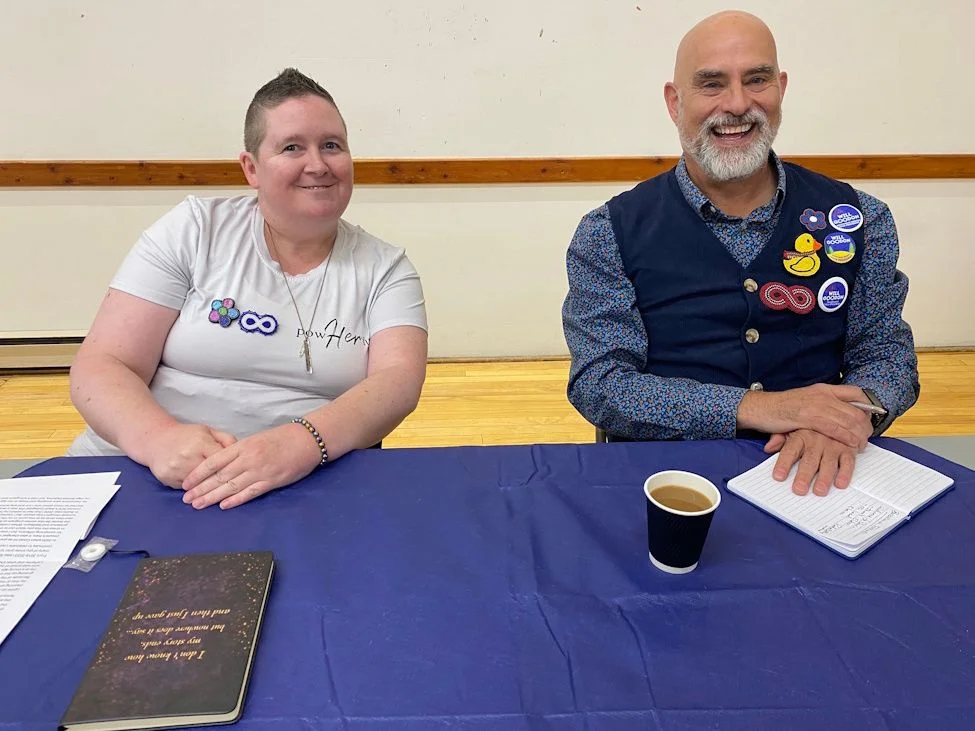
Red River Métis National Election: Vice President Candidates Debate Key Regional Issues
Red River Métis National Election: Vice President Candidates Debate Key Regional Issues
Campaigns are intensifying ahead of the June 23 Red River Métis National Election, where two prominent candidates are actively competing for the critical leadership position of Vice President within the Southwest Region.
Key Highlights
- Two candidates are vying for the Southwest Region Vice Presidency in the upcoming June 23 election.
- Interim Vice President Will Goodon and challenger Charlene Nault participated in an extensive eight-question debate.
- Essential platform pillars focus on reversing regional isolation, expanding housing, and enhancing mental health care.
- Both candidates emphasized infrastructure upgrades, including a replacement plan for the aging Brandon regional building.
The political race took center stage as moderator Al Benoit guided Manitoba Métis Federation (MMF) Vice President hopefuls Will Goodon and Charlene Nault through a comprehensive question-and-answer forum. The public session centered on defining distinct strategic visions for the Southwest Region, motivating factors for seeking office, and the specific leadership capabilities each contender pledges to utilize if successful.
Goodon, originally from Boissevain and now operating from Brandon, currently fulfills duties as the interim Vice President. His permanent tenure rests on the upcoming majority vote during the Manitoba Metis Federation election on Tuesday.
Goodon actively manages dual portfolios as the Minister of Housing & Property Management alongside serving as the Minister of Identity Protection and Inter-Indigenous Relations for the MMF. He simultaneously maintains a seat on the executive committee of cabinet. Goodon has represented the Southwest Region as an elected official since June 2014.
Challenging incumbent leadership, Charlene Nault of Minto possesses specialized professional training in social services. Her frontline experience encompasses managing acute mental health challenges, facilitating substance and alcohol addiction recovery, and addressing community homelessness.
Nault maintains her community alignment through the Grand Valley Métis Local, situated directly within the Southwest Region of the MMF.
Benoit presented eight distinct inquiries to the participating candidates during the forum. The subsequent sections outline the specific responses provided for three of those critical policy questions.
Q: If elected, what do you bring to the position?
A: Charlene Nault
If chosen by voters, I promise to deliver deep compassion, empathy, active listening, consistent support, and genuine understanding. I want to assure citizens that my dedication to public service is absolute. Even when structural limits prevent achieving every outcome, I will dedicate myself to listening and exhausting all options to elevate our population.
Will previously used the term “perimeteritis.” Although I had not planned to address it, this geographic isolation is a tangible reality confirmed by numerous citizens. I am entirely committed to bringing expanded economic opportunities and essential public services to the Southwest Region, customized to what the community requires. Implementing cultural beadwork classes, bridging generational gaps between youth and Elders, and funding grassroots activities remain crucial.
During the Brandon Forum, I interacted with a young woman legally ineligible to vote due to age restrictions. Her family operates a flour enterprise, and she expressed a desire to launch cooking workshops. I fully endorsed her vision. When she suggested a brief four-class limit, I countered that we should run continuous, sequential programs, as persistent engagement is the optimal pathway to mobilize our younger demographic.
Meeting her was a privilege, and I intend to actively facilitate these youth culinary programs alongside any additional resources our young people require.
If chosen for office, I also pledge to supply top-tier traditional bread to the broader region, acknowledging that my cousin Barb currently produces some of the finest bannock available.
More fundamentally, my determination drives my platform. Passive leadership is ineffective. My father, our national president, and our broader community have consistently modeled that true public service requires active passion.
Consequently, I offer intense passion and high energy to this office. My deep commitment to our population, our sovereign Nation, and our governing structures is visible today, celebrating an administrative reality that was merely a distant aspiration 30, 40, or 50 years ago during the infancy of the MMF.
I emphasize listening as a core strength, and I maintain that my capacity to hear citizen concerns is highly developed.
My platform rests on established governance experience. I offer years of direct insight as an active cabinet minister, paired with thorough involvement in the major institutional decisions executed over the preceding 30 years.
Furthermore, I anchor my leadership in deep respect. Engaging our Elders will confirm that I prioritize respect as an unyielding principle. Our Elders and our youth possess an inherent right to respect. I will never deviate from this core value, which was instilled by my immediate family, my father, and the local community.
Q: Many of our families in our communities are facing addiction and mental health struggles, and financial, and other challenges. What has your experience taught you about helping our people through these hard times? And how would you work to bring more Metis-led care and understanding to our families and communities?
I possess deep familiarity with these systemic challenges. Operating within social services in Brandon exposes a professional to the addiction crises and mental health struggles impacting the population. However, these local issues are vastly outpaced by the scale observed in Winnipeg. This exposure has clarified the true severity of our current societal situation, reinforcing my administrative commitment.
My academic objectives were systematically designed to support Indigenous populations, specifically targeting the intersection of homelessness, substance dependency, and mental health crises. These issues command my absolute focus. While I hesitate to term it a passion—given that I prefer a reality where these crises did not exist—this specialized care is precisely where my skills are required.
I command the precise educational credentials and practical casework background necessary to guide families through intense mental health and addiction struggles. While the current Health and Wellness Department provides foundational resources, our local communities require expanded allocations, and I will aggressively lobby for increased funding.
A: Will Goodon
When evaluating addiction and mental health crises, achieving authentic understanding is remarkably difficult without personal exposure. To remain entirely transparent about my path, I have personally navigated these intense struggles. Even now, I occasionally require designated intervals to regain my personal footing.
The contemporary landscape introduces overwhelming pressures that test every citizen.
I frequently contemplate the statistical reality noting that a vast segment of the Canadian population resides only one or two missed paychecks away from absolute homelessness. From my perspective, when observing individuals enduring extreme hardship on the street, I recognize that I am only a minimal number of missteps away from that exact vulnerability.
This perspective fosters deep empathy, preventing me from viewing any struggling citizen with condescension. My father consistently emphasized an essential truth: every individual retains equal worth, whether they fulfill duties as a janitor or serve as the president. I have maintained that principle throughout my life.
Inhabitants of fragile structures should refrain from criticism and focus instead on elevating others. While our existing mental health crisis hotline remains functional, extensive work must be deployed to assist individuals confronting multi-dimensional crises.
As previously stated, my personal experiences with hardship allow me to comprehend these issues deeply. I am profoundly indebted to the support networks that have consistently restored my strength during challenging periods.
Q: What are your goals for the Southwest Region?
My professional background as a social worker naturally informs my extensive objectives for the Southwest Region, driving an inherent desire to provide comprehensive resources to every citizen.
An primary administrative goal centers on maintaining absolute operational transparency and preserving an open-door policy, ensuring citizens always have a dedicated representative available to listen to their concerns.
Additionally, my platform prioritizes the construction of affordable housing units, the implementation of localized executive leadership training, the restoration of youth athletic and recreation grants, and the maintenance of a dignified, respectful employment environment.
Health, community wellness, and mental health advocacy remain central to my public service path. I intend to substantially scale up these specific support frameworks. The post-COVID-19 environment has drastically accelerated mental health challenges globally and within our specific citizenship.
Ultimately, my objectives include securing a modernized regional headquarters and establishing a dedicated daycare facility, directly reflecting the explicit requests I have gathered while listening closely to our citizens.
This inquiry directly addresses the core mechanics of regional governance and leadership capability. The Southwest Region has historically established the standard for institutional leadership, and we must preserve that trajectory.
Our region holds the inherent capacity to achieve operational excellence across government functions, community development, and public service delivery.
Analyzing the extensive progress achieved across Portage la Prairie, St. Eustache, Turtle Mountain, and St. Madeleine reveals an abundance of success stories that we must elevate and promote, highlighting our local citizens, our youth, and decades of collective effort.
Communication remains an absolute priority, echoing sentiments previously raised by Wes Hannah. Effective communication is the foundational element of my current responsibilities as Acting Vice President.
Understanding localized developments requires consistent attendance at community meetings to maintain a direct link to neighborhood challenges.
Consequently, clear communication is our primary objective. I acquired this governing philosophy directly from President Chartrand. Observing his leadership over decades reveals that effective officials must simultaneously execute technical tasks while clearly articulating those policies to the public.
Physical infrastructure remains a critical target. Our current administrative building in Brandon is aging and requires immediate replacement; I confirm that a new facility will be constructed.
Similarly, seniors and youth require focused advocacy. Following a brief dialogue with Jim Ranson during his travel to Brandon, he emphasized the necessity of expanding services for our elderly population. I concur completely, and we are currently advancing this mandate through targeted seniors’ housing initiatives.
Future Outlook
The outcome of the June 23 vote will establish the administrative trajectory for the MMF Southwest Region. With the aging Brandon regional building confirmed for decommissioning, the incoming administration will immediately face large infrastructure projects. Furthermore, integrating specialized social services directly into Métis-led healthcare frameworks remains a critical objective for the region as it navigates post-pandemic mental health demands.
FAQs
When is the Red River Métis National Election taking place?
The election is scheduled to take place on June 23. Citizens will cast their votes to determine key leadership positions, including the Vice President of the Southwest Region.
Who are the candidates running for Vice President of the Southwest Region?
The two candidates competing for the Vice Presidency are the current interim Vice President Will Goodon and challenger Charlene Nault, a social services professional.
What are the main infrastructure priorities discussed for the Southwest Region?
Both candidates identified that the current regional MMF building in Brandon is aging and requires a complete replacement. Plans are underway to construct a modernized facility to better serve the community.