Prime Minister Narendra Modi Surpasses Historical Tenure Record
On June 10, 2026, Prime Minister Narendra Modi achieved a historic milestone by becoming the longest-serving democratically elected Prime Minister of India. This tenure surpasses the record previously held by the first Prime Minister of independent India, Jawaharlal Nehru, marking an era of significant political transformation.
Key Highlights
- Prime Minister Narendra Modi has officially become India’s longest-serving democratically elected leader as of June 10, 2026.
- The administration has prioritized political continuity, driving large-scale domestic infrastructure projects and national welfare programs.
- A core pillar of the tenure involves a massive shift toward civilizational decolonization, elevating indigenous traditions and replacing colonial-era legal codes.
- Regional administration initiatives, such as those in Manipur, are aligning with the national infrastructure push to expand transit networks toward international borders.
During this extended leadership period, India has experienced substantial advancements across multiple sectors. A primary feature of this administration has been maintaining governance stability within a political arena previously characterized by short-lived coalition partnerships and recurrent leadership changes. This prolonged political continuity has provided a foundation for steady, long-term policy implementation.
Over consecutive terms, major nationwide development schemes have scaled significantly. These initiatives encompass the industrial “Make in India” strategy, aggressive expansions in highway networks, airport infrastructure, and digital frameworks, alongside prominent social welfare programs. Projects such as Swachh Bharat, PM Awas, Ujjwala, and Jan Dhan Yojanas highlight the practical outcomes of sustained administrative stability.
Adhering to the core philosophy of “Sabka Saath, Sabka Vikas,” Islamic scholar Ibn Khaldun Bharati notes that the Prime Minister has successfully steered Indian democratic practices away from identity-based vote-bank dynamics. Bharati stated that post-partition Indian democracy had previously remained constrained by the systemic influences of the Two-Nation theory.
Beyond legislative achievements and economic data, this governance period has structurally altered the nation’s cultural baseline. This shift focuses heavily on Hindu civilizational identity, highlighting historical narratives, ancestral wealth, and an uninterrupted knowledge lineage spanning several millennia. The current administration has moved traditional heritage from peripheral status directly into mainstream national life. Consequently, cultural policy functions as a dual mechanism, fostering internal political unity while acting as a soft-power diplomatic asset globally. Senior journalist Navneen Anand, founder of GreyMatters Communications, observed that this tenure has aligned with a heightened focus on civilizational consciousness and historical symbols that segments of the population felt were previously neglected in public settings.
This leadership style features a Prime Minister who openly displays his Hindu faith, diverging from the strictly guarded secular approaches that characterized post-independence governance. Bharati described the leader as an administration head who openly embraces and takes pride in his Hindu identity. By incorporating personal faith into public duties, the leadership frames Hindu heritage as a foundational element of state pride. Commentators interpret this transition as an exercise in civilizational decolonization, restoring native cultural perspectives to public affairs and governance models.
The construction of the Ram Mandir in Ayodhya remains a central symbol of this cultural transition. In January 2024, the Prime Minister performed the Prana Pratishtha ritual, a traditional ceremony to consecrate the deities, following a multi-decade legal process that concluded centuries of historic friction. The temple opening served as a major event for millions of citizens, representing the reclamation of a sacred site recognized as the birthplace of Bhagwan Ram.
This development, coupled with the comprehensive upgrade of the Kashi Vishwanath Corridor in Varanasi and various other religious sites, demonstrates a twofold strategy: modernizing historic pilgrimage infrastructure while emphasizing historical continuity.
On the international stage, the globalization of Yoga and Ayurveda, catalyzed by the annual International Day of Yoga, has transformed ancient practices into diplomatic instruments. Yoga represents a Darshana, serving as one of the six orthodox systems of Hindu philosophy. Derived from Sanskrit, the word signifies a state of unity. Scholars define the practice as the alignment of the mind with the true Self, distinguishing clearly between mental faculties like memory or judgment and pure consciousness. This alignment removes internal duality, guiding practitioners toward a state of sat-chit-anand.
The global event was originally introduced to the United Nations General Assembly in September 2014. The date of June 21 was selected due to its alignment with the Summer Solstice, a period carrying cosmic and spiritual importance across various global traditions. The proposal secured rapid international consensus, leading to a UN resolution in December 2014 backed by 175 co-sponsoring countries.
Former journalist Ashish Sinha noted that traditional medical practices have received unprecedented institutional backing during this period. As global health challenges highlighted vulnerabilities in Western public health models, international interest in indigenous medical frameworks accelerated, driving the expansion of the AYUSH framework.
The Ministry of AYUSH manages the structural revival of Ayurveda, Yoga, Naturopathy, Unani, Siddha, and Homeopathy. Under the current leadership, the department was upgraded to a full ministry to position traditional wellness systems within standard public healthcare protocols.
Through the allocation of research funds, the enforcement of production standards, and the creation of specialized medical academies, the ministry works to validate native treatments. This state-sponsored framework provides affordable local healthcare while projecting traditional systems as external soft-power assets.
Sinha remarked that these ancient knowledge systems effectively address preventive, curative, and lifestyle needs. By introducing native languages, including Sanskrit, into educational systems, the administration has sought to counter colonial-era academic perspectives and adjust historical paths set by earlier secular leaders. This educational restructuring aims to restore historical narratives that were previously marginalized.
A tangible shift occurred when the parliament repealed and replaced three colonial criminal codes from the British era, implementing a updated legal structure utilizing native terminology. Former Chief Justice N.V. Ramana previously remarked that the inherited court structures failed to match local complexities, creating barriers for ordinary citizens. The ongoing legal updates seek to transition the judiciary from an old colonial mindset to a citizen-first operational model.
Nevertheless, the mandate requiring English within higher judicial tiers remains an institutional vestige of colonial governance, acting as an obstacle to widespread legal access. Furthermore, while major temple restorations advance, tens of thousands of Hindu shrines continue to operate under direct state management. The administrative oversight of these properties remains a highly contested topic, escalating from localized legal complaints into a coordinated national campaign supported by legal experts and advocacy groups. Critics highlight an operational contradiction where a secular republic manages and collects revenue from over 100,000 Hindu temples, while the religious sites of other faiths remain independently operated.
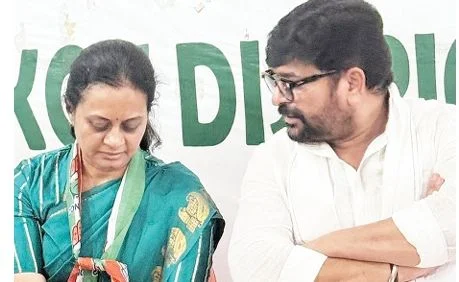
Simultaneously, regional developments are moving in tandem with national infrastructure goals. In Imphal, Chief Minister Yumnam Khemchand recently used a public forum to advocate for communal harmony and dialogue to sustain regional stability. Speaking at a localized public welfare camp, the Jan Kalyan Shivir organized by the Imphal West administration at Hao Ground, Khemchand emphasized the decentralized delivery of public benefits.
During the event, Khemchand acknowledged the milestone achieved by the Prime Minister, framing the welfare initiatives as vital components of the long-term Viksit Bharat–Viksit Manipur 2047 vision.
The Chief Minister confirmed that the regional railway infrastructure originating from Jiribam has advanced to Khongsang. The transit network is projected to reach the capital city of Imphal within the next two years, with subsequent blueprints detailing a strategic rail extension toward the border town of Moreh, advancing the goals of the national Act East Policy.
History of Indian Prime Ministerial Tenures
The structural framework of Indian governance has shifted from the early post-independence era, which was dominated by single-party mandates and lengthy individual tenures, into volatile periods of coalition governance during the late 1980s and 1990s. The stabilization of national leadership under a single political party over multiple consecutive terms represents a significant shift from decades of fragmented political alliances. This stability has enabled centralized policy execution across both domestic infrastructure portfolios and international diplomatic initiatives.
FAQs
When did Narendra Modi achieve the milestone of becoming India’s longest-serving Prime Minister?
He achieved this historic tenure milestone on June 10, 2026, officially surpassing the cumulative leadership timeline of India’s first Prime Minister, Jawaharlal Nehru.
What is the primary function of the Ministry of AYUSH in India?
The Ministry of AYUSH is tasked with developing, standardizing, and integrating traditional Indian medical and wellness systems, including Ayurveda and Yoga, into mainstream national health infrastructure.
What infrastructure developments were recently announced for the Northeast region?
The railway network has advanced from Jiribam to Khongsang, with clear project timelines set to extend the rail line to Imphal within two years, followed by a future connection to the border hub of Moreh under the Act East Policy.