PM Modi Critiques Congress Constitution Stunt at Republic Summit
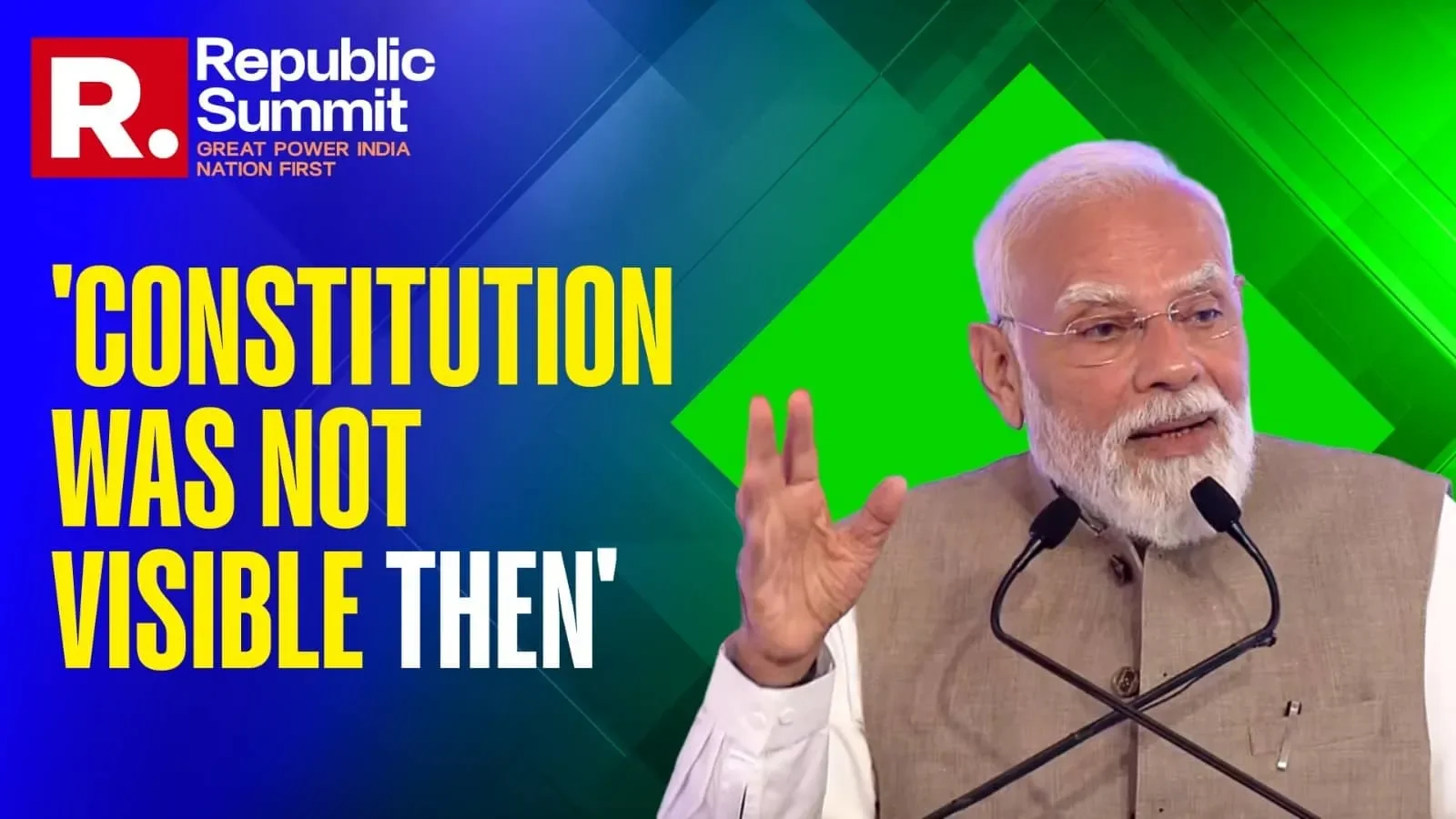
Prime Minister Narendra Modi strongly critiqued the opposition’s constitutional stance while addressing the Republic Summit 2026 in New Delhi on Monday. Modi highlighted historical security failures and rising citizen aspirations, asserting that previous administrations neglected constitutional rights during peak periods of internal extremist violence.
Key Highlights
- PM Modi criticized the Congress party for using the Constitution as a political tool after decades of silence during internal security crises.
- The administration noted that Maoist terrorism is nearing its end, contrasting current stability with over 17,000 violent incidents between 2004 and 2014.
- Structural tax reforms and development programs have successfully lifted 25 crore citizens out of poverty across designated aspirational districts.
- Public expectations have transitioned from basic infrastructure needs to premium service demands like the Vande Bharat rail network.
New Delhi: In a direct attack on the opposition’s political strategy, Prime Minister Narendra Modi shredded their defense of the Constitution, recalling the harsh realities under previous administrations. Speaking at the Republic Summit 2026, PM Modi took a sharp jibe at the Congress party’s sudden focus on the document.
The Prime Minister asserted that previous leadership remained passive during periods of heavy regional unrest, neglecting the core values of the foundational text. Modi stated that individuals residing in areas heavily impacted by insurgency faced extreme peril simply for invoking constitutional protections while past authorities offered no intervention. He noted that the document appeared forgotten by leadership during those periods of national distress.
‘Even Congress Demands Things From Me’
According to PM Modi, public confidence in his government’s ability to deliver is so strong that even his political opponents look to him to get things done. “Not just ordinary people, even the entire Congress party says that Modi ji should do this and that. They trust that whatever needs to be done, he will do it. Friends, aspirations exist only where people believe that dreams can be fulfilled. And this is exactly the aspiration of India’s youth, the poor, and the middle class,” PM Modi stated.
The Prime Minister emphasized that a wave of soaring expectations has taken over the country because citizens finally believe that their dreams can become a reality. He stated that the prevailing national sentiment is driven by a deep conviction that long-term progress is achievable under the current governance model.
From Clean Seats to Vande Bharat: India’s Skyrocketing Expectations
Describing how development has transformed the mindset of the public, PM Modi explained that basic infrastructure demands have now evolved into premium requirements.
“If earlier there was no demand for roads, then after roads were built, people started asking when the metro would come. Earlier, the expectation was that trains should arrive on time and that there should be enough space to sit inside them. Now the demand is why Vande Bharat is not running on our route,” the PM said.
He reframed this constant demand from citizens as a sign of progress rather than public dissatisfaction.
The Prime Minister observed that these rising requirements represent expanding national ambition. He noted that citizens direct their high expectations exclusively toward an administration that demonstrates a consistent capacity for executing large-scale developmental work.
Major Tax Relief for the Middle Class
The Prime Minister also highlighted the structural and financial reforms implemented by his administration to ease everyday life for the middle class. “The tax-free income limit has increased many times, and due to tax reforms, the middle class has received a lot of convenience. Time and cost in tax filing have been saved, returns are being filed from home, and issues are being resolved in real time.”
These regulatory updates have streamlined fiscal compliance for millions of domestic taxpayers. The transition to digital processing has eliminated conventional bureaucratic delays, offering real-time problem resolution and lowering the compliance burden on middle-income households.
‘Nation First’ vs Maoist Extremism
Turning his focus to national security, PM Modi cited the government’s approach to tribal belts as a prime example of putting the country first, contrasting it with the security situation between 2004 and 2014.
“An example of what ‘Nation First’ impact looks like is our tribal regions. More than 10 crore population of India living in tribal areas, and we all know how Maoist extremism had entrenched itself there. Even in the 21st century, these extremists did not allow basic facilities to reach these areas. There were times when the government could not even send a single vehicle into these regions. Governments came and went, and it felt as if the tragedy of violence would continue forever. Between 2004 and 2014, more than 17,000 incidents of violence took place due to Maoist extremism, and around 7,000 lives were lost.”
Concluding his speech, the Prime Minister emphasized the decisive actions taken after 2014 to eliminate internal security threats entirely.
“After 2014, in order to change the situation, we moved forward with the spirit of Nation First. We took action. We did not just speak, we did not just make announcements, we worked. We resolved that we would uproot Naxalism and Maoism completely, and today the entire country is seeing the results. Today, Maoist extremism in the country is breathing its last.”
Future Outlook
The Prime Minister stated that India is establishing itself as a highly reliable and credible global economic power. He emphasized that the country is currently laying down strategic structural foundations that will define its developmental trajectory for the next 1,000 years.
By restructuring previously neglected zones into proactive development hubs, the administration intends to sustain this upward economic momentum. The continued integration of tribal and remote areas into the mainstream economic framework remains a core priority for securing long-term domestic stability.
FAQs
What was the focus of PM Modi’s address at the Republic Summit 2026?
PM Modi focused on critiquing the opposition’s sudden defense of the Constitution, contrasting it with historical security failures. He also highlighted India’s economic growth, national security advancements, tax reforms, and the elimination of Maoist extremism.
How many casualties were linked to Maoist extremism between 2004 and 2014?
Official data cited by the Prime Minister indicates that over 17,000 violent incidents occurred due to Maoist extremism between 2004 and 2014, resulting in the loss of approximately 7,000 lives.
What are aspirational districts in the context of Indian governance?
Aspirational districts are regions previously labeled as backward or severely affected by left-wing extremism that were renamed and targeted with focused developmental initiatives. These programs have helped lift 25 crore citizens out of poverty.
Why did PM Modi mention the Vande Bharat trains during his speech?
PM Modi utilized the Vande Bharat trains as an example of shifting public expectations. He explained that citizens have progressed from demanding basic train punctuality to requesting premium, high-speed transit infrastructure in their local areas.