Modi Visits Slovakia in Historic Bilateral Expansion
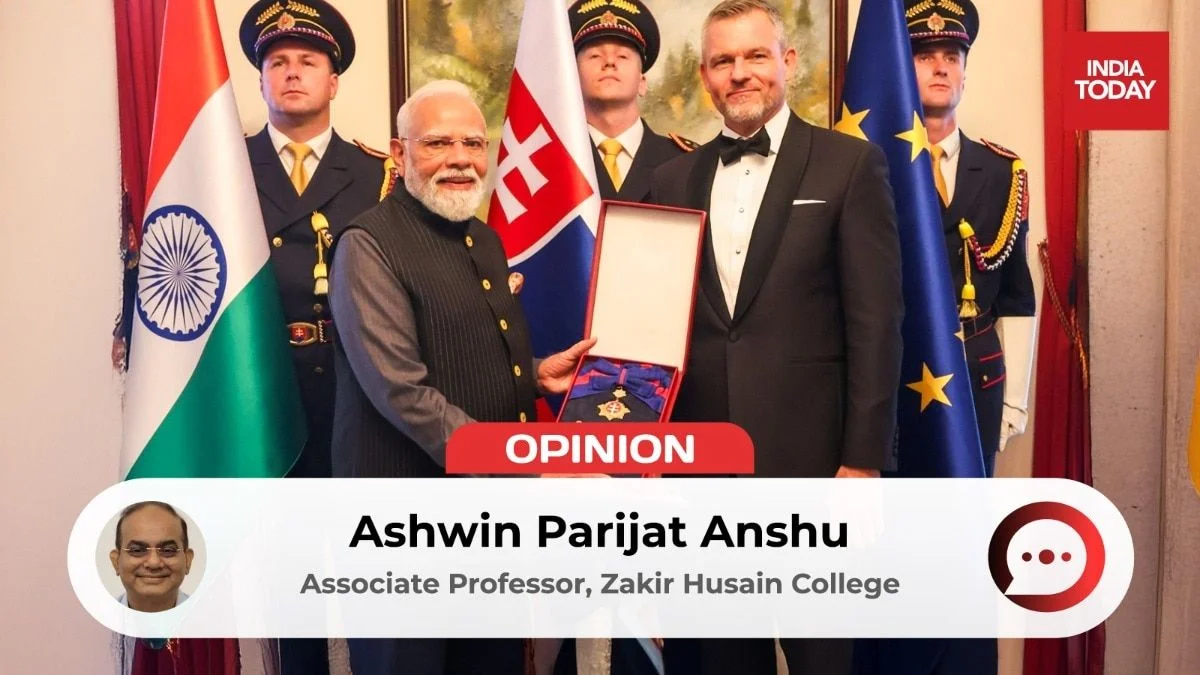
Prime Minister Narendra Modi launched a historic diplomatic mission to Slovakia in mid-June 2026, marking the first visit by an Indian head of government to the independent Central European nation since its formation in 1993. The visit signals a strategic shift to expand bilateral cooperation beyond traditional diplomatic channels.
Key Highlights
- Prime Minister Narendra Modi completed a historic diplomatic visit to independent Slovakia in mid-June 2026.
- The visit establishes the first direct prime ministerial contact between New Delhi and Bratislava since 1993.
- Bilateral talks focused on transforming legacy ties into a comprehensive strategic partnership with deep defense cooperation.
- High-level economic discussions centered on aligning Slovak automotive manufacturing expertise with Indian technological resources.
Slovakia operates as an industrial anchor within the European Union, maintaining global leadership in automotive production per capita. Simultaneously, India sustains its position as a fast-growing major global economy, offering a stable market amid widespread international macroeconomic volatility and slowing fiscal growth. The economic complementarities between the two nations present significant commercial opportunities that have remained underutilized for several decades.
Bilateral ties have historically been characterized by official channels as warm and friendly. However, the diplomatic relationship previously faced structural neglect, low political visibility, and a deficit in long-term strategic planning from both capitals. Commercial trade volumes remained constrained, high-level ministerial exchanges occurred rarely, and institutional cooperation across technology, higher education, and cultural exchange remained unrealized.
A Shared Sense of History
Bilateral engagements gain momentum when anchored in historical consciousness, elevating diplomatic interactions beyond standard geopolitical calculations. Initial momentum toward this renewed bilateral framework began during the state visit of Indian President Droupadi Murmu to Bratislava in April 2025. Diplomatic observers noted an exceptional warmth during the visit that extended beyond standard state protocol. The Indian head of state received a reception marked by cultural hospitality and symbolic diplomacy, signaling an alignment of values.
India and Slovakia share cultural affinities rooted in their respective historical trajectories. Both nations draw institutional continuity from civilizational memories that preceded the formation of their modern Westphalian state architectures. Consequently, each country identifies as the custodian of an enduring cultural inheritance rather than a standard political entity.
For the Slovak population, the historical memory of Great Moravia—the foundational Slavic state structure in Central Europe—parallels the structural role that classical traditions, ancient kingdoms, and epics occupy in Indian historical consciousness. The legacy of Great Moravia preserved Slovak cultural identity through eras of external governance and systematic Magyarization. Mirroring India’s utilization of cultural heritage as a tool of resilience against colonial administration, Slovak historical memory protected linguistic and cultural independence.
The Slovak national revival derived its structural momentum directly from authentic folk culture. National revivalists, including Ludovit Stur and Jan Kollar, rejected elite cosmopolitan models and classical Latin norms to champion the Slovak language, localized folklore, and rural traditions. These systemic efforts established a modern national consciousness anchored securely in indigenous cultural assets.
India’s Intellectual Influence
The period of Slovak national awakening occurred concurrently with a broader movement among European intellectuals who studied ancient Indian civilization. Sanskrit literature, Indian philosophical frameworks, and the Upanishads attracted significant analytical attention from scholars and romantic thinkers across the European continent.
Ludovit Stur, a primary architect of the Slovak national revival, utilized insights from the structural study of Sanskrit and Indian philosophy. The grammatical architecture and logical consistency of Sanskrit informed his linguistic methodology, directly influencing his systematic codification of the modern Slovak language. His analysis of Indian philosophy aligned with a broader European recognition of India as a foundational global civilizational center.
Comparative research into Indo-European linguistic roots led scholars Jan Holly and Jan Kollar to hypothesize India as the ancestral point of origin for Slavic populations. Kollar’s epic poem Slavy Dcera (The Daughter of Slava) deified the figure of Slava as an overarching symbol of the Slavonic identity. His academic assertions connected the deity Slava directly to the Indian ritual term Svaha.
These historical intellectual networks continue to serve as a contemporary cultural framework linking New Delhi and Bratislava. Consequently, Indology continues to be actively studied within major Slovak universities and independent European research institutions.
Building the Future
Slovakia and India have both navigated complex historical challenges to overcome the geopolitical dominance of larger regional powers. Following its independence, Slovakia achieved rapid economic expansion, with gross domestic product growth peaking above 10% to establish the nation as an economic contributor in Europe. Slovakia’s industrial capacity in advanced manufacturing, automotive engineering, and industrial design complements India’s expanding capabilities in digital services, information technology, renewable energy, pharmaceuticals, and technical human capital.
Spurred by historical connections, the formal elevation of bilateral relations to a comprehensive partnership establishes a framework for future economic integration. Reflecting this maturing relationship and enhanced mutual confidence, both governments affirmed a commitment to operate jointly within a volatile global security environment, signing multiple bilateral defense and security cooperation agreements.
Prime Minister Modi’s state visit represents the commencement of an expanded bilateral trajectory rather than an isolated diplomatic event. A shared appreciation of historical ties, paired with unified economic objectives, provides the necessary framework to convert traditional diplomatic cordiality into a functional and modern twenty-first-century partnership.
Future Outlook
The formalization of defense agreements during this visit lays the groundwork for joint military industrial research, specifically linking Slovak heavy machinery expertise with India’s defense manufacturing ecosystem. Moving forward, bilateral working groups are scheduled to establish digitized frameworks to streamline talent corridors, allowing Indian software engineers and technical experts to address labor vacancies in Slovakia’s expanding high-tech sectors.
FAQs
What was the historical significance of Prime Minister Modi’s visit to Slovakia?
The state visit in mid-June 2026 marked the first time an Indian Prime Minister visited Slovakia since it became an independent nation in 1993, ending a multi-decade gap in direct prime ministerial diplomacy.
What industrial sectors drive the economic relationship between India and Slovakia?
The bilateral economic relationship is led by Slovakia’s advanced automotive manufacturing and engineering sectors, which complement India’s scaled capacities in digital technology, software services, renewable energy, and pharmaceuticals.
How did ancient Indian culture influence the Slovak national revival?
During the Slovak national awakening, revivalists like Ludovit Stur studied Sanskrit grammar and Indian philosophy to help codify the modern Slovak language, while other intellectuals explored shared Indo-European civilizational roots.
What diplomatic status did India and Slovakia agree to implement?
The two nations officially elevated their bilateral relationship to a comprehensive partnership, executing multiple new agreements specifically targeting defense cooperation and regional security frameworks.