India Brands Indus Waters Treaty Outdated At UNHRC
India has strongly censured Pakistan during the United Nations Human Rights Council session, labeling the decades-old Indus Waters Treaty as obsolete. New Delhi asserted that Islamabad cannot perpetrate cross-border terrorism while simultaneously demanding bilateral cooperation privileges, signaling a firm shift in India’s geopolitical stance regarding regional water diplomatic frameworks.
Key Highlights
- India declared the 1960 Indus Waters Treaty outdated and unsuited for modern realities at the UNHRC.
- New Delhi stated that nations sponsoring terrorism cannot expect goodwill-based bilateral cooperation.
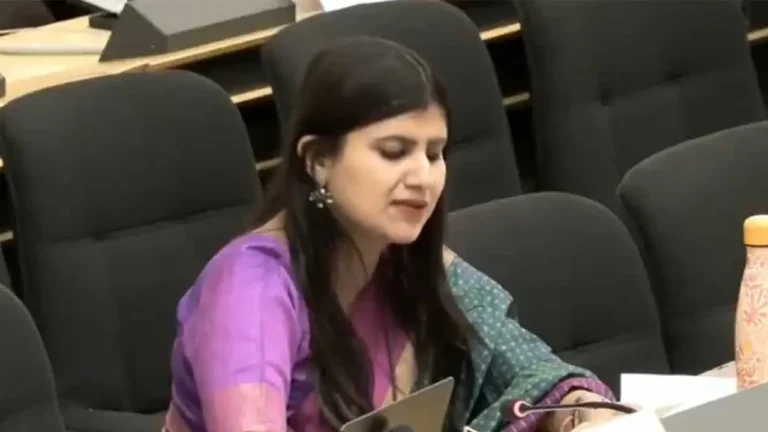
- First Secretary Anupama Singh rejected Pakistan’s allegations and criticized its internationalization of bilateral issues.
- India urged Pakistan to shift its focus toward resolving its compounding internal economic and political crises.
India delivered a stinging rebuke against Pakistan at the United Nations Human Rights Council, characterizing the Indus Waters Treaty as an antiquated framework misaligned with contemporary realities. New Delhi argued that a state driving cross-border terrorism cannot simultaneously expect the advantages of a pact built on mutual trust.
Addressing the 62nd Session of the UNHRC, Anupama Singh, First Secretary at India’s Permanent Mission to the UN, dismissed Pakistan’s claims. She criticized Islamabad for continuously attempting to drag bilateral disputes onto global platforms instead of resolving them through established mechanisms.
Singh emphasized that India’s stance on the water distribution pact remains consistent. She noted that it contradicts logic for a country utilizing terrorism as state policy to demand cooperative benefits that require foundational goodwill, declaring the treaty fundamentally outdated in the current geopolitical climate.
The diplomat stated that technical mechanisms cannot remain static over six decades while global dynamics shift. She asserted that the 1960 accord cannot be viewed as an eternal right protected from accountability, isolated from modern realities, or insulated from historic regional transformations.
Singh concluded by advising Pakistan to redirect its attention toward internal stability rather than pursuing territorial ambitions against India. She stressed that Islamabad would better serve its citizens by addressing domestic challenges and restoring order within its own borders.
Historical Context
The Indus Waters Treaty was signed on September 19, 1960, between Indian Prime Minister Jawaharlal Nehru and Pakistani President Ayub Khan, brokered by the World Bank. The treaty fixed the distribution of six major rivers, allocating the three eastern rivers to India and the three western rivers to Pakistan. Over the past 66 years, the treaty survived multiple armed conflicts, but escalating cross-border security concerns have prompted New Delhi to demand formal modifications to the agreement to reflect current ecological and political realities.
FAQs
What is the Indus Waters Treaty?
The Indus Waters Treaty is a water-distribution treaty signed in 1960 between India and Pakistan, brokered by the World Bank, to manage the utilization of the Indus River system.
Why is India calling the Indus Waters Treaty outdated?
India argues that the treaty negotiated in 1960 fails to account for environmental changes, modern technical advancements, and the current security climate, specifically Pakistan’s continued sponsorship of cross-border terrorism.
Where did India make these remarks against Pakistan?
The statements were delivered by First Secretary Anupama Singh during the 62nd Session of the United Nations Human Rights Council (UNHRC).